
Last updated September 10, 2026
Full 25-point door and opener safety check with every visit - springs, cables, rollers, tracks, and your LiftMaster or Chamberlain opener included
You get a price before we start. It does not change when the truck arrives.
 Before
 After
After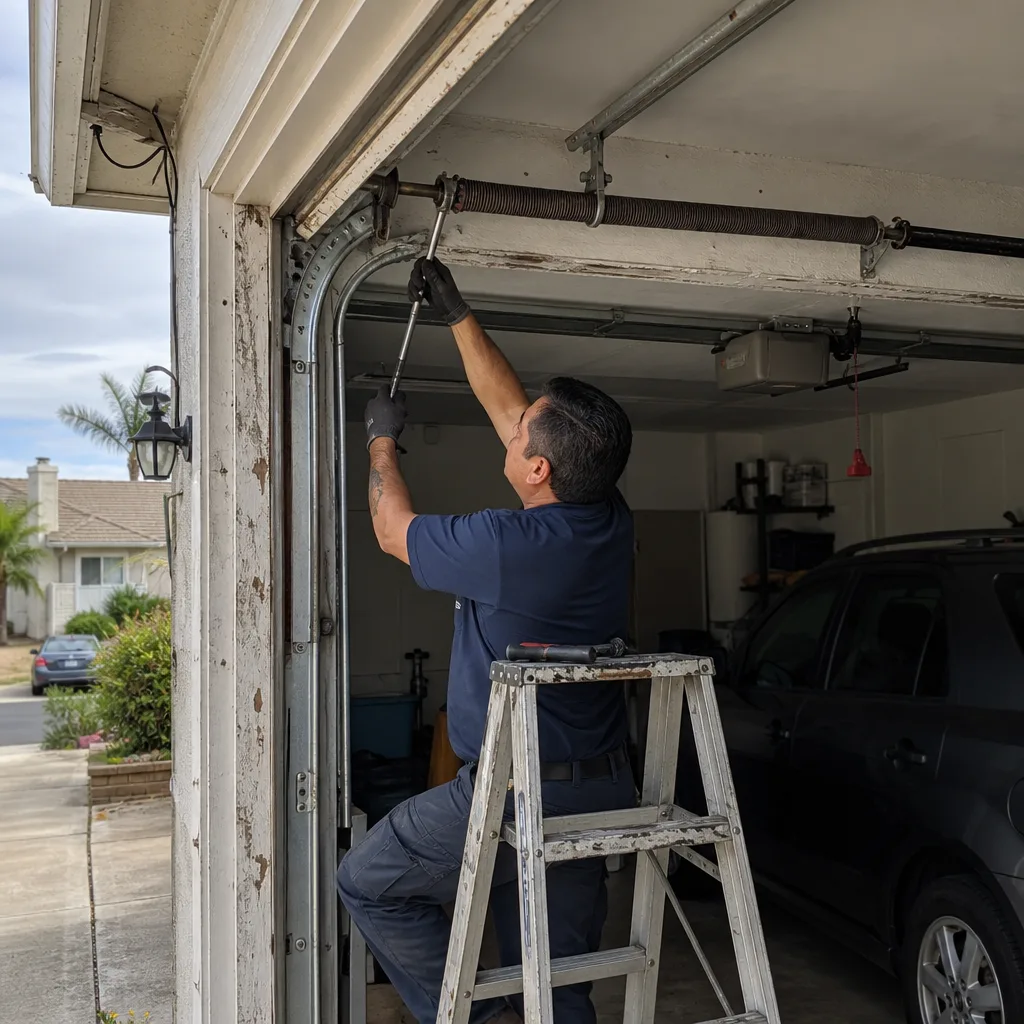 Before
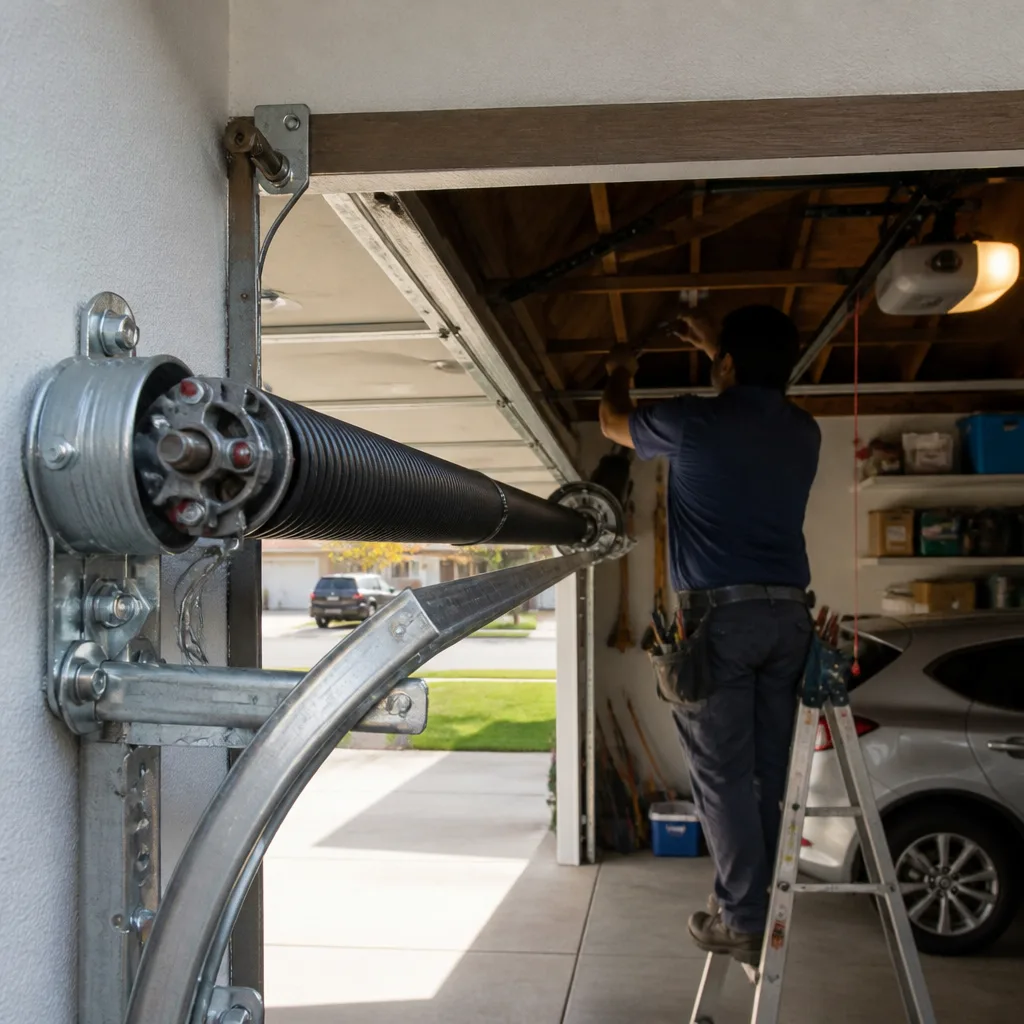 After
After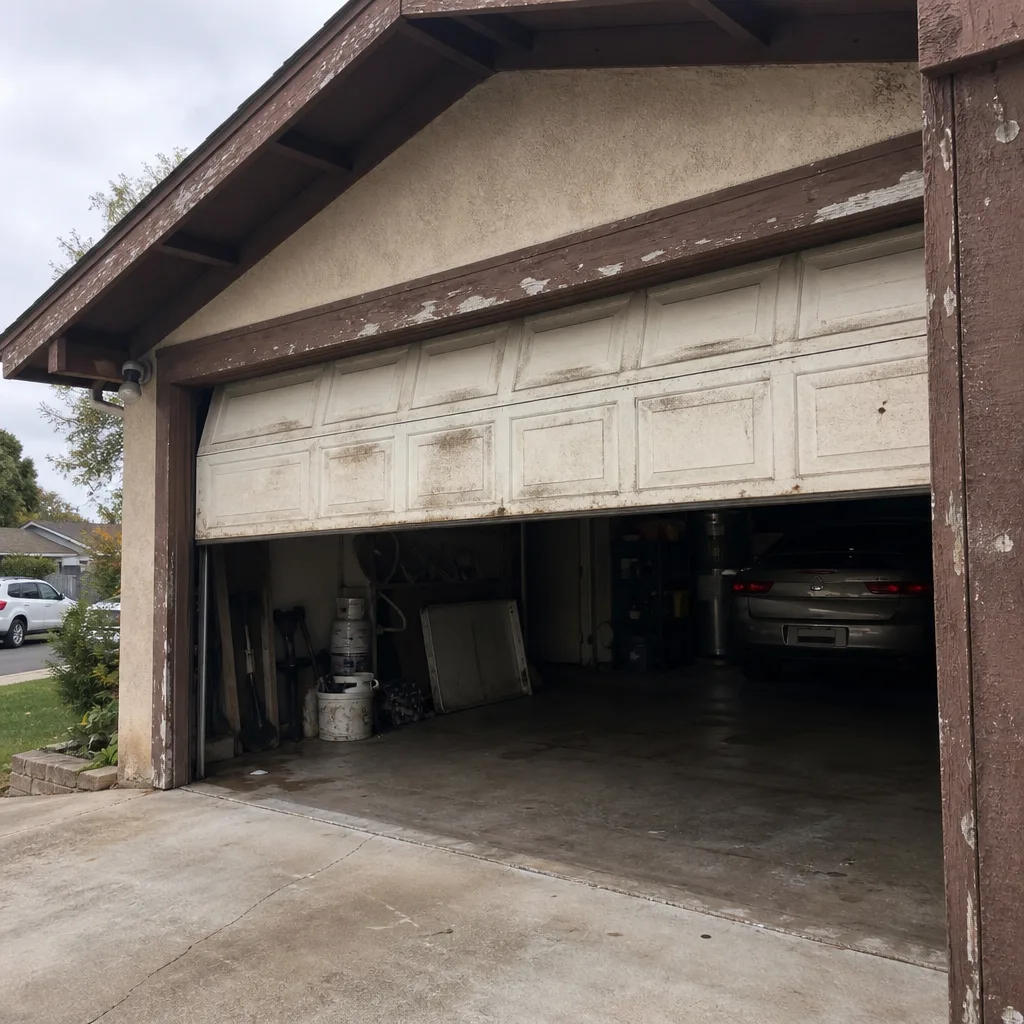 Before
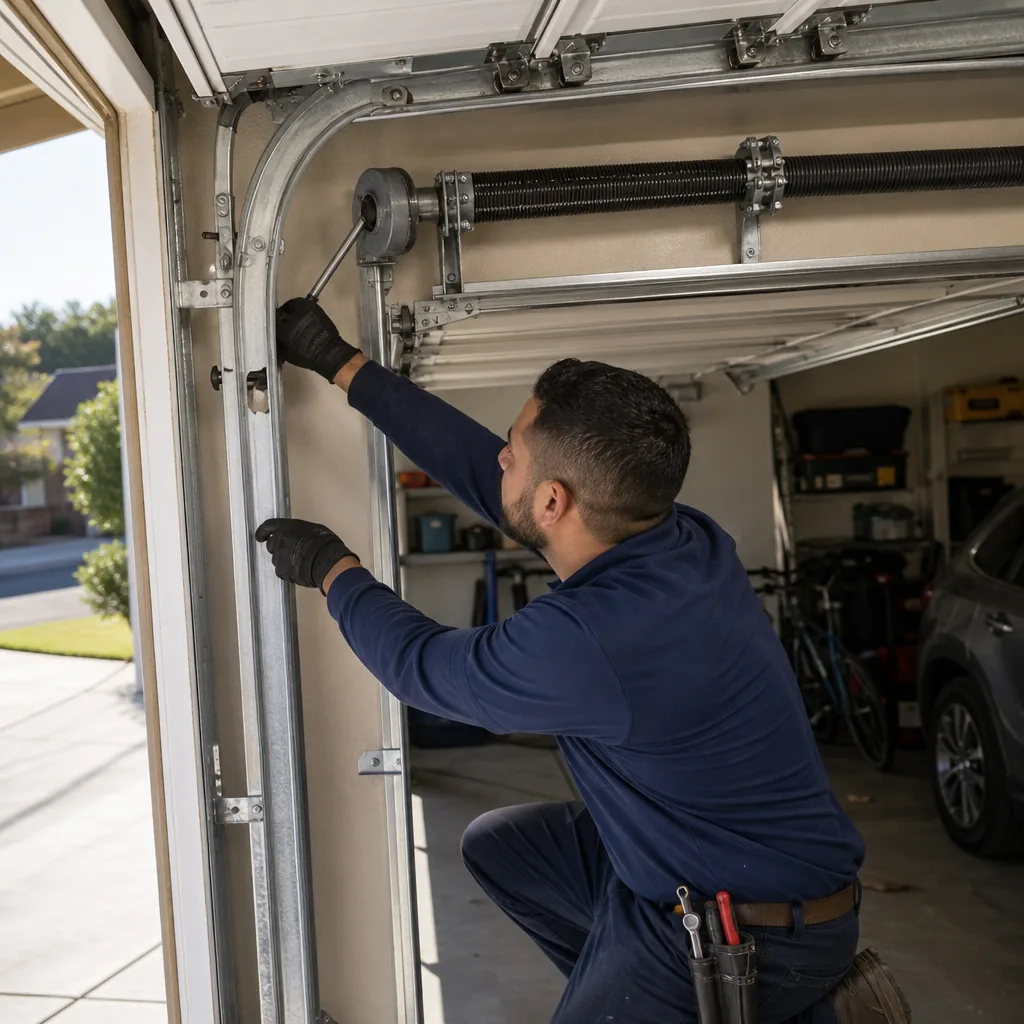 After
AfterGarage Door Repair Maintenance Checklist for El Cajon Homeowners
Most garage door maintenance checklists floating online contain a dangerous error. They tell you to lubricate the entire roller, including the bearing inside the wheel. Do that, and the lubricant attracts dust that grinds the bearing like sandpaper. In El Cajon, where East County dust settles on everything from Santee to Lakeside, that mistake destroys a roller in a single season. We’ve replaced hundreds of rollers at homes in Fletcher Hills and Rancho San Diego where a well-meaning homeowner followed generic advice. This guide shows what you can safely maintain yourself, what requires a trained technician, and how to time each task to the season when it actually matters in our climate. For professional help, see our Garage Door Repair services.
Quick Answer
El Cajon homeowners should perform visual inspections monthly, lubricate hinges and the top rail of the opener chain quarterly with a dry-film lubricant, and test door balance twice yearly. Never adjust springs, cables, bottom brackets, or the opener’s force settings yourself. These four components store lethal tension and cause the majority of serious garage door injuries nationwide.
Table of Contents
- What You Can Safely Do: The Three Homeowner Tasks
- The Four Components You Should Never Touch
- Lubricants That Survive El Cajon’s Dry Heat
- The Two-Minute Balance Test That Catches Spring Failure Early
- Visual Inspection Sequence for Dust and Debris
- Your 12-Month El Cajon Maintenance Calendar
- Common Mistakes to Avoid
- When to Call a Professional
- Frequently Asked Questions
What You Can Safely Do: The Three Homeowner Tasks
After forty-two years in this trade, we’ve learned that homeowners who understand the mechanical reason behind a task perform it better and spot problems sooner. Here are the three maintenance items any El Cajon homeowner can handle without tools or training, plus why each one matters.
1. Visual Inspection of Tracks, Rollers, and Hardware
Garage door tracks are steel channels that guide rollers weighing between two and five pounds each, moving a door that can exceed two hundred pounds. When a track loosens or a roller cracks, the door shifts off-center and strains every other component.
Once a month, with the door closed, scan these items:
- Track mounting brackets: Look for bolts that have backed out from vibration. A loose bracket at the top curve of the track is common in older El Cajon homes near Madison Avenue and Mollison Avenue, where decades of thermal expansion have fatigued the original fasteners.
- Roller condition: Nylon rollers should show no cracks or flat spots. Steel rollers should turn freely without grinding. If a roller sits cocked in the track, the stem is bent and will soon bind.
- Track alignment: The vertical track should plumb straight; the horizontal track should tilt slightly toward the back of the garage. A gap between roller and track on one side indicates the track has shifted.
- Cable wear: Look for fraying, rust blooming, or broken strands at the bottom bracket and drum. Do not touch the cable. Note the condition and call if you see damage.
In our experience, homeowners in El Cajon’s older neighborhoods like Bostonia and Crest notice track issues faster because the original wood frame garages have settled over decades, throwing alignment off gradually.
2. Lubrication of Hinges and Opener Rail
Hinge pins carry the full weight of each door section as it transitions from vertical to horizontal. Without lubrication, the pin grinds against the hinge knuckle, elongating the hole until the door sags and binds.
The safe lubrication points are:
- Hinge pins: The pivot point where the two leaves of the hinge meet. Apply a thin film, wipe excess, and operate the door once to distribute.
- Top rail of the opener chain or screw drive: Not the chain itself on a chain-drive unit, but the rail surface the trolley rides along. On belt drives, the rail needs no lubrication; check your opener manual.
- Weather seal contact points: Where the rubber seal meets the door frame at the sides and top. A light application prevents the seal from sticking and tearing.
Never lubricate the roller bearing inside the wheel. The bearing is sealed; forcing lubricant inside draws in grit. Never lubricate the track. The roller is designed to roll, not slide. Oiled tracks cause rollers to skid and flat-spot.
3. Safety Reversal Test
Federal law since 1993 requires all automatic garage door openers to reverse when encountering an obstruction. The test takes thirty seconds and should be performed monthly.
- Place a 2×4 board flat on the floor, centered under the door path.
- Close the door using the remote or wall button.
- The door should reverse within two seconds of contacting the board.
- If the door stops but does not reverse, or if it crushes the board, the opener’s force setting is misadjusted. Do not attempt to adjust this yourself. The force setting interacts with the spring system; an incorrect adjustment can cause the opener to pull the door off its hardware or damage the motor.
Call a technician. In El Cajon, Garage Door Repair in El Cajon from Mainspring includes force-setting verification on every service call.
The Four Components You Should Never Touch
Every year, approximately 20,000 people in the United States visit emergency rooms for garage door-related injuries. The majority involve springs, cables, bottom brackets, or opener force settings. Here’s why each is dangerous and what the mechanism is doing.
Torsion Springs
A standard seven-foot residential garage door weighs between 150 and 250 pounds. Torsion springs, mounted on a steel shaft above the door, are wound tight to counterbalance this weight. A fully wound spring stores enough torque to lift a small car. When a spring breaks, it unwinds in a fraction of a second with a sound like a gunshot. Attempting to wind or unwind a spring without proper bars and training risks broken fingers, lacerations, and fatalities documented in consumer safety reports.
In El Cajon, we see accelerated torsion spring fatigue in west-facing garages, particularly in neighborhoods like Fletcher Hills where afternoon sun heats the garage interior above 110 degrees for months each year. Heat cycling degrades the steel faster. A spring rated for 10,000 cycles may fail at 7,000 in these conditions.
Extension Springs and Safety Cables
Older homes in El Cajon, especially those built before 1990 in the Bostonia and Magnolia Avenue corridors, may still have extension spring systems. These stretch parallel to the horizontal track and store energy differently. When they break, they can whip across the garage. The safety cable running through the spring is designed to contain this, but the cable itself is under extreme tension and must not be adjusted.
Bottom Brackets
The bottom bracket attaches the cable to the bottom of the door. It is under the full tension of the spring system at all times. Even with the door open and apparently at rest, the springs are loaded. Removing a bottom bracket bolt releases this tension instantly. We have seen doors collapse and cables lash out from this mistake.
Opener Force and Limit Settings
The opener’s internal adjustments control how hard the motor pushes and where it thinks the floor is. These settings are calibrated to the specific door weight and spring condition. A homeowner who “tweaks” the force setting to make a sticking door close may override the safety reversal system entirely. The door will crush an obstruction rather than reverse. This is not a maintenance task. It is a technician calibration.
If your door is not operating correctly, Garage Door Opener in El Cajon service from Mainspring includes full force and limit verification with every repair.
Lubricants That Survive El Cajon’s Dry Heat
The generic advice to “use silicone spray” fails in East County. Silicone lubricants, while safe on most materials, attract and bind dust particles. Within one season of El Cajon’s Santa Ana winds and desert dust intrusion, a silicone-treated hinge becomes a grinding paste of polymer and grit.
We specify and stock two lubricant types for our El Cajon service area:
- Dry-film PTFE (Teflon) spray: Deposits a microscopic solid lubricant layer that does not attract dust. Suitable for hinges, lock mechanisms, and weather seal contact surfaces. Available from hardware suppliers; look for brands specifying “dry film” or “non-oily.”
- Lithium-based grease, light NLGI #1 or #2: For the opener rail on chain-drive and screw-drive units. Stays in place, resists heat degradation up to 350°F, and does not thin out in a hot garage. Apply sparingly; excess serves no purpose.
What to avoid in El Cajon specifically:
- WD-40 as a lubricant: This is a water-displacement solvent, not a lubricant. It evaporates within days and leaves a sticky residue.
- Graphite on exterior hardware: Graphite corrodes aluminum components found in some Clopay and Wayne Dalton track systems.
- Heavy grease on rollers or tracks: Attracts dust, hardens, and causes sliding instead of rolling.
For homeowners who prefer we handle it, our Mainspring Garage Door Co. home page lists the $89 Seasonal Tune-Up, which includes proper lubrication with trade-specified products and full safety testing.
The Two-Minute Balance Test That Catches Spring Failure Early
A properly balanced garage door should stay in place at any position along its travel, supported entirely by the springs, with the opener serving only as a guide. When springs weaken, the door becomes “heavy” and the opener strains. Most homeowners notice only when the opener fails; by then, the opener gears are often damaged and the springs are near breaking.
The balance test reveals spring degradation months before failure:
- Close the door fully.
- Pull the emergency release cord (usually red) to disconnect the opener trolley from the door. The door is now manual.
- Raise the door by hand to waist height, approximately three feet off the floor.
- Release the door smoothly. It should remain in place or drift slowly no more than six inches in either direction.
- Repeat at head height, approximately five feet. Same standard.
- Lower the door to two feet off the floor and release. A slight drift downward is acceptable; rapid fall is not.
What the results mean:
- Door drifts down rapidly from any position: Springs have lost tension. The opener is doing the spring’s work. Schedule service before the opener fails or a spring breaks.
- Door rises on its own from below halfway: Springs are over-tensioned. This strains the opener in the opposite direction and can pull the door off the cable drums.
- Door feels heavy to lift manually: Spring failure is imminent. Do not operate the door except to lower it closed. Call for service.
In El Cajon, we recommend this test in early May and early November. May catches spring fatigue before summer heat stress peaks; November identifies wear before winter temperature swings complete the fatigue cycle. Homes in the warmer pockets near Gillespie Field or the I-8 corridor may need earlier spring testing due to extended heat exposure.
After testing, re-engage the opener by pulling the release cord toward the opener motor while the door is at mid-travel, or by pressing the remote button as the trolley reconnects on most modern units. Consult your opener manual if uncertain.
Visual Inspection Sequence for Dust and Debris
El Cajon’s location at the mouth of Dehesa Valley and proximity to Cleveland National Forest creates unique debris patterns. Santa Ana winds carry chaparral dust, ash from periodic wildfires, and pollen from oak and sage scrub. This material infiltrates garage door components differently than coastal salt air or urban pollution.
Perform this inspection quarterly, ideally before each lubrication cycle:
- Track interior: Wipe with a dry cloth to remove dust buildup. Do not use solvent; residue affects roller traction. Look for black streaks indicating roller bearing grease contamination, which means the roller seal has failed.
- Weather seal (bottom): The rubber or vinyl seal along the door bottom hardens and cracks in dry heat. In El Cajon, UV exposure through west-facing garage door windows accelerates this. A cracked seal admits dust, rodents, and conditioned air loss. Replace when cracks are visible or the seal no longer compresses against the floor.
- Weather seal (sides and top): Brush-style seals common on Clopay and Amarr doors trap dust in the bristles. Vacuum gently with a soft brush attachment. Compressed air drives dust deeper into the mechanism.
- Photo-eye sensors: The two small boxes near floor level on each track send an invisible beam across the door opening. Dust coating either lens breaks the beam and prevents door closure. Wipe lenses with a soft cloth. Check alignment: both sensors should show steady indicator lights (typically green or amber, varies by brand). A blinking light indicates misalignment from vibration or impact.
- Spring and cable condition (visual only): Look for gaps in torsion springs (indicating a broken inner coil), rust flaking on cables, or cable strands protruding like whiskers. Do not touch. Document with a phone photo if needed for the technician.
- Door panel surface and joints: Steel doors: check for rust spots at panel edges and joint seams, common where stone chips from East County roads have damaged paint. Wood doors: check for moisture staining at bottom panels, which indicates seal failure and potential rot. Fiberglass doors: check for UV chalking and surface cracking.
Homes near the El Cajon city limits toward Lakeside and Alpine encounter more rodent activity. Chewed weather seal corners are the first sign. Steel-backed seals resist this but still require inspection.
Your 12-Month El Cajon Maintenance Calendar
Timing maintenance to local climate patterns prevents the most common seasonal failures we see in El Cajon service calls. This calendar maps each task to the month when conditions make it most effective.
| Month | Task | Why This Timing |
|---|---|---|
| January | Post-holiday hardware inspection | Cold nights contract metal; loose bolts from summer heat cycling show as gaps now. Check after holiday storage use peaks. |
| February | Weather seal assessment | Rainfall, though limited, tests seal compression. Identify gaps before spring dust season. |
| March | Full balance test and opener force verification | Moderate temperatures give accurate baseline before summer heat stress begins. |
| April | Track cleaning and roller inspection | Pre-Santa Ana preparation. Remove winter accumulation before wind season. |
| May | Second balance test; lubrication | First heat waves test spring integrity. Catch fatigue before peak summer. |
| June | Photo-eye and safety reversal test | Longest days mean most door cycles. Verify safety systems under maximum use. |
| July | Visual inspection only; no lubrication | Peak heat. Lubricant applied now runs and attracts dust. Inspect, defer treatment to evening if needed. |
| August | Panel and paint inspection | Peak UV exposure reveals coating failure. Address rust spots before fall moisture. |
| September | Post-heat lubrication cycle | Temperatures moderate. Apply dry-film lubricant after summer dust settles. |
| October | Weather seal replacement if needed | Last chance before winter wind and occasional rain. Seal is still pliable from summer warmth. |
| November | Third balance test; hardware torque check | Temperature swings begin. Verify springs survived summer; tighten hardware before contraction cycles. |
| December | Full system review; schedule annual professional tune-up | Holiday guests increase door use. Ensure reliability before peak demand. |
This calendar assumes a standard steel door in typical El Cajon conditions. West-facing wood doors in Bostonia or hillside homes in Fletcher Hills with greater sun exposure may need seal inspection two months earlier. Garage Door Installation in El Cajon from Mainspring includes climate-specific material recommendations for replacement doors.
Common Mistakes to Avoid
- Lubricating the roller bearing: As described above, this draws in dust and destroys the bearing. The roller should spin freely on its own lubrication; if it doesn’t, replace the roller.
- Ignoring a slow-opening door: Homeowners often adapt to gradual slowing, blaming the opener. In most cases, weakening springs are the cause. The opener works harder, overheats, and fails prematurely. A $200 spring replacement ignored becomes a $600 opener replacement.
- Using the emergency release improperly: Pulling the red cord with the door open and no one supporting it causes free-fall. The door can slam shut with crushing force. Always close the door before disengaging the opener, or have two people support it.
- Pressure-washing the door or weather seals: High-pressure water drives grit into bearings, delaminates wood door surfaces, and forces water behind seals. In El Cajon’s dry climate, trapped moisture then evaporates slowly, promoting rust and rot.
- Adjusting the opener limit switches to compensate for a sticking door: This masks mechanical problems and creates safety hazards. The door should travel freely before any electronic adjustment is considered.
- Neglecting the photo-eye alignment after minor bumps: Garbage cans, bikes, and storage items knock sensors out of alignment constantly. A door that reverses for no apparent reason is almost always this, not a failing opener.
- Waiting for a spring to break: A broken torsion spring often damages the cable, bottom bracket, and sometimes the door panel. The balance test catches weakening springs. Scheduled replacement costs less than emergency repair with collateral damage.
When to Call a Professional
Call a qualified technician when you observe: a door that fails the balance test; any fraying or rust on cables; a broken spring or gap in a torsion spring coil; a door that reverses inconsistently or not at all; grinding, popping, or squealing that persists after proper lubrication; a panel that has separated from its hinges; or any opener behavior that changed suddenly.
Carl Dutton and the team at Mainspring Garage Door Co. have served El Cajon since 2016, building on a company foundation dating to 1984. We answer calls with a live person 24 hours a day, arrive with springs, cables, and openers on the truck, and state the flat price before any work begins. Our 90-Day Done Right Promise covers every completed job in writing. For maintenance beyond your comfort level, or for a professional assessment of anything this checklist reveals, see How to Hire a Garage Door Contractor in El Cajon: A Step-by-Step Guide. Mainspring offers free estimates in El Cajon. Call (619) 853-0087.
Frequently Asked Questions
Quarterly lubrication of hinges and opener rail is sufficient for most El Cajon homes; monthly is excessive and accumulates residue. Apply dry-film PTFE lubricant in March, June, September, and December, with a visual inspection only in July when peak heat causes lubricant migration.
No. Torsion springs store lethal energy and require specialized winding bars, training, and physical technique. The Consumer Product Safety Commission documents serious injuries and fatalities from DIY spring work annually. This is not a cost-saving opportunity; it is a hazard that warrants professional handling.
Metal expansion from heat, dried lubricant, and dust infiltration are the three primary causes. In El Cajon, afternoon garage temperatures regularly exceed 120 degrees, expanding steel tracks and altering roller fit. Lubricant formulated for cooler climates thins and runs. Combined with Santa Ana dust, these factors amplify every mechanical sound. A seasonal tune-up with heat-appropriate products addresses all three.
Mainspring Garage Door Co. offers a $89 Seasonal Tune-Up that includes full inspection, proper lubrication with trade-specified products, safety reversal and balance testing, and written condition assessment. Repairs identified during tune-up are quoted upfront with no obligation. Seniors and veterans receive a permanent 5% discount. Call (619) 853-0087 to schedule.
A steel door with standard maintenance lasts 20 to 30 years in El Cajon; the primary limiters are UV degradation of exterior finish and seal hardening from dry heat. Wood doors last 15 to 20 years with diligent sealing but require more frequent panel replacement. The opener mechanism typically lasts 10 to 15 years depending on cycle count and spring condition.
Permit requirements depend on whether the replacement involves structural modification to the opening or electrical work for the opener. Like-for-like door replacement on existing hardware generally does not require permitting, but El Cajon’s building division can confirm for specific projects. Mainspring handles permit coordination when required for Garage Door Installation in El Cajon.
A balanced door stays in place when released at any height between fully open and fully closed. Perform the two-minute test described in this guide: disconnect the opener, raise to waist height, and release. If the door holds position, springs are properly tensioned. If it drifts more than six inches, springs need professional adjustment or replacement.
The Bottom Line
Honest garage door maintenance separates what a homeowner can safely accomplish from what requires a trained technician with the right tools. The three safe tasks, visual inspection, hinge lubrication, and safety reversal testing, prevent most common failures when performed on schedule. The four forbidden components, springs, cables, bottom brackets, and opener force settings, cause serious injury because they store energy that releases without warning. In El Cajon’s dry, dusty, thermally extreme climate, product choice and seasonal timing matter as much as the tasks themselves. Use dry-film lubricants, test balance before summer peak, and inspect seals before Santa Ana season. When a task exceeds your comfort or the checklist reveals a problem, professional service with upfront pricing and written guarantees exists for exactly that reason. Explore more guides & resources on our blog.
Written by Carl Dutton, Owner at Mainspring Garage Door Co., serving El Cajon since 2016.