
Last updated September 10, 2026
Full 25-point door and opener safety check with every visit - springs, cables, rollers, tracks, and your LiftMaster or Chamberlain opener included
You get a price before we start. It does not change when the truck arrives.
 Before
 After
After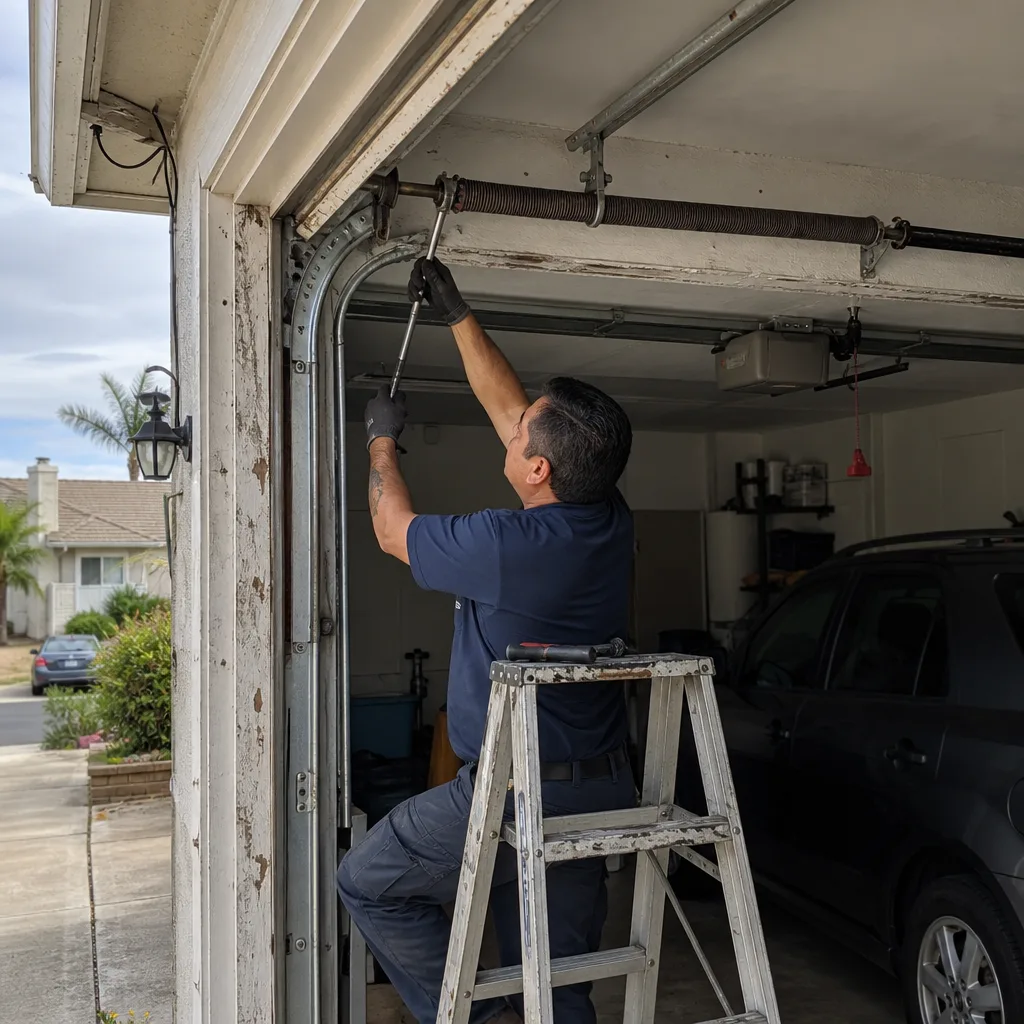 Before
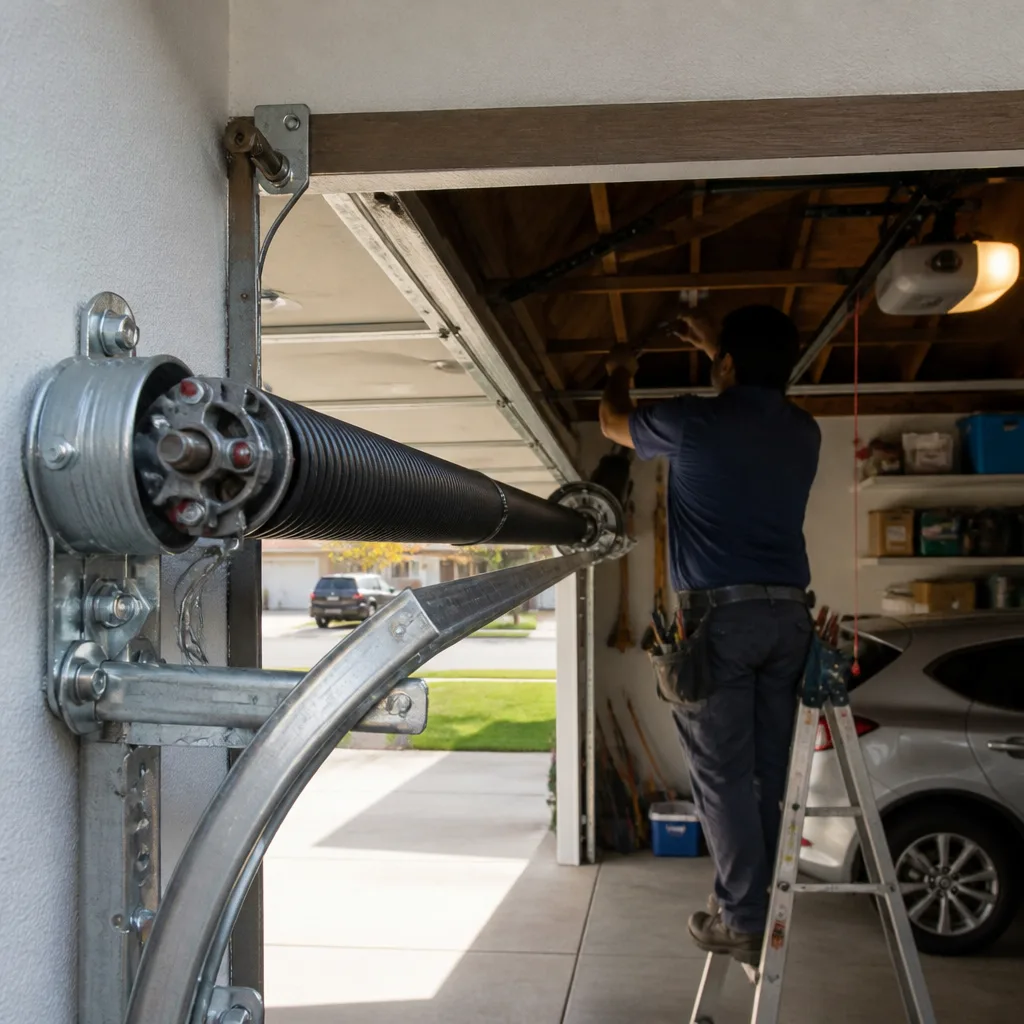 After
After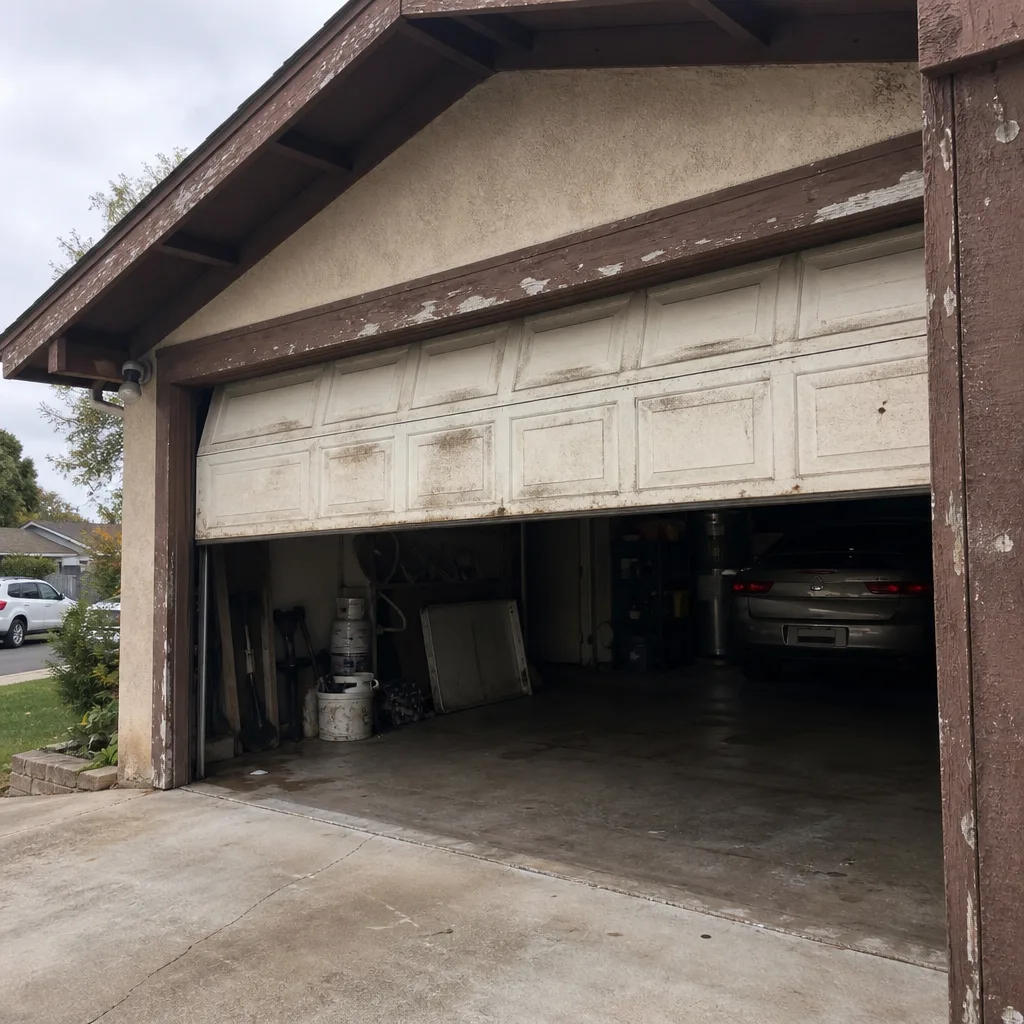 Before
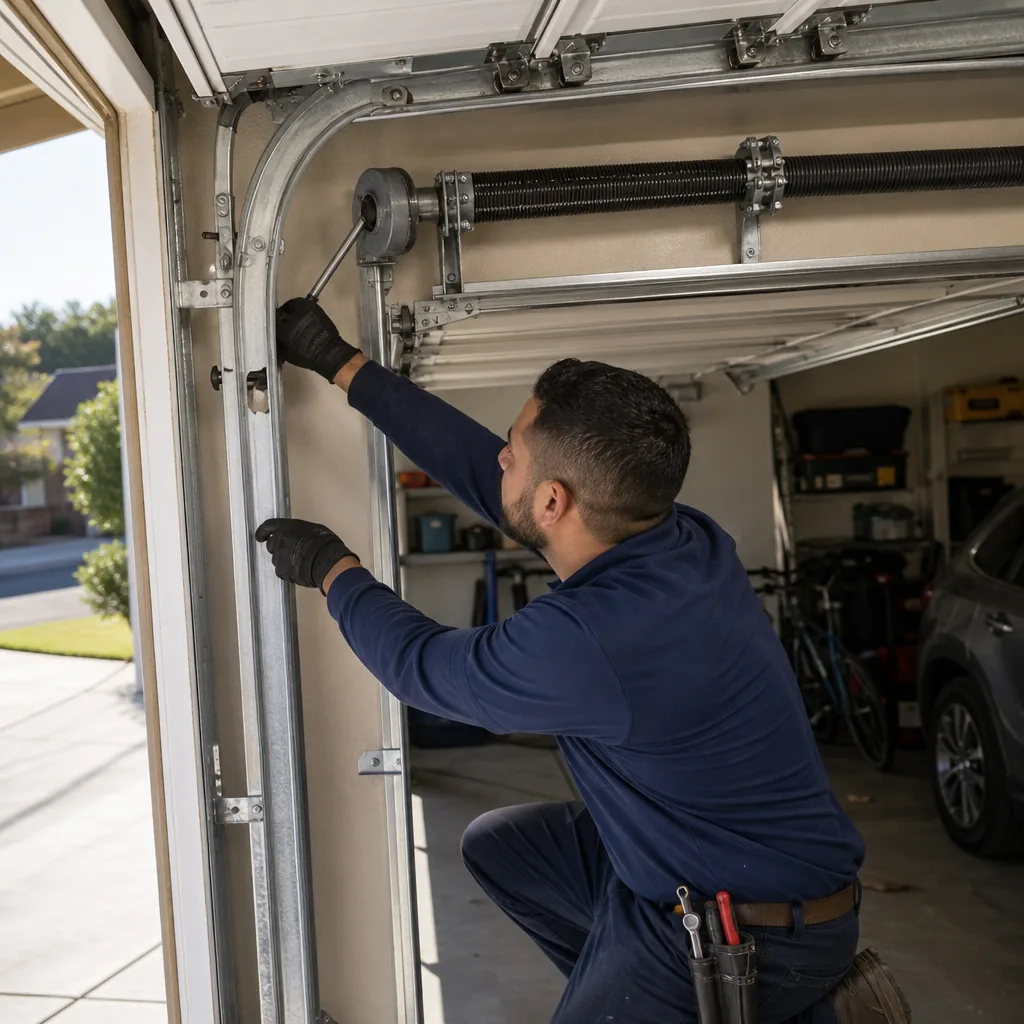 After
AfterHow to Hire a Garage Door Contractor in El Cajon: A Step-by-Step Guide
California requires every garage door contractor to carry a C-61/D28 specialty license, yet fewer than half the trucks pulling into El Cajon driveways can produce one when asked. In 42 years of serving San Diego’s East County, we’ve seen homeowners learn this lesson the hard way: a broken spring turns into a second breakdown, a botched installation, or a bill that doubles once the work is done. This guide - along with our Complete Guide to Garage Door in El Cajon - shows you exactly how to verify credentials, ask the right questions on the phone, read a contract, and spot the red flags that cost your neighbors thousands.
Quick Answer
To hire a garage door contractor in El Cajon, verify an active C-61/D28 license on the CSLB website, confirm general liability and workers’ compensation insurance, demand a written upfront quote before any work begins, and ask how parts and labor warranties are structured. A legitimate contractor answers these questions directly; evasion is your signal to keep looking.
Table of Contents
- How to Verify a C-61/D28 License in Under 60 Seconds
- Four Questions to Ask on the Phone Before You Schedule
- Why a Written Upfront Quote Is Your Legal Protection
- How to Read a Garage Door Warranty Like a Pro
- Bait-and-Switch Tactics Common in San Diego County
- El Cajon-Specific Considerations: Climate, Codes, and Neighborhoods
- Common Mistakes to Avoid
- When to Call a Professional
- Frequently Asked Questions
- The Bottom Line
How to Verify a C-61/D28 License in Under 60 Seconds
The C-61/D28 classification is California’s specialty license for garage door and automatic gate work. It is not a general contractor’s license. It is not a handyman exemption. Any company installing, repairing, or replacing garage doors in El Cajon must carry this specific classification, and the license must be held by either the owner or a designated RME (Responsible Managing Employee) who actively supervises the work.
Here is the exact process, start to finish:
- Go to cslb.ca.gov/OnlineServices/CheckLicenseII/
- Enter the contractor’s six- or seven-digit license number. Do not accept “we’re working on it” or “the owner has it.” A valid license is active now or it is not valid.
- Check three fields on the resulting page:
- Status: Must read “Active.” Suspended, expired, or cancelled means stop.
- Classification: Must include C-61/D28. A C-10 electrical or B general does not cover garage door work.
- Workers’ Compensation: Must show “Exempt” only if the licensee has no employees. If workers are present, this field must show active coverage. In California, uninsured workers on your property create liability that attaches to your homeowner’s policy.
- Cross-reference the business name. Some operators borrow or rent a license number that does not match the truck in your driveway. The CSLB page shows the legal entity name; if it differs from the company you called, ask why.
In El Cajon, we have encountered situations where a crew arrives in an unmarked truck, produces a license number that checks out, but the CSLB listing shows a different business name registered in Los Angeles or Riverside County. This is a common arrangement in the garage door trade: a licensed holder “rents” their number to unqualified operators for a monthly fee. It is legal in a narrow sense, but it means the person actually doing your work has never been vetted by the state.
The fix is simple. When you call, ask: “Is your C-61/D28 license held in the same business name I’m speaking with?” Then verify it yourself. The entire process takes less than a minute, and it eliminates more bad actors than any other single step.
Four Questions to Ask on the Phone Before You Schedule
A legitimate garage door contractor in El Cajon answers these four questions without hesitation, deflection, or a callback promise. Evasive answers are not neutral; they are information, and the information is “keep calling.”
Question 1: “What is your C-61/D28 license number, and in what name is it held?”
A direct answer sounds like: “License 123456, held by ABC Garage Door Inc., you can verify it on the CSLB site.” An evasive answer sounds like: “Oh, we’ve been in business 20 years, we have all the proper licensing,” or “The owner has that, let me have him call you back.” The first is transparency. The second is a stall tactic, and stalls in this industry usually hide something worth hiding.
Question 2: “Will your technician provide a written quote before starting any work?”
California’s Home Improvement Contract law requires a written contract for jobs over $500, but the best contractors treat every service call the same way: diagnose, quote, obtain written or verbal approval, then begin work. If the answer is “we’ll see when we get there” or “the tech has to evaluate it first,” you are opening yourself to the classic bait-and-switch. A flat, upfront price stated before the wrench turns is the standard of a shop that stands behind its work.
At Mainspring Garage Door Co., we state the full price before any work begins. No exceptions. The price on the quote is the price on the bill.
Question 3: “Do you carry general liability and workers’ compensation insurance, and will you provide certificates?”
General liability covers damage to your property. Workers’ compensation covers injury to employees. In California, if a worker is injured on your property and the contractor lacks coverage, your homeowner’s insurance may be drawn into litigation. A legitimate contractor emails certificates within minutes of request. A hesitant contractor has something to lose by sending them.
Question 4: “What is your warranty on parts and labor, and is it in writing?”
Listen for specificity. “One year on everything” is vague. “90 days labor, manufacturer’s warranty on parts, detailed in writing on every invoice” is specific. The structure matters more than the duration, as the next section explains in detail.
Red flag answers to all four questions include: pressure to schedule before answering, refusal to provide license or insurance details, claims that “licensing doesn’t matter for small jobs,” or any suggestion that you should “trust” rather than verify. Trust is built after verification, not before.
Why a Written Upfront Quote Is Your Legal Protection
California Business and Professions Code Section 7159 governs home improvement contracts. For any garage door repair, installation, or replacement over $500, the contractor must provide a written contract containing: the contractor’s name, address, and license number; a description of the work; the total contract price; and a notice of your three-day right to cancel. But the legal minimum and the practical protection are two different things.
A written upfront quote - provided before work begins, not after the door is disassembled - serves three functions beyond the legal requirement:
- It prevents scope creep. The technician who quotes $189 for a spring replacement cannot ethically bill $450 because “the springs were heavier than expected.” The springs are known before the work starts. Their weight, length, and inner diameter are measured in 30 seconds.
- It creates a paper trail. If the finished work fails or the contractor disappears, your written quote is evidence in small claims court or a CSLB complaint. Verbal quotes evaporate.
- It signals organizational competence. A shop that can price accurately before starting has done the job enough times to know what it takes. A shop that cannot price until afterward is either inexperienced or deliberately opaque.
In El Cajon, the garage door repair market includes operators who advertise low dispatch fees - sometimes $29 or $39 - then discover “additional problems” once on site. The written upfront quote neutralizes this tactic entirely. If the quote is $189 and the tech claims additional issues, your response is simple: “Please stop. I’ll pay the quoted amount and seek a second opinion.” A contractor with nothing to hide will respect this. A contractor running a scam will become aggressive or threatening. Either reaction tells you what you need to know.
The quote should also specify whether sales tax is included, whether haul-away of the old door is covered, and whether permit costs are the homeowner’s responsibility. In El Cajon, garage door replacements on existing openings typically do not require permits, but structural modifications - widening an opening, converting to a roll-up on a detached structure - may trigger a permit with the City of El Cajon Development Services Department. A contractor who knows local code will flag this proactively.
How to Read a Garage Door Warranty Like a Pro
Warranty language separates into two categories: parts and labor. Most homeowners assume they are bundled. Often they are not, and the separation is deliberate.
Parts Warranties
Parts warranties come from the manufacturer, not the installer. A torsion spring might carry a 3-year, 5-year, or lifetime warranty from the manufacturer. But “lifetime” rarely means your lifetime. Read the definition: it may mean the original purchaser’s lifetime, the original homeowner’s lifetime, or the product’s “useful life” as determined by the manufacturer. Transfer to a subsequent homeowner is often excluded or requires registration within 30 days of installation.
Brand-specific examples we encounter in El Cajon:
- Clopay and Amarr door panels typically carry limited lifetime warranties on the original purchaser, with prorated coverage after year 10.
- LiftMaster and Chamberlain opener motors often carry lifetime motor warranties but 1-5 years on electronics, with separate terms for belt, chain, and rail components.
- Craftsman warranties vary by retail channel; Sears-issued warranties differ from those sold through independent dealers, and documentation requirements are stricter.
The critical question for your contractor: “Will you register the warranty on my behalf, and will you provide the registration confirmation?” Unregistered warranties are often voided. A shop that handles this as standard practice is a shop that plans to be around when claims arise.
Labor Warranties
Labor warranties come from the installer and cover the quality of the work: proper spring tension, correct track alignment, secure opener mounting. This is where many contractors limit exposure. Common structures include:
- 30 days: Barely covers the settling period. A spring installed with incorrect tension may fail in 45 days; the homeowner eats the cost.
- 90 days: Industry standard for repair work. Covers installation defects that manifest quickly, excludes normal wear.
- 1 year: Common for new installations. Suggests confidence in the work but read exclusions carefully.
At Mainspring Garage Door Co., our 90-Day Done Right Promise covers every completed job: if it is not right, we return at no charge, in writing, with no dispute process. The promise is not a warranty in the legal sense; it is a broader commitment. “Not right” includes your judgment, not just ours. If the door runs louder than you expected, if the opener light behaves oddly, if anything feels unfinished - we return. This is rare in the trade, and we state it on every invoice because we have stood behind it since 1984.
Red flag: a contractor who offers a “lifetime warranty” on labor but has been in business 18 months. The warranty is only as good as the company backing it. Verify longevity through the CSLB license history, which shows original issuance date, or through the Secretary of State business entity records.
Bait-and-Switch Tactics Common in San Diego County
The San Diego County District Attorney’s Consumer Protection Unit has documented consistent patterns in garage door contractor complaints over the past decade. Understanding these patterns inoculates you against them. Here are the four most common, with El Cajon-specific context.
Tactic 1: The Low Dispatch Fee
An advertisement promises “$29 service call” or “$39 tune-up.” The technician arrives, inspects the door, and discovers “dangerous conditions” requiring immediate repair: frayed cables, worn rollers, misaligned tracks. The $39 call becomes a $687 invoice. The original condition was either fabricated or exaggerated.
In El Cajon’s older neighborhoods - specifically the homes built between 1950 and 1980 in areas like Bostonia and Crest - original hardware is often genuinely worn, which is why seasonal garage door care for El Cajon matters year-round. This creates cover for the tactic: the technician points to real wear, inflates the urgency, and bundles unnecessary replacements. The homeowner, seeing actual rust or fraying, assumes the diagnosis is honest.
Defense: Obtain a written quote for the full scope before approving any work. For a second opinion, Mainspring Garage Door Co. offers a Free Second Opinion on any written estimate. Bring us the other contractor’s quote; we’ll tell you what is necessary, what is preventive, and what is unnecessary.
Tactic 2: The Spring Count Switch
Your door has one broken spring. The technician recommends replacing both, or claims your single-spring system “must” be converted to a dual-spring system. Sometimes dual springs are correct; many heavier doors use them for balanced lifting. But the recommendation should be based on door weight and cycle life calculations, not a blanket rule. A 9×7 steel door under 150 pounds runs fine on a single properly sized spring. A 16×8 custom wood door needs two.
Ask: “What is the weight of my door, and what cycle life is the replacement spring rated for?” A technician who cannot answer with numbers is selling, not diagnosing.
Tactic 3: The Opener Oversell
The technician claims your opener is “too old to repair” and must be replaced. In reality, most opener issues are circuit board, gear, or safety sensor problems fixable for $150-$300. A new LiftMaster or Chamberlain belt-drive unit runs $400-$700 installed. The replacement recommendation should come after failed repair attempts, not as the first suggestion.
For garage door opener service in El Cajon, a proper diagnostic includes testing the force settings, safety reverse, travel limits, and logic board error codes. Any of these may reveal a $45 sensor realignment rather than a full replacement.
Tactic 4: The Phantom Brand
The technician installs a door or opener branded with a name you’ve never heard, claiming it is “just as good as” the major manufacturers. Often these are private-label imports with no U.S. service network, no parts availability, and warranty terms enforceable only through the installer - who may not be in business next year. In El Cajon, we’ve encountered “builder special” doors installed by developers in the 2000s that cannot be matched or repaired because the manufacturer dissolved.
Insist on factory-familiarity with established brands. At Mainspring, we work with LiftMaster, Chamberlain, Genie, Clopay, Amarr, Wayne Dalton, Craftsman, and Raynor because parts are available, warranties are backed, and you are not locked to a single installer for future service.
El Cajon-Specific Considerations: Climate, Codes, and Neighborhoods
El Cajon’s geography and climate create conditions that affect garage door performance and contractor selection in ways that generic guides miss.
Heat and Thermal Cycling
El Cajon sits in a valley where summer temperatures regularly exceed 95°F, with garage interiors reaching 110°F or higher. Steel doors expand and contract dramatically. Springs lose tension in heat and regain it in cooler months. This thermal cycling accelerates wear on rollers, hinges, and opener drive gears. A contractor who does not account for this in spring selection - choosing a higher cycle rating or adjusting tension for seasonal variation - is installing for failure.
In the Fletcher Hills area and along the I-8 corridor, we’ve seen spring life reduced by 30% compared to coastal San Diego due to heat alone. We specify springs rated for 15,000-20,000 cycles in these locations rather than the standard 10,000.
Santa Ana Wind Exposure
El Cajon’s eastern and northern exposures, particularly in neighborhoods bordering the Cleveland National Forest, experience Santa Ana wind events that exert lateral pressure on garage doors. Doors with weak horizontal reinforcement or deteriorated weatherstripping can bow, bind, or pop out of track. A contractor should inspect wind load rating on replacement doors and recommend reinforcement struts for wide doors in exposed locations.
Soil and Foundation Movement
Parts of El Cajon, including the Granite Hills and Rancho San Diego adjacencies, sit on expansive clay soils that shift with moisture. Garage door frames settle unevenly. A contractor who installs a new door without checking frame squareness - measuring diagonal corner-to-corner - is setting up binding and premature roller wear. We check this on every garage door installation in El Cajon, and we shim or rebuild jambs when needed rather than forcing a square door into a crooked frame.
Local Code and Permit Nuances
The City of El Cajon follows the 2022 California Building Code with local amendments. Garage door replacements on existing openings generally do not require permits. However, new construction, structural modifications, or conversions of carports to enclosed garages do. Fire-rated doors are required for doors opening into living spaces (common in attached garage conversions in the older Bostonia housing stock). A contractor unfamiliar with these distinctions can create code violations that complicate future home sales.
Neighborhood-Specific Hardware Patterns
Understanding what was originally installed in your El Cajon neighborhood helps anticipate what needs replacement:
- Bostonia and central El Cajon (pre-1980): Often original one-piece tilt-up doors or early sectional steel with 1/3 HP openers. Upgrades to modern insulated sectional doors usually require header reinforcement and electrical updates.
- Fletcher Hills (1960s-1990s): Mix of steel sectional and early aluminum doors. Many original openers are chain-drive Craftsman or Raynor units still functional but loud and lacking modern safety features.
- Rancho San Diego and newer developments: Standard 16×7 insulated steel with belt-drive openers, but developer-grade hardware (budget rollers, minimal struts) often needs upgrading within 5-7 years.
Common Mistakes to Avoid
- Hiring based on the lowest phone estimate. An estimate given without seeing the door is a guess, not a quote. The lowest guess often becomes the highest final bill once “unforeseen issues” appear. Get written, on-site quotes from three contractors and compare scope, not just price.
- Skipping license verification because “it’s just a repair.” California requires the C-61/D28 for any garage door work, including spring replacement. Unlicensed operators cannot pull permits, carry proper insurance, or be held accountable through the CSLB complaint process. Your recourse disappears with them.
- Accepting verbal warranties. “Don’t worry, we’ll take care of you” means nothing when the technician’s phone goes to voicemail. Every warranty term - parts, labor, duration, exclusions, transferability - belongs in writing on the invoice or contract.
- Ignoring the truck and uniform. Unmarked vehicles, out-of-state plates, and technicians without company identification suggest transient or subcontracted labor. Background-checked, uniformed technicians are standard practice for established shops; their absence is a signal, not a savings.
- Paying in full before completion. California limits down payments to 10% or $1,000, whichever is less, for home improvement contracts. A contractor demanding full payment upfront - especially in cash - is operating outside legal bounds and likely planning to disappear.
- Neglecting to ask about parts stocking. A contractor who must order springs or openers creates a second appointment, a second day of inconvenience, and a security gap with your garage unsecured. Trucks stocked with common springs, cables, rollers, and openers complete most jobs in a single visit.
- Failing to check local reputation specifically. A contractor with strong reviews in Orange County may have no presence in El Cajon. Search “[company name] El Cajon” specifically, and check Nextdoor or local Facebook groups where neighbors discuss actual experiences, not just Google reviews.
When to Call a Professional
Some garage door issues are maintenance items a homeowner can handle: lubricating hinges and rollers with silicone-based spray, clearing track debris, testing the manual release. Others require trained technicians due to genuine danger. If you’re unsure which category applies, see our DIY vs Professional Garage Door guide for El Cajon homeowners.
Call a professional immediately for: broken torsion or extension springs (high-tension components that can cause severe injury or death if mishandled); cables off the drum or frayed to the point of visible wire separation; doors that have come out of the horizontal tracks (structural instability risk); openers that run but the door does not move (stripped gears or broken couplings); or any situation where the door is stuck open and your home’s security is compromised.
At Mainspring Garage Door Co., we answer calls with a live person 24 hours a day, including nights, weekends, and holidays. No phone trees, no voicemail, no after-hours answering service. Most repairs are completed in a single visit because our trucks carry the necessary parts. We offer free estimates in El Cajon - call (619) 853-0087 to speak with us directly.
Frequently Asked Questions
Most standard repairs in El Cajon range from $150 to $400, with spring replacements typically falling between $180 and $340 depending on door weight and spring type. Opener repairs average $150 to $300, while full door replacements start around $1,200 for standard steel sectional doors and rise with insulation, window packages, and custom sizing. Call (619) 853-0087 for an exact quote - estimates are free, and the price is stated before any work begins.
You can and should verify every license yourself on the CSLB website at cslb.ca.gov. The process takes under 60 seconds and requires only the six- or seven-digit license number. Any contractor who discourages this verification is telling you something important about their operation.
A parts warranty is issued by the manufacturer and covers defects in the door, spring, or opener itself. A labor warranty is issued by the installer and covers the quality of the installation: correct spring tension, proper track alignment, secure mounting. They often have different durations and different claim processes. Always get both in writing, and understand who handles each claim.
Get three written quotes for the same scope of work and compare line by line. Be specific: “Replace one broken torsion spring on a 16×7 steel door, including cables and rollers if needed.” Vague scopes invite variable pricing. Our Free Second Opinion on any written estimate lets you bring us a competitor’s quote for direct comparison - no obligation, no pressure. For more guides & resources, visit our blog.
On a dual-spring system, yes - the unbroken spring has the same cycle life as the broken one and will fail soon. On a single-spring system, replacement of the one spring is correct unless the door weight or usage pattern has changed significantly. A technician should measure door weight and explain the recommendation with numbers, not insist on dual springs for every door.
Replacement of an existing garage door on an existing opening typically does not require a permit in El Cajon. New construction, structural modifications to the opening, or conversion of carports to enclosed garages do require permits through the City of El Cajon Development Services Department. A knowledgeable contractor will identify permit requirements during the estimate and handle filing if needed.
The Bottom Line
Hiring a garage door contractor in El Cajon comes down to verification before trust: a verified C-61/D28 license, verified insurance, a written upfront quote, and a warranty structure you understand completely. The contractors who resist these steps are not merely casual; they are counting on your reluctance to ask. The ones who answer directly, document everything, and stand behind the work in writing - those are the shops that will still be in town when you need them again.
We have served San Diego’s East County since 1984, and we have built the business on the promise that you will never have to think about your garage door again. That starts with a square deal on the first call.
Call (619) 853-0087 to speak with a live person, 24 hours a day. Ask us the four questions in this guide. We will answer every one directly, verify anything you need, and provide a free, written, no-surprise estimate before any work begins. Senior and veteran discounts of 5% apply automatically. Our $89 Seasonal Tune-Up and $50 Off Any Repair Over $250 are always available - no expiration, no gimmick.
Written by Carl Dutton, Owner at Mainspring Garage Door Co., serving El Cajon since 2016.