
Last updated September 10, 2026
Full 25-point door and opener safety check with every visit - springs, cables, rollers, tracks, and your LiftMaster or Chamberlain opener included
You get a price before we start. It does not change when the truck arrives.
 Before
 After
After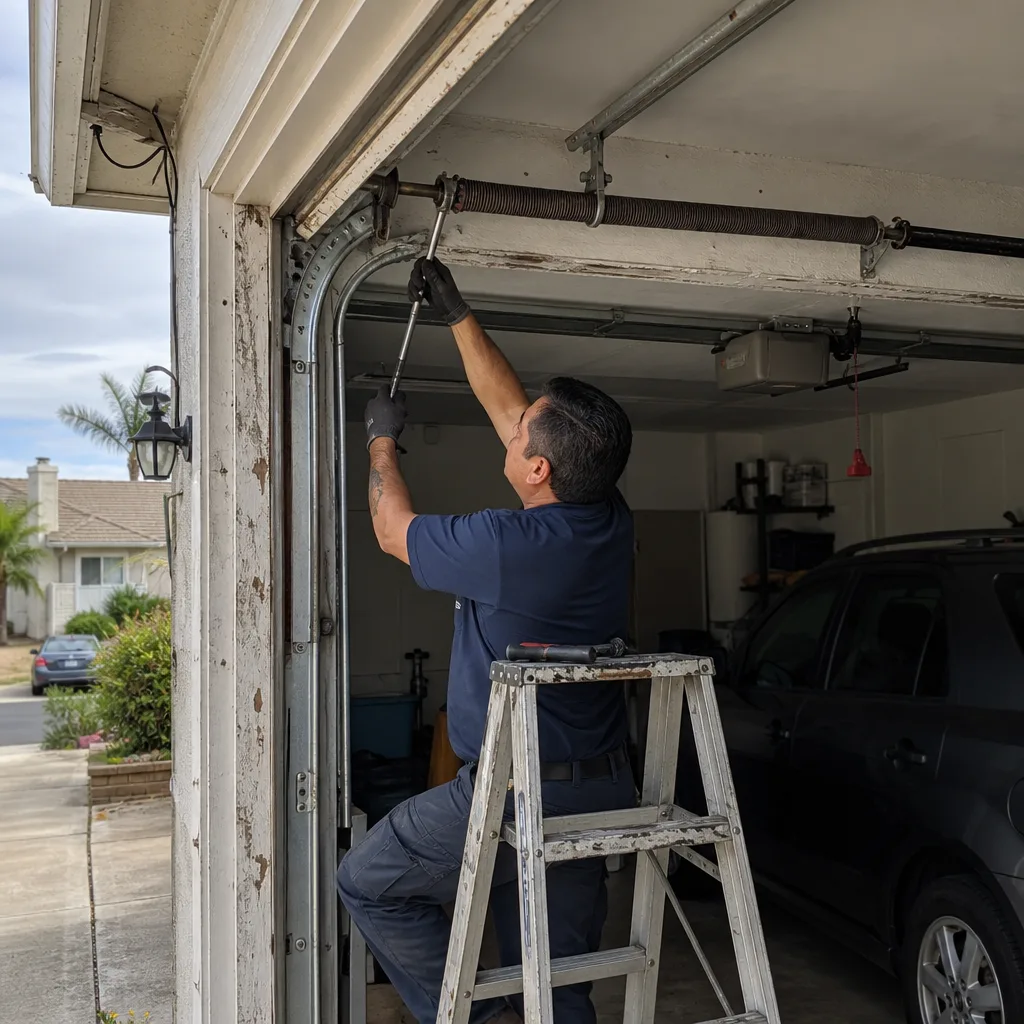 Before
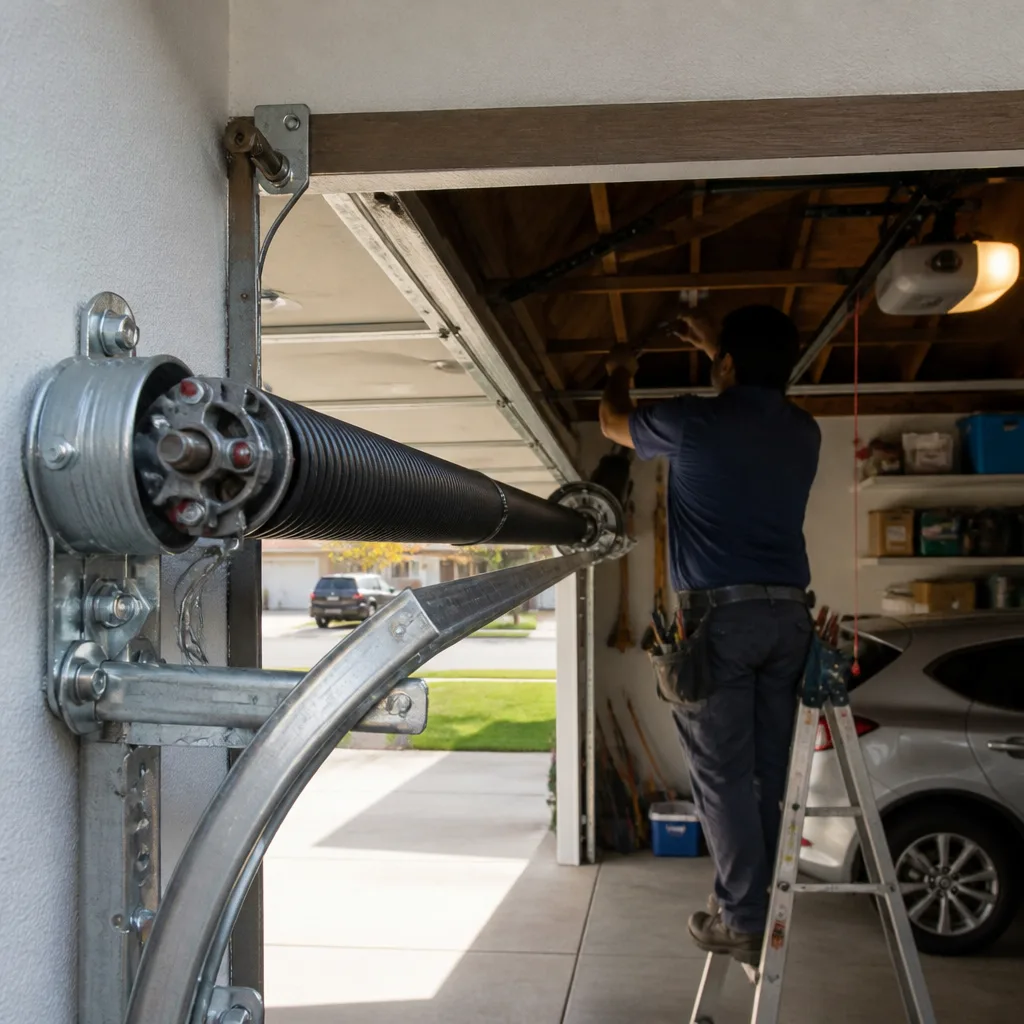 After
After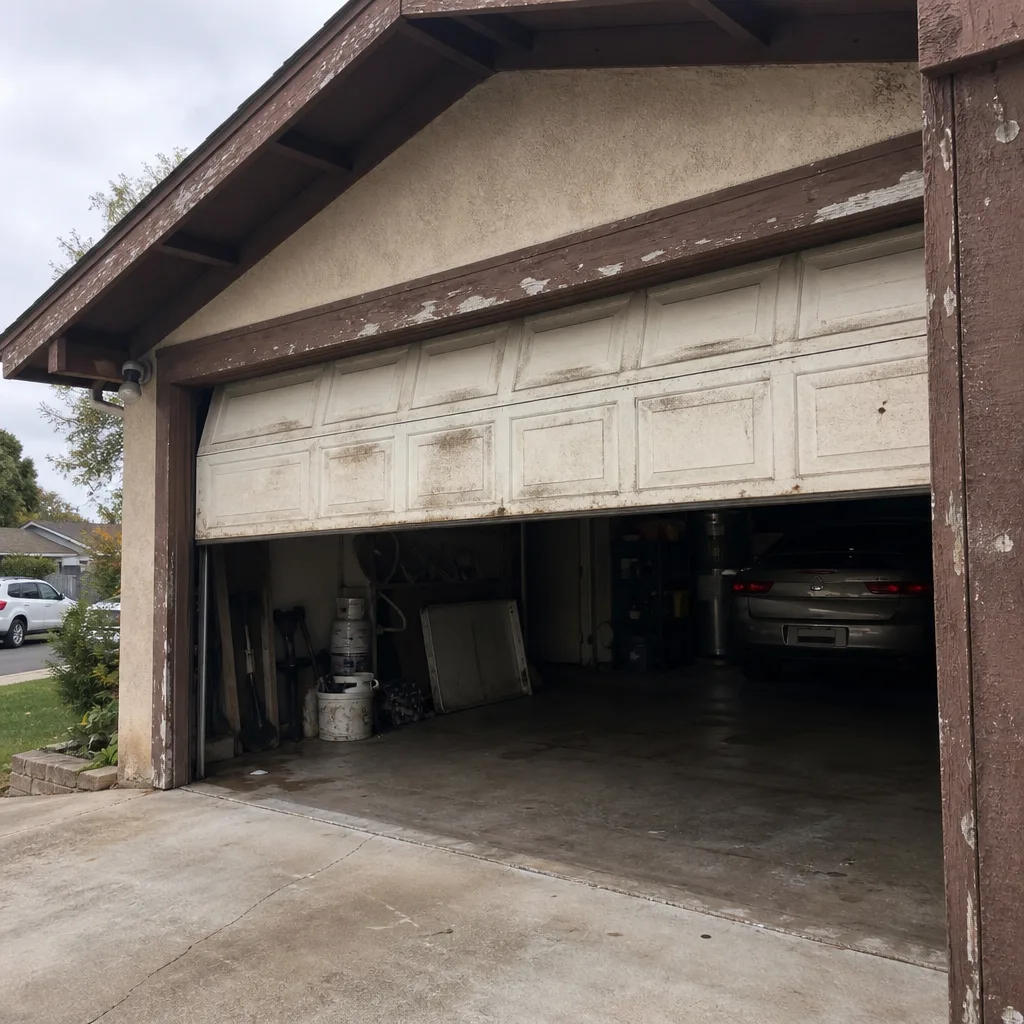 Before
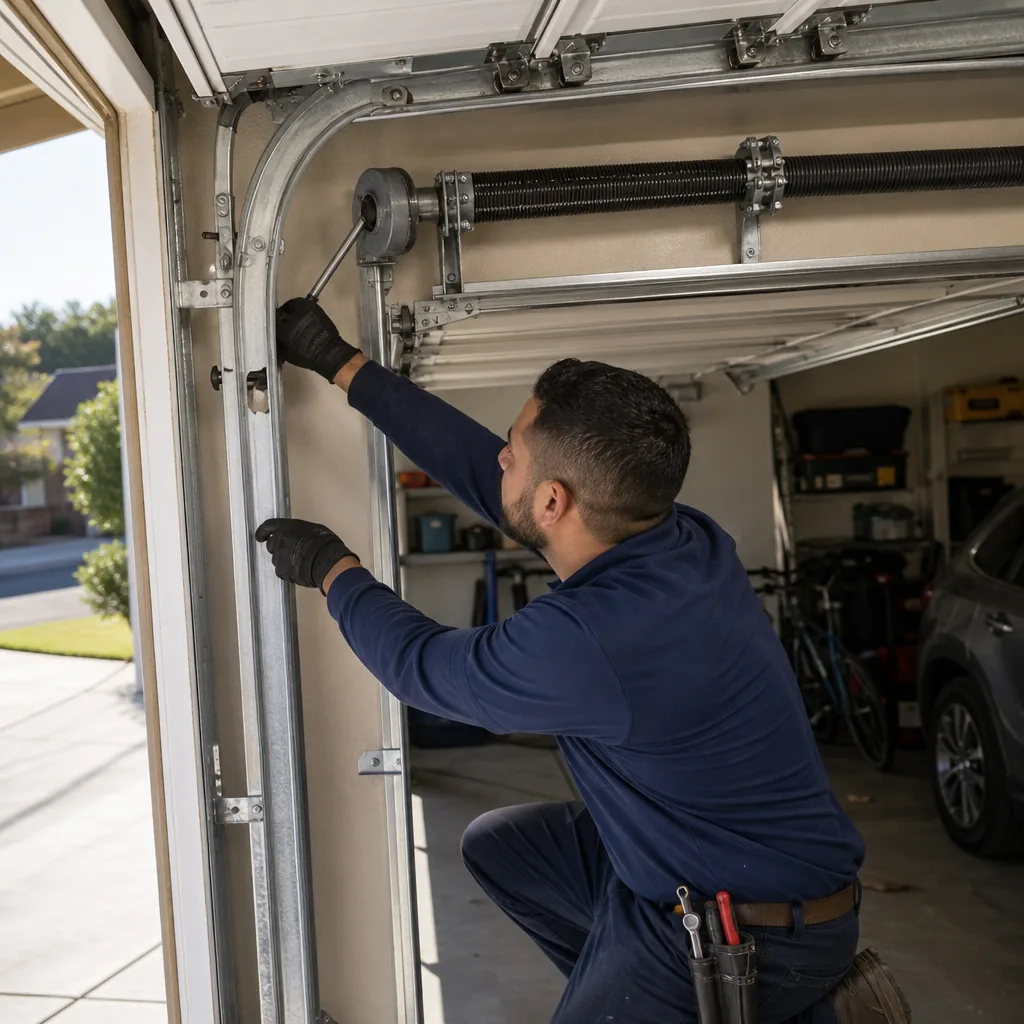 After
AfterThe Complete Guide to Garage Door in El Cajon
The average El Cajon home was built before 1985. That means its garage door system, engineered for a spring life of roughly 10,000 cycles, likely expired years ago. Most owners never notice until the door slams shut at 6 a.m. or refuses to budge before a doctor’s appointment. In this guide, we’ll cover what actually matters for El Cajon homeowners, with more guides & resources available on related topics: how inland heat destroys components faster than coastal climates, why East County tract homes carry specific spring configurations, and how to read the signs of failure before you’re trapped inside or locked out.
Quick Answer
A well-maintained garage door in El Cajon should open smoothly and quietly, seal against dust and heat, and carry a spring system matched to the door’s weight and your household’s daily use. Given El Cajon’s 95°F+ summers and older housing stock, homeowners should inspect weatherstripping and spring tension twice yearly, replace springs every 7-10 years regardless of apparent condition, and choose insulation rated for inland heat rather than mild coastal conditions.
Table of Contents
- How El Cajon’s Climate Wears Down Garage Doors Faster Than Coastal San Diego
- Torsion vs. Extension Springs in East County Tract Homes
- What Insulation R-Value Actually Matters in El Cajon
- How to Read the Manufacturer Data Plate on an Older Door
- Matching a New Opener to Your Existing Door
- The Permit Trigger That Surprises El Cajon Homeowners
- A Maintenance Schedule That Fits El Cajon Conditions
- When Repair Becomes Replacement
How El Cajon’s Climate Wears Down Garage Doors Faster Than Coastal San Diego
El Cajon sits 15 miles inland from the Pacific, and those 15 miles make a measurable difference in what your garage door endures. Summer temperatures routinely climb past 95°F, with garage interiors often reaching 110°F or higher. Coastal zip codes in La Jolla or Del Mar rarely see sustained heat above 80°F. That gap changes everything about component life.
Spring fatigue accelerates dramatically in heat. Torsion springs are hardened steel under constant tension. Every cycle, the metal flexes and generates internal friction. At higher temperatures, the steel’s molecular structure softens slightly, and the lubricant thins. The result: a spring rated for 10,000 cycles in moderate climate may fail at 7,500 in El Cajon’s summer garage heat. We’ve replaced springs in the Garage Door Repair in El Cajon area that showed advanced fatigue after just six years of normal use.
Weatherstripping hardens and cracks. The flexible vinyl or rubber seal at the bottom and sides of your door is designed to stay pliable. In El Cajon’s dry, hot conditions, UV exposure through garage windows or open doors breaks down the polymer chains. Cracked weatherstripping lets in dust, pollen, and the fine particulate that blows east from the desert. More critically, it breaks the thermal seal. An attached garage with failed weatherstripping bleeds cooled air into a 110°F space, driving up your electric bill from June through October.
Track alignment shifts with thermal expansion. Steel tracks expand in heat and contract overnight. Over years, this daily movement loosens mounting brackets, particularly on older El Cajon homes where the original garage framing may have settled or dried out. A door that ran straight in March may rub or bind by August.
What to check:
- Run your hand along the bottom seal. If it’s rigid or cracked, replace it before summer.
- Listen for new grinding or squealing in July and August. Heat-thinned lubricant reveals bearing wear.
- Check track mounting bolts seasonally. A quarter-turn with a socket wrench prevents bigger problems.
We’ve found that El Cajon homeowners who treat their garage door like a cooling system component, not just an entry point, avoid mid-summer failures. The door works harder here. It needs attention on that schedule.
Torsion vs. Extension Springs in East County Tract Homes
Most El Cajon homes built between 1960 and 1990, the core of our housing stock, were constructed with extension spring systems. Understanding which you have, and why it matters for replacement, saves money and prevents dangerous mismatches-read our DIY vs Professional Garage Door: The El Cajon Homeowner’s Decision Guide to weigh your options.
Extension springs run parallel to the horizontal tracks, stretching and contracting as the door moves. They’re visible, relatively simple, and were cheaper to install during the tract-home boom. The downside: they store enormous energy in a stretched state, and when they break, they can whip violently. Safety cables, required by modern code, contain this, but many older El Cajon installations lack them.
Torsion springs mount on a steel shaft above the door, twisting to store energy. They’re more compact, distribute weight more evenly, and last longer under normal conditions. A torsion system keeps the door balanced better as it ages, which matters for opener longevity.
Why replacement strategy differs in El Cajon:
- Extension spring homes often need structural modification to accept torsion. The header above the door must have adequate clearance and strength. In Fletcher Hills and Rancho San Diego, we’ve seen headers compromised by termite damage or original undersizing. Converting to torsion requires honest assessment, not just spring swap.
- Extension springs must be replaced in matched pairs. Even if only one broke, the other has endured identical cycles and heat exposure. Replacing one guarantees a callback within months. We quote pairs, explain why, and stand behind that recommendation.
- Torsion springs are calibrated to door weight. An El Cajon homeowner who added insulation or a decorative hardware kit changed the door’s mass without updating the spring. The mismatch overworks the opener and strains the new spring.
In our experience across El Cajon’s older neighborhoods, from Bostonia to Crest, extension-to-torsion conversion pays for itself in smoother operation and fewer callbacks. But it’s not automatic. We measure header strength, check side-room clearance, and quote the right system for the actual structure, not a generic upgrade.
Carl Dutton has handled spring work in El Cajon since 2016. The pattern is consistent: heat plus age equals premature failure. The question isn’t if, but when, and whether the replacement matches the door’s real condition.
What Insulation R-Value Actually Matters in El Cajon
Garage door insulation is marketed with big R-value numbers, but the right choice depends on how your garage relates to your house and how you use the space. El Cajon’s climate makes this calculation specific, not generic.
Attached garage, living space above or adjacent: Here, insulation matters significantly. A non-insulated steel door in an El Cajon summer turns the garage into a heat radiator, warming bedrooms above and forcing your air conditioner to compensate. We recommend R-12 to R-16 for these applications. The incremental cost over R-8 pays back in two to three summers of reduced cooling load.
Attached garage, no living space above: Moderate insulation, R-8 to R-12, balances thermal separation with cost. You’re blocking the worst heat transfer without overspending on a door that doesn’t condition adjacent spaces.
Detached garage: Unless you work in the space regularly, basic R-6 to R-8 is sufficient. The door’s primary job is structural integrity and security. In El Cajon’s dry climate, moisture concerns that drive higher R-values in humid regions simply don’t apply.
Material matters as much as R-value. Polystyrene panels, common in budget insulated doors, degrade slightly faster in sustained heat. Polyurethane foam, injected between steel skins, maintains its structure and bonding longer. For El Cajon, we specify polyurethane when the budget allows, particularly for south and west-facing doors that absorb direct afternoon sun.
A practical note: Many El Cajon homeowners with original uninsulated doors add reflective radiant barriers to the interior panels. This helps, but it’s not equivalent to insulated construction. The barrier reflects radiant heat but does nothing for conductive transfer through the metal itself. In a 110°F garage, the door skin is hot. Radiant barrier or not, that heat conducts inward.
When we quote Garage Door Installation in El Cajon, we ask about garage use, house layout, and door orientation before recommending insulation level. The right R-value is the one that solves your actual problem, not the highest number on the brochure.
How to Read the Manufacturer Data Plate on an Older Door
Before 1993, garage door manufacturers weren’t required to attach standardized data plates. But most did, and those plates contain information that prevents expensive mismatches when you’re considering repairs, opener upgrades, or replacement.
Where to find it: Check the interior surface of the bottom panel, the side of the top panel near the track, or the edge of a middle panel. El Cajon’s heat and age may have faded or partially detached the plate. A flashlight at an angle helps read worn stamping.
What the plate tells you:
- Model number and size. This confirms width and height, critical for part ordering. A door sold as “16-foot” may measure 15’10” or 16’2″ depending on era and manufacturer.
- Section thickness and construction. Single-layer steel, double-layer (steel plus insulation), or triple-layer (steel-insulation-steel). This determines weight and what spring or opener can safely handle it.
- Wind load rating. Required in some California zones but not El Cajon specifically. Still useful to know if the door was originally spec’d for higher loads.
- Track radius. 12-inch, 15-inch, or 20-inch radius affects headroom requirements and what opener rail geometry fits.
Why this matters for opener replacement: A 1980s El Cajon door with 24-gauge single-layer steel and no insulation weighs substantially less than a modern insulated equivalent. Installing a 3/4-horsepower opener designed for heavy doors on a lightweight older door creates excessive closing force, a safety hazard. Conversely, a modern heavy door on an original 1/3-horsepower opener strains the motor and gears.
We’ve arrived at jobs in El Cajon where a homeowner, frustrated by a “broken” opener, actually had a perfectly good motor mismatched to a door whose weight it couldn’t handle. Reading the data plate first would have prevented the unnecessary replacement.
If your plate is missing or illegible, we measure door thickness, weigh a sample section, and check track geometry on site. But starting with the plate, when it’s available, saves time and ensures accuracy.
Matching a New Opener to Your Existing Door
The opener does not lift your garage door. The springs do. The opener’s job is to manage the door’s travel, provide safety reversal, and offer convenience features. Matching it correctly to your El Cajon door prevents premature failure and safety risks.
Step 1: Determine door weight and spring condition. A properly spring-balanced door weighs effectively zero when manually lifted to mid-travel. If your door feels heavy, the springs are failing or mismatched. Installing a more powerful opener to compensate is the wrong fix. It masks the underlying problem and overworks the opener. We always assess spring condition before recommending any opener.
Step 2: Select horsepower appropriate to door mass.
- Light single-layer steel or aluminum door: 1/3 to 1/2 horsepower
- Standard double-layer insulated door: 1/2 horsepower
- Heavy triple-layer or solid wood door: 3/4 horsepower
Step 3: Consider drive type for El Cajon conditions. Chain drives are durable and economical but louder. Belt drives run quieter, worth considering if the garage is beneath a bedroom. Screw drives, once common, have largely been displaced by belt and chain systems with DC motors that offer variable speed and soft start/stop.
Step 4: Verify safety features. Federal law since 1993 requires automatic reversal on contact and photoelectric sensors. If your El Cajon home still runs a pre-1993 opener without these features, replacement isn’t optional for safety. Modern openers add force-sensing reversal and timer-to-close, which we recommend for households with children or pets.
Step 5: Check smart home compatibility. LiftMaster and Chamberlain models with MyQ integration allow smartphone monitoring. For El Cajon homeowners who travel frequently or rent their property, this provides remote verification that the door closed properly. We install and configure these systems, including WiFi range extension if the garage is detached from the main router.
When we handle Garage Door Opener in El Cajon service, we bring the full range of LiftMaster and Chamberlain models on the truck, along with Genie systems for homeowners with existing Genie infrastructure. Most installations complete in a single visit, with the door tested for balance and safety before we leave.
The Permit Trigger That Surprises El Cajon Homeowners
Most garage door replacements in El Cajon don’t require permits. The exception, and it’s a significant one, catches homeowners mid-project: changing the opening width. See Garage Door Permits, Codes & Inspections in CA: What You Need to Know for full details.
If you’re replacing a door with another of identical dimensions, using the same track mounting points and header, no permit is needed. This covers the vast majority of El Cajon repair and replacement work.
But if you want to widen the opening, perhaps to accommodate a larger vehicle or convert a single door to a double, you’ve triggered structural work. The header above the door is a load-bearing element. Widening the span requires engineering calculation, potentially a larger laminated beam or steel header, and inspection by the city of El Cajon Building Division.
Why this matters practically: Some homeowners, inspired by renovation shows or online tutorials, begin demolition before checking requirements. They’ve ordered a 16-foot door for a 14-foot opening, or removed a center post between two singles. The project stalls when a contractor refuses to proceed without permit documentation, or worse, a city inspector flags the unpermitted work during a routine property assessment.
What El Cajon requires for width changes:
- Structural plans showing header sizing and connection details
- Permit application with property owner signature
- Inspection at rough framing and final completion
- Compliance with current California Building Code, which may exceed original construction standards
We’ve guided El Cajon homeowners through this process when their vision exceeded their original opening. It’s manageable with planning. The surprise comes from assuming a “simple door swap” covers structural modification.
Carl Dutton reviews every replacement quote for permit triggers before work begins. No one wants a project halted with an open garage and a delivery truck scheduled.
A Maintenance Schedule That Fits El Cajon Conditions
Generic maintenance advice says “service your garage door annually.” In El Cajon, that’s insufficient for components under thermal stress. We’ve developed a schedule based on what we observe in local conditions.
March (before heat arrives):
- Inspect all rollers for wear or binding. Nylon rollers degrade faster in heat; steel rollers need bearing lubrication.
- Test spring balance. Disconnect opener and lift manually. The door should stay at mid-travel without drifting.
- Check weatherstripping flexibility. Replace if hardened.
- Lubricate hinges, bearings, and spring coils with silicone-based lubricant. Avoid WD-40, which attracts dust and dries to a gummy residue in heat.
September (after peak heat):
- Retest spring balance. Heat-fatigued springs often fail in late summer when cumulative damage peaks.
- Inspect cable condition. Fraying accelerates in dry, dusty conditions.
- Tighten all track mounting hardware. Thermal expansion cycles loosen bolts.
- Clean photoelectric sensors. El Cajon’s dust accumulation can obscure the beam.
Monthly (minimal effort):
- Listen for new noises during operation. Grinding, popping, or squealing that wasn’t there last month indicates developing wear.
- Visually inspect cables and springs from inside the garage. Don’t touch, but look for gaps in spring coils or cable fraying.
- Test auto-reverse with a 2×4 laid flat in the door path. The door should reverse on contact.
Our $89 Seasonal Tune-Up covers the full inspection and adjustment. For homeowners who prefer not to handle lubrication or tension checks themselves, we schedule these visits and document door condition in writing. Many El Cajon seniors appreciate this service, particularly those who no longer feel comfortable on a ladder.
When Repair Becomes Replacement
There’s no universal rule, but we’ve developed clear thresholds from 42 years of door work and thousands of El Cajon service calls.
Replace rather than repair when:
- The door is pre-1993 and lacks modern safety hardware. Retrofitting safety sensors and auto-reverse to obsolete track systems is often more expensive than replacement with a current-compliant door.
- Multiple panels are dented, rusted through, or delaminated. Individual panel replacement is possible on some models, but discontinued designs and mismatched fading make this visually unacceptable.
- The spring system has failed twice in three years. This indicates fundamental mismatch between spring rating and door weight, or structural settling that’s stressing components unevenly.
- You’re investing in opener replacement and the door itself is near end of life. Installing a new opener on a door you’ll replace in two years wastes money on double labor.
- Energy costs are rising and the door is uninsulated with no practical retrofit path. Modern insulated doors with proper perimeter sealing reduce cooling load measurably in El Cajon’s climate.
Repair is the right choice when:
- Single component failure (one spring, one cable, one roller) on a door less than 15 years old
- Opener malfunction with a door in good structural condition
- Weatherstripping or seal failure with intact panels and hardware
- Minor track alignment issues from settled mounting, not bent rail
We quote both paths honestly when the decision is borderline. The 90-Day Done Right Promise applies either way, but we’d rather set proper expectations upfront than return for a callback that could have been avoided with candid advice.
Common Mistakes to Avoid
- Ignoring spring age because “the door still works.” Springs fail catastrophically, not gradually. In El Cajon’s heat, a spring within months of failure may still lift the door. The warning signs are subtle: slightly slower operation, minor opener strain, a door that drifts closed when left halfway. Waiting guarantees an inconvenient, often expensive emergency.
- Adding insulation to a door without upgrading springs. The weight increase is significant, 15 to 25 pounds on a standard double door. Original springs, already heat-fatigued, will fail prematurely. We calculate total door weight including any additions before specifying spring replacement.
- DIY spring replacement. Torsion springs store lethal energy. The winding bars can slip, the cone can fracture, the door can drop. We’ve responded to injuries that could have been avoided. This is not a homeowner maintenance task.
- Choosing a door based on appearance alone. That decorative carriage-house style may require heavier hardware and more powerful opener. We verify structural compatibility before ordering any door, particularly for El Cajon’s older homes with limited headroom or side clearance.
- Neglecting the bottom seal. It’s out of sight and degrades slowly. By the time you notice light under the door or increased dust, the seal has been failing for months. In El Cajon, this also means scorpion and rodent entry, both more common than coastal homeowners expect.
- Assuming all openers are interchangeable. Jackshaft (wall-mounted) openers require specific torsion spring configuration and adequate side room. Direct-drive systems need different header clearances. We measure before recommending, not after installation problems arise.
When to Call a Professional
Call when springs show any gap in the coils, when cables fray, when the door binds or reverses unexpectedly, or when operation noise changes suddenly. Call before an emergency becomes urgent. Call if you’re considering any door modification that changes dimensions or weight. Call if your opener predates 1993 and lacks modern safety features.
Carl Dutton and the team at Mainspring Garage Door Co. home provide free estimates in El Cajon. We’ll assess your door’s condition, explain what we find, and quote a flat price before any work begins. No phone trees, no voicemail, no after-hours answering service. A live person answers every call, including nights, weekends, and holidays. Reach us at (619) 853-0087.
Frequently Asked Questions
Spring replacement in El Cajon typically runs $180 to $340 for a standard residential door, depending on spring type, door size, and whether one or both springs need replacement. For a complete picture, see our Garage Door Cost Breakdown: The El Cajon Homeowner’s Reference for 2026. We quote the exact price after measuring your door’s weight and checking spring configuration, and that price is locked before work starts. Call (619) 853-0087 for a free estimate.
Standard 10,000-cycle springs in El Cajon typically last 7 to 10 years, shorter than the 12 to 15 years we see in coastal climates. The difference is sustained summer heat above 95°F, which accelerates metal fatigue. For households with multiple daily cycles, consider high-cycle springs rated for 25,000 or 50,000 cycles. The upfront cost increase pays back in longer service life and fewer interruptions.
Opener installation involves electrical connection, precise rail alignment, and critical safety adjustments to force and travel limits. While mechanically inclined homeowners can attempt it, improper installation risks door damage, opener failure, and personal injury from uncontrolled door drop. We complete most opener installations in a single visit, with safety testing and written warranty. The labor cost is modest compared to correcting a DIY error.
Not for same-size replacement using existing framing and header. You do need a permit if you’re changing the opening width, which requires structural engineering for the load-bearing header above. We check permit requirements as part of every replacement quote and guide homeowners through the process when modification is involved.
For attached garages with living space above, R-12 to R-16. For attached garages without living space above, R-8 to R-12. For detached garages used primarily for parking and storage, R-6 to R-8 is sufficient. The key factor isn’t the number itself but whether the insulation level matches your actual thermal boundary needs. We assess garage configuration and door orientation before recommending.
Heat thins lubricant, expands metal components, and dries out nylon rollers and hinges. The door that ran quietly in March may grind or squeal by August. Seasonal lubrication with silicone-based product, applied before peak heat, prevents most summer noise issues. If noise persists after lubrication, it indicates wear requiring component replacement.
The Bottom Line
El Cajon garage doors work harder than their coastal counterparts. The heat is real, the housing stock is aging, and the difference between a door that functions and one that fails quietly until it fails catastrophically is attention to specific, local conditions. Check your springs before they break. Read the data plate before you upgrade. Match insulation to your actual garage configuration, not a brochure chart. And when the work exceeds your comfort, call a shop that quotes flat prices, arrives with parts on the truck, and stands behind the work in writing. That’s how you avoid thinking about your garage door again.
Written by Carl Dutton, Owner at Mainspring Garage Door Co., serving El Cajon since 2016.