
Last updated September 10, 2026
Full 25-point door and opener safety check with every visit - springs, cables, rollers, tracks, and your LiftMaster or Chamberlain opener included
You get a price before we start. It does not change when the truck arrives.
 Before
 After
After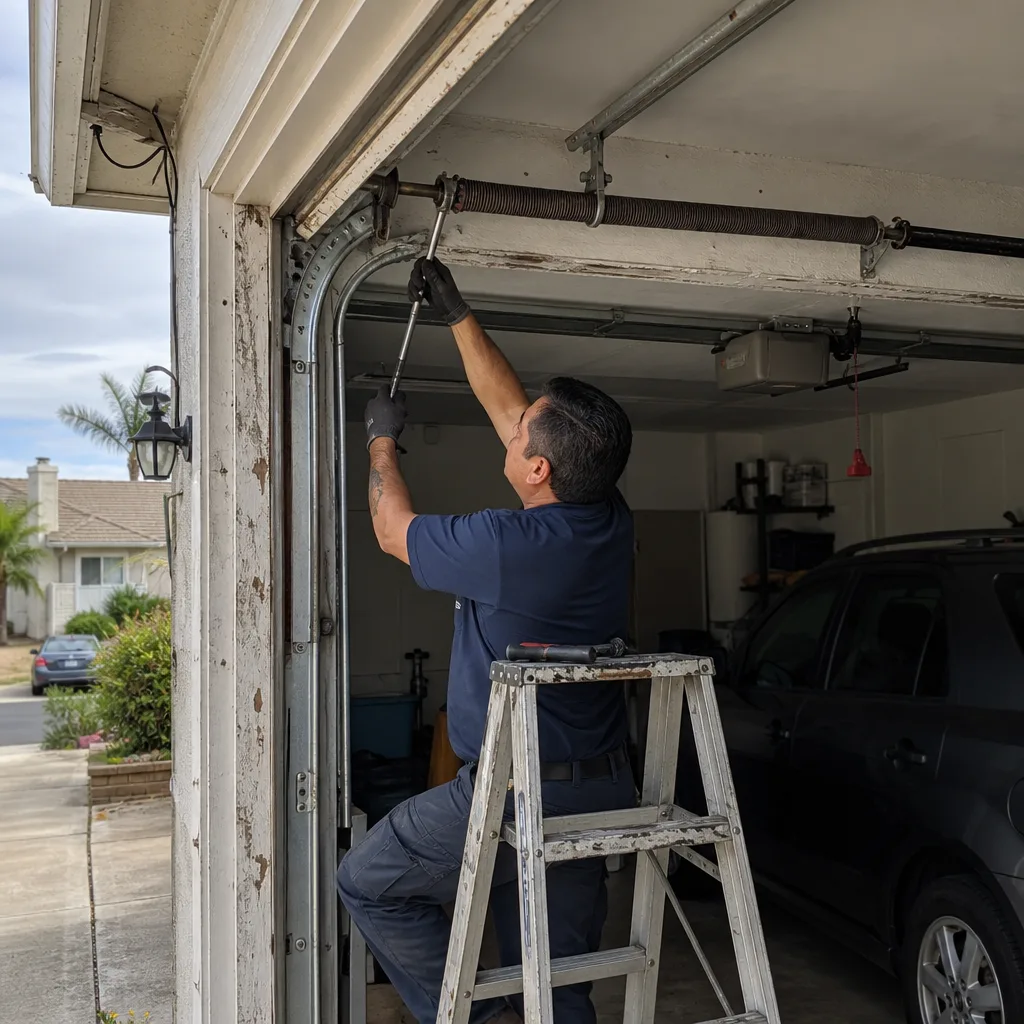 Before
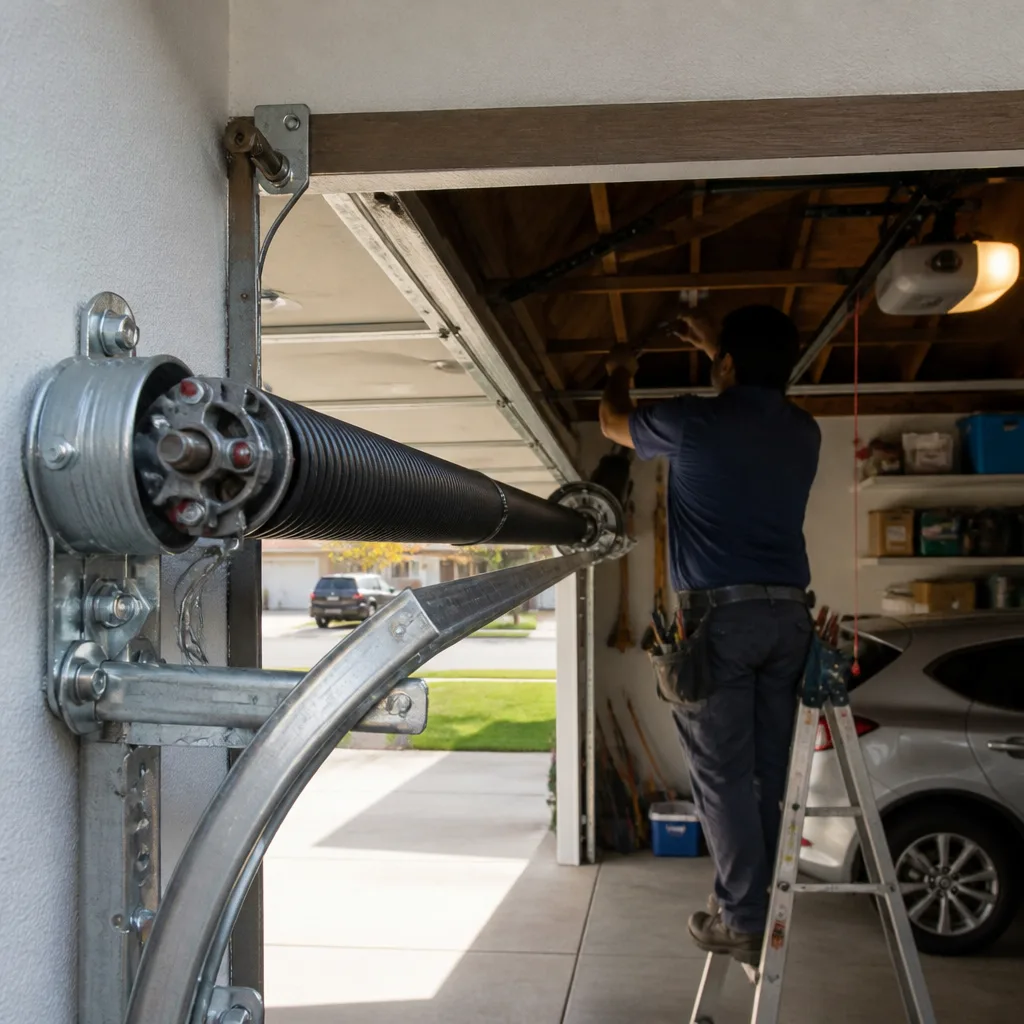 After
After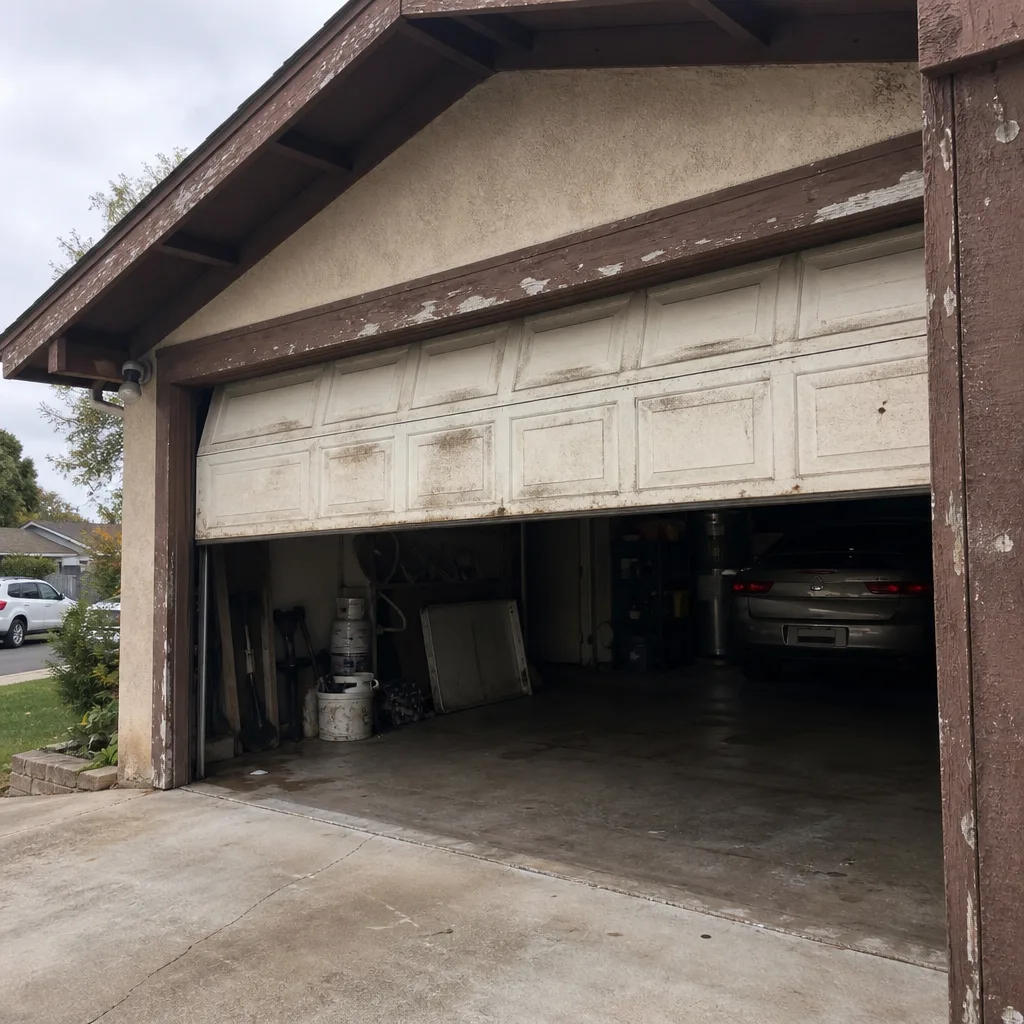 Before
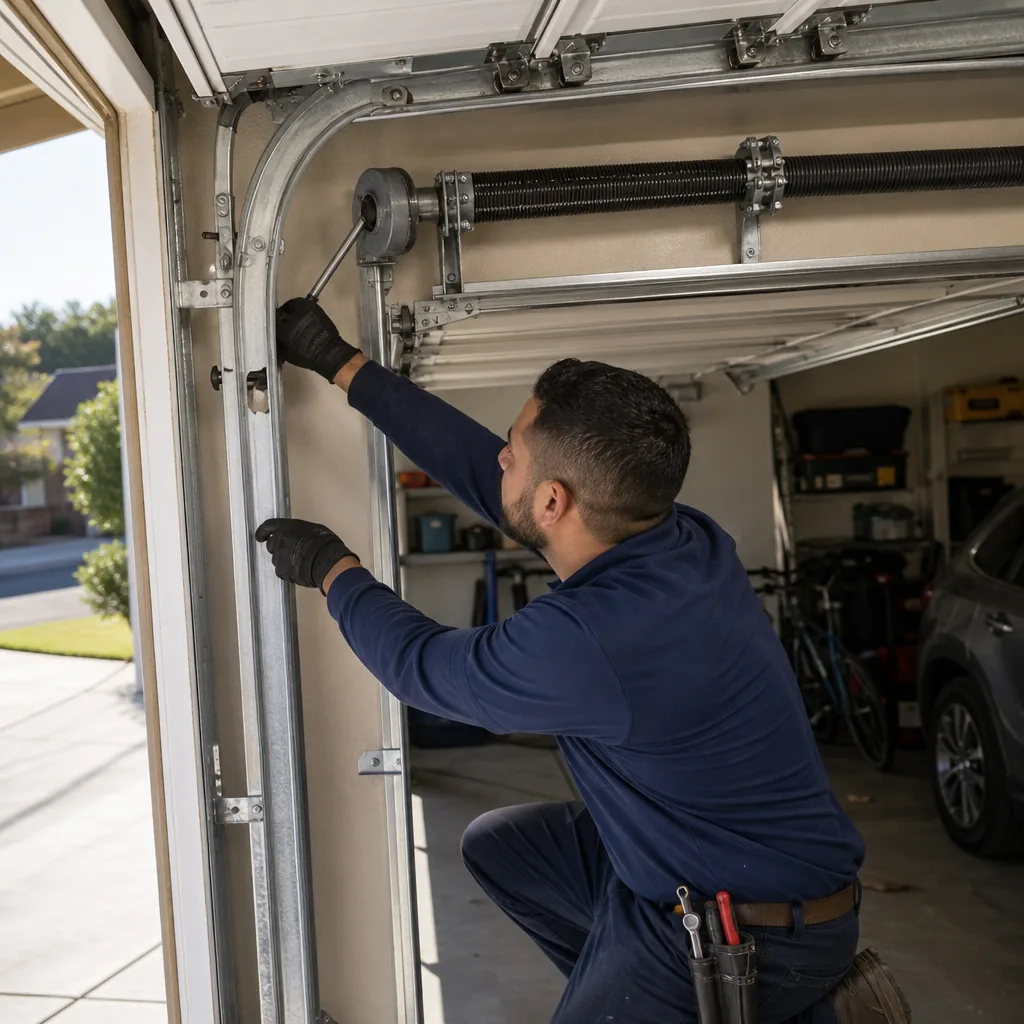 After
AfterGarage Door Permits, Codes & Inspections in CA: What You Need to Know
A garage door replacement completed without a permit can sit invisible for years, then surface during escrow and kill a sale. In San Diego County, we have seen buyers’ lenders demand retroactive inspection of unpermitted door work, forcing sellers into rushed corrections or price reductions they never budgeted for. California’s garage door rules are not uniform statewide; they live at the intersection of state building code, local municipal amendments, and fire safety overlays that vary block by block in older El Cajon neighborhoods. This guide explains when a permit is required, what codes apply, how inspections work, and what unpermitted work means for your property record and resale value. For ongoing care, see our Garage Door Repair Maintenance Checklist for El Cajon Homeowners.
Quick Answer
Most garage door replacements in California require a building permit under the California Residential Code, while simple repairs like spring or cable replacement typically do not. In El Cajon, over-the-counter permits for standard residential door swaps cost approximately $150-$300 and require one inspection; new installations or structural modifications need plan review and may trigger Title 24 energy compliance. Unpermitted work must be disclosed to buyers under California Civil Code and can complicate financing, insurance claims, and resale. Learn to spot problems early with our Garage Door Warning Signs: A El Cajon Homeowner’s Reference Guide.
Table of Contents
- When Is a Permit Required for Garage Door Work in California?
- The California Residential Code Sections That Govern Your Door
- How El Cajon’s Building Department Handles Garage Door Permits
- UL 325 Safety Standards and Inspector Verification
- Title 24 Energy Compliance for Conditioned Garages
- How Unpermitted Work Appears on Property Records
- Repair vs. Replacement: The Dollar Threshold That Changes Everything
- Common Mistakes to Avoid
- When to Call a Professional
- Frequently Asked Questions
- The Bottom Line
When Is a Permit Required for Garage Door Work in California?
The general rule is straightforward: if you are removing and replacing an entire garage door system, California requires a building permit. If you are repairing or replacing individual components within the existing system, you usually do not.
Permit triggers include:
- Full door replacement, including the door panel, track, and hardware as a complete unit
- Converting from a manual door to an automatic opener system
- Structural modifications to the opening, such as widening, heightening, or reframing
- Installing a new door in a previously open carport or new construction
- Any work that alters the egress, fire rating, or structural load path of the garage
Work that typically does not require permitting:
- Spring replacement or tension adjustment
- Cable replacement or drum repair
- Roller, hinge, or weatherstrip replacement
- Opener repair, gear replacement, or remote programming
- Panel replacement within an existing door system (single panel, same dimensions)
The distinction matters because the California Residential Code treats the garage door as both an opening protective and a structural element. The door resists wind loads, provides fire separation between garage and living space, and in attached garages, contributes to the thermal envelope. Changing any of these characteristics without oversight violates state law and local ordinance.
In El Cajon, the Building Division applies the state code without significant local amendments for standard residential garage doors, but fire district overlays in the eastern canyon areas and older neighborhoods near downtown can impose additional requirements. Always verify with the city before starting work.
The California Residential Code Sections That Govern Your Door
Several CRC sections apply directly to garage door installation and replacement. Understanding them helps you anticipate what an inspector will check and why certain details matter.
R302.6 - Fire Separation
Garages attached to dwellings must maintain a fire separation between the garage and living spaces. The door between garage and house must be 20-minute fire-rated, self-closing, and solid wood or steel. The garage door itself does not carry this rating, but the wall assembly and any penetrations must remain intact during replacement. We have seen inspectors in El Cajon reject jobs where the installer disturbed the garage-to-house wall seal or compromised the fire blocking above the door track.
R301.2.1 - Wind Design
San Diego County falls within a moderate wind zone, but the CRC still requires garage doors to resist specified wind pressures. For most of El Cajon, this means a door rated for the basic wind speed of 85 mph, three-second gust. In elevated areas like Mt. Helix or the eastern ridges, local amendments may require higher ratings. The door label must show compliance; inspectors will photograph it.
R309.1 - Vehicle Barrier
Garage doors serving as vehicle barriers must resist specified impact loads. This applies to doors at the property line or where a vehicle could exit toward a public way. The requirement is less common in standard residential applications but appears in hillside homes with street-facing garages on steep grades.
R311.7 - Egress
Garages must maintain emergency egress. A garage door with an automatic opener must have a manual release mechanism operable from inside without a key. Inspectors test this on every installation.
Table R602.10.1 - Braced Wall Panels
Where a garage door opening interrupts a braced wall line, the header and jambs must be engineered to transfer lateral loads. This becomes critical in two-story homes where the garage wall supports upper-floor framing. Unpermitted header modifications have caused structural failures in earthquake events.
How El Cajon’s Building Department Handles Garage Door Permits
El Cajon processes most residential garage door permits over the counter at the Building Division, located at 200 Civic Center Way. The process is more straightforward than many homeowners expect, but preparation prevents delays.
Step-by-step permit process:
- Verify jurisdiction. Confirm your property lies within El Cajon city limits, not county unincorporated land or a neighboring city with different requirements. The city website offers a parcel lookup tool.
- Gather documentation. Bring a site plan showing the garage location, the manufacturer’s specification sheet for the new door, and the opener model number if applicable. For doors in fire districts, add the fire district approval letter.
- Complete the application. The standard residential alteration form covers garage door replacements. Describe the work as “garage door replacement, same size, no structural modification” if accurate.
- Pay fees. As of 2024, over-the-counter permits for standard residential door replacement run approximately $150-$300 depending on valuation. Plan review fees apply if structural changes are involved.
- Schedule inspection. One inspection is standard for replacement jobs. The inspector verifies door label compliance, opener safety features, and structural integrity. Call (619) 853-0087 or use the online portal.
- Obtain final approval. The permit is finaled after passing inspection. Keep the documentation for your records and future sale.
El Cajon’s turnaround is generally 2-3 business days for over-the-counter permits if documentation is complete. Plan review for structural modifications takes 2-3 weeks. The city accepts manufacturer specification sheets for major brands like Clopay, Amarr, and Wayne Dalton directly; for lesser-known brands, additional testing documentation may be required.
We have worked with El Cajon inspectors for decades. They are thorough but fair, and they appreciate contractors who arrive prepared. A complete submittal on the first visit saves everyone time.
UL 325 Safety Standards and Inspector Verification
Every new garage door opener installed in California must comply with UL 325, the Underwriters Laboratories standard for door, drapery, gate, louvre, and window operators and systems. This is not optional, and inspectors verify it methodically.
What UL 325 requires:
- Entrapment protection: automatic reversal when the door contacts an obstruction during closing
- Secondary entrapment protection: either a monitored photoelectric sensor (safety eyes) or an edge sensor on the door bottom
- Force limitation: the door must reverse before exerting 15 pounds of force
- Manual release: a means to disengage the opener and operate the door manually during power failure
- Control station location: wall-mounted controls must be placed where the operator has full view of the door, or additional safety devices must compensate
How El Cajon inspectors verify compliance:
The inspector places a 2×4 board flat on the floor in the door path and commands a close cycle. The door must reverse within 2 seconds of contact. They then test the photoelectric sensors by interrupting the beam during closure; the door must reverse immediately. The inspector photographs the UL 325 label on the opener motor housing and checks that the label matches the model on the permit application.
We install LiftMaster, Chamberlain, and Genie openers that carry current UL 325 certification. Older openers, even if functional, often fail current standards and cannot be reinstalled in a permitted replacement. If your opener lacks a UL 325 label or the label is dated before 1993, plan on replacement.
One detail homeowners miss: the safety eyes must be mounted no higher than 6 inches above the floor. Installers sometimes raise them to avoid driveway debris, but this violates the standard and will fail inspection.
Title 24 Energy Compliance for Conditioned Garages
Title 24 of the California Code of Regulations governs energy efficiency in building construction. Most garage door replacements do not trigger Title 24 review, but conditioned garages do, and the definition of “conditioned” is broader than many homeowners realize.
A garage is conditioned if it has:
- Heating or cooling supplied from the main house system
- Insulation in walls or ceiling with intent to maintain temperature
- Ductwork passing through the garage space
- A finished interior used as workshop, studio, or auxiliary living space
In El Cajon, converted garages are common in older neighborhoods like Bostonia and the areas near Madison Avenue, where homeowners have added insulation, drywall, and mini-split systems for year-round use. A door replacement in these spaces requires compliance with Title 24, Part 6, which specifies minimum insulation values for envelope components.
For garage doors, this typically means a minimum R-value of 10 for climate zone 7, which covers most of San Diego County. The door must bear a label stating its rated R-value, and the installer must seal the perimeter to prevent air leakage. Inspectors check both the label and the seal quality.
We have seen homeowners in El Cajon select a non-insulated steel door for a conditioned garage, only to learn at inspection that it does not meet code. The correction requires door replacement or a variance application that adds weeks and cost. Verifying conditioned status before ordering the door prevents this entirely.
How Unpermitted Work Appears on Property Records
Unpermitted garage door work does not automatically generate a city citation or appear on a routine property search, but it creates exposure that surfaces at the worst possible moment: during a home sale.
How it is discovered:
- Buyer’s inspection identifies a newer door with no matching permit on file
- Lender requires permit verification for FHA, VA, or certain conventional loans
- Title company flags unpermitted work in the preliminary report
- Insurance claim for garage-related damage triggers permit history review
- Neighbor complaint to code enforcement prompts investigation
California Civil Code Section 1102.6 requires disclosure of unpermitted work. Sellers must answer “yes” to the question of whether any room additions, structural modifications, or other alterations were made without required permits. A garage door replacement qualifies. Failure to disclose exposes the seller to post-sale liability, even years later.
Remedies for unpermitted work:
- Retroactive permit: El Cajon allows this in many cases. The homeowner applies for a permit after the fact, pays a penalty fee (typically 1.5-2x the original permit cost), and schedules inspection. If the work meets code, the permit is finaled. If not, corrections are required.
- Removal and replacement: In rare cases where the work cannot be brought to code, the door must be removed and replaced with a compliant installation. This is most common with structural modifications or fire-rated assemblies.
- Price adjustment: Some sellers negotiate a credit to buyers rather than pursue retroactive permitting, but lenders may still require inspection clearance before funding.
In our 42 years serving El Cajon, we have assisted numerous homeowners with retroactive permitting. The process is manageable but never pleasant. Pulling the permit before installation is always the simpler path.
Repair vs. Replacement: The Dollar Threshold That Changes Everything
California building departments generally distinguish repair from replacement by scope, not cost, but the dollar value of work matters for contractor licensing, insurance, and in some jurisdictions, for permit triggers.
Repair work (typically no permit):
- Spring replacement: $180-$340 in the El Cajon market
- Cable replacement: $150-$280
- Roller or hinge replacement: $120-$220
- Opener repair: $200-$400
- Weatherstrip or bottom seal: $100-$180
Replacement work (permit required):
- Full door and track system: $1,200-$3,500 installed, depending on size, material, and insulation
- Door with opener package: $1,800-$4,500
- Custom wood or oversized door: $3,500-$8,000+
The threshold where a job becomes “replacement” is functional, not financial. If the door panel, track, and hardware are removed as a unit and a new system installed, it is replacement. If individual failed components are swapped within an existing system, it is repair.
One gray area: panel replacement. Replacing one damaged panel in an otherwise functional door is usually treated as repair. Replacing all panels, or replacing a panel in a door so old that matching panels are unavailable, effectively constitutes replacement and may require permitting.
We quote every job with this distinction clear. If your repair crosses into replacement territory, we flag it before work begins so you can decide whether to proceed with permitting or explore alternatives. No surprises on the bill means no surprises after the fact.
Common Mistakes to Avoid
- Assuming repair and replacement follow the same rules. Many homeowners call for a “broken door” and do not realize their full replacement needs permitting until the installer mentions it, or does not. Verify scope before signing.
- Trusting a contractor who says permits “are not needed for this job.” In El Cajon, only the Building Division can waive a permit requirement. A contractor’s opinion is not authority. If they resist permitting, ask why.
- Installing a non-UL 325 opener to save money. Discount openers sold online often lack current certification. They will fail inspection, and in a liability event, your insurance may deny coverage.
- Ignoring fire district requirements. Properties in El Cajon’s wildland-urban interface zones need additional clearances and fire-resistant materials. Standard doors may not qualify.
- Failing to disclose unpermitted work at sale. California’s disclosure laws are strict, and post-sale discovery of intentional nondisclosure can result in damages far exceeding the cost of retroactive permitting.
- Conditioning a garage without updating the door. The Title 24 trigger is real, and the correction is expensive. Plan the door upgrade with the garage conversion, not after.
- Discarding permit documentation. Keep final permit cards and inspection approvals with your home records. Future buyers, insurers, and contractors will ask for them.
When to Call a Professional
Not sure who to trust? Read our How to Hire a Garage Door Contractor in El Cajon: A Step-by-Step Guide, then call a licensed garage door contractor when the scope exceeds component-level repair, when permitting is required, or when safety-critical systems like high-tension springs or automatic openers are involved. The forces in a garage door system are substantial, and improper handling causes serious injury.
Specific scenarios that warrant professional service:
- Any full door replacement, to ensure permitting and code compliance
- Spring or cable work, where stored energy can release without warning
- Opener installation, for UL 325 compliance and warranty validity
- Structural modifications to the opening
- Retroactive permitting assistance for prior unpermitted work
Mainspring Garage Door Co. offers free estimates in El Cajon and throughout San Diego County. We handle the permit application as part of our installation service, schedule inspections, and ensure every job passes before we consider it complete. Call (619) 853-0087 to discuss your project.
Frequently Asked Questions
Yes, a full garage door replacement requires a building permit in El Cajon under the California Residential Code. Over-the-counter permits cost approximately $150-$300 and require one inspection for standard residential jobs with no structural modifications. Call (619) 853-0087 for a free estimate, and we will handle the permit as part of your installation.
Standard over-the-counter permits for residential garage door replacement in El Cajon typically run $150-$300, based on project valuation. Structural modifications, plan review, or fire district overlays add fees. The city accepts payment at the Building Division or online. For an exact quote on your specific job, call us at (619) 853-0087.
Unpermitted garage door replacement must be disclosed under California Civil Code when you sell, and buyers’ lenders may require retroactive inspection or correction before funding. You can apply for a retroactive permit in El Cajon, but penalty fees apply and the work must meet current code. It is always simpler to permit before installation.
Replacing an existing opener with a new unit of similar capacity typically does not require a permit if no new electrical circuits are added. However, installing an opener where none existed before, or upgrading electrical supply, triggers permitting. All new openers must meet UL 325 safety standards, verified at installation.
Your garage is conditioned if it receives heating or cooling from the house system, contains ductwork, has insulated walls or ceiling with intent to maintain temperature, or is finished as usable living space. In El Cajon, converted garages in older neighborhoods frequently meet this definition and require R-10 minimum door insulation. We assess this during every estimate.
The inspector verifies that any opener connected to the new door meets current UL 325 standards, including auto-reverse, force limitation, and photoelectric sensors. Older openers without current certification must be replaced. We check opener compliance before ordering your door so there are no surprises at inspection.
The Bottom Line
California garage door permits are not optional bureaucracy; they are the mechanism by which the state ensures fire safety, structural integrity, and energy compliance in a component that protects your home and family. In El Cajon, the process is straightforward when approached correctly: verify scope, gather documentation, apply over the counter, pass inspection, and keep your records. The cost of permitting is modest compared to the expense and stress of retroactive correction, disclosure disputes, or failed home sales. For repair work, know where the line falls between component replacement and full system replacement. When in doubt, ask before work begins. A square deal starts with clarity about what is required, what it costs, and who stands behind the result.
Written by Carl Dutton, Owner at Mainspring Garage Door Co., serving El Cajon since 2016.