
Last updated September 10, 2026
Full 25-point door and opener safety check with every visit - springs, cables, rollers, tracks, and your LiftMaster or Chamberlain opener included
You get a price before we start. It does not change when the truck arrives.
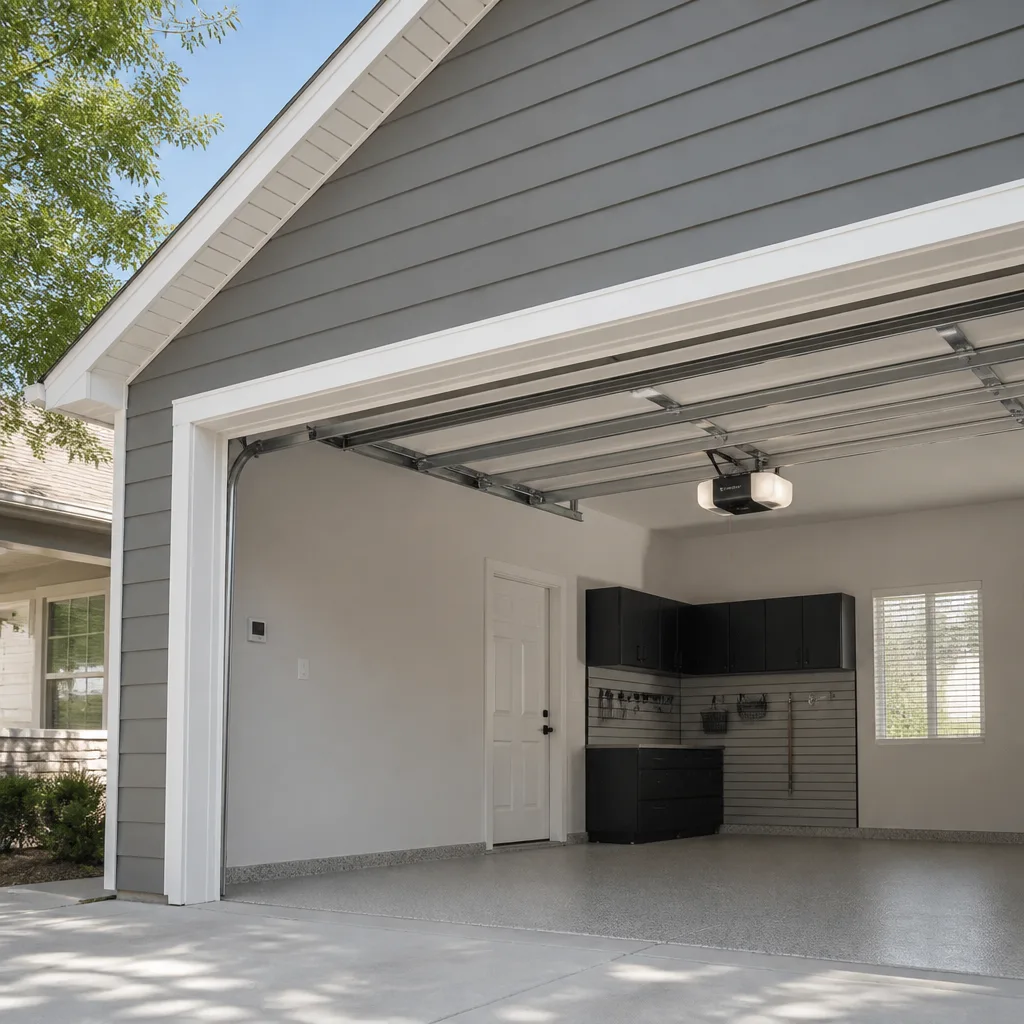
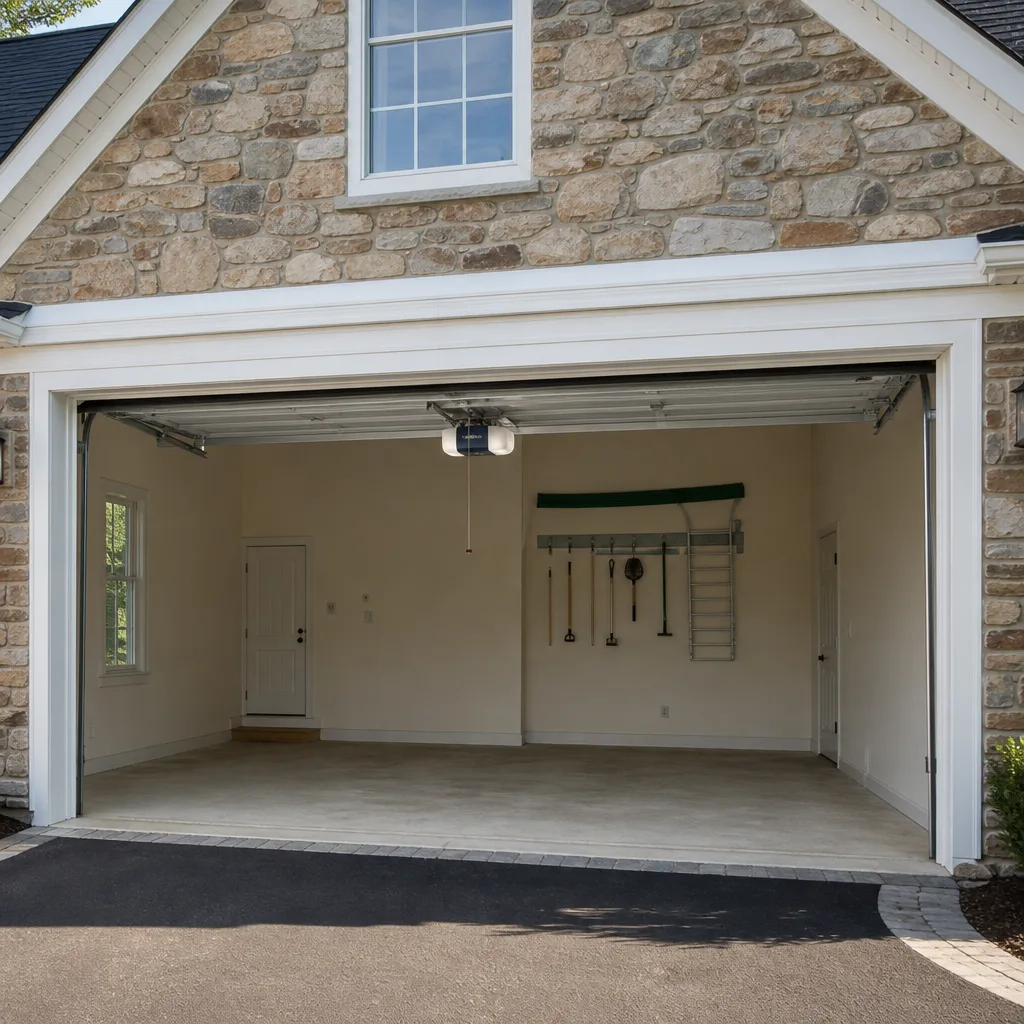
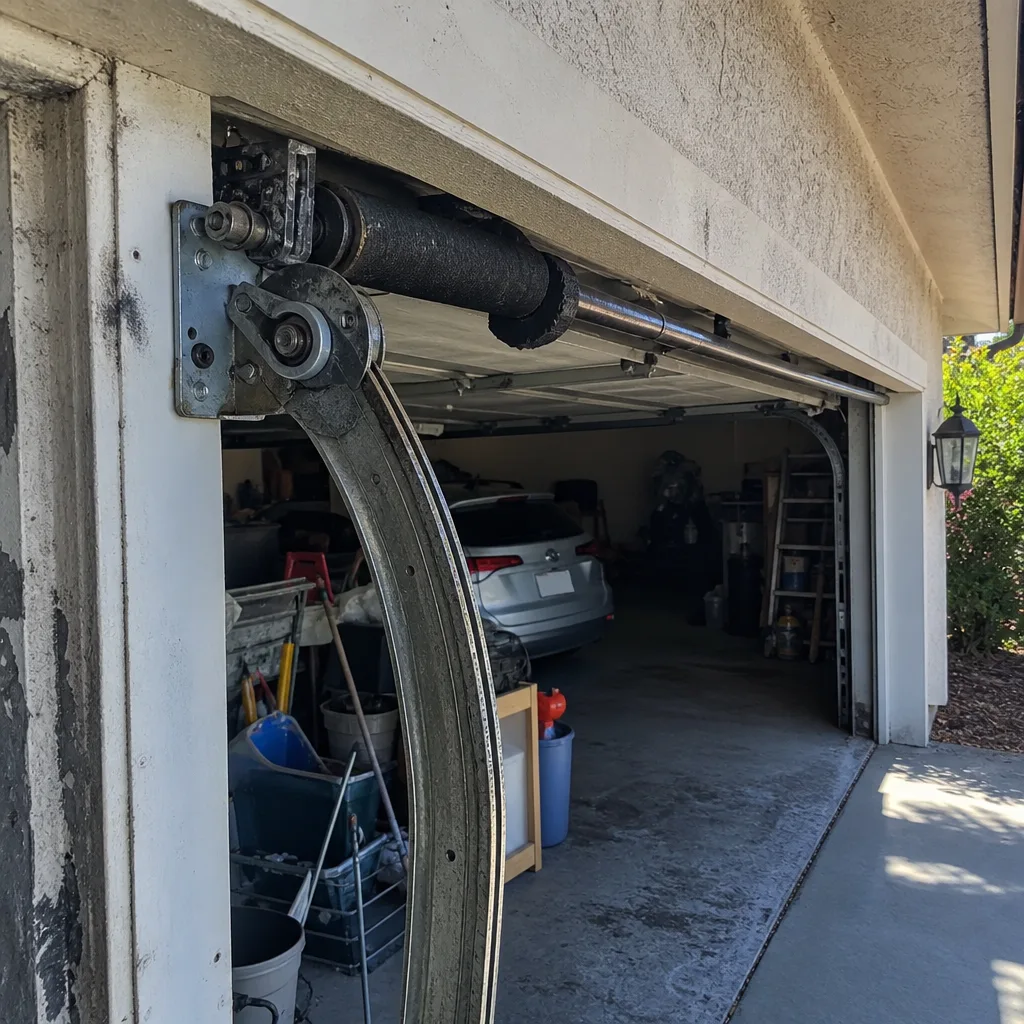 Before
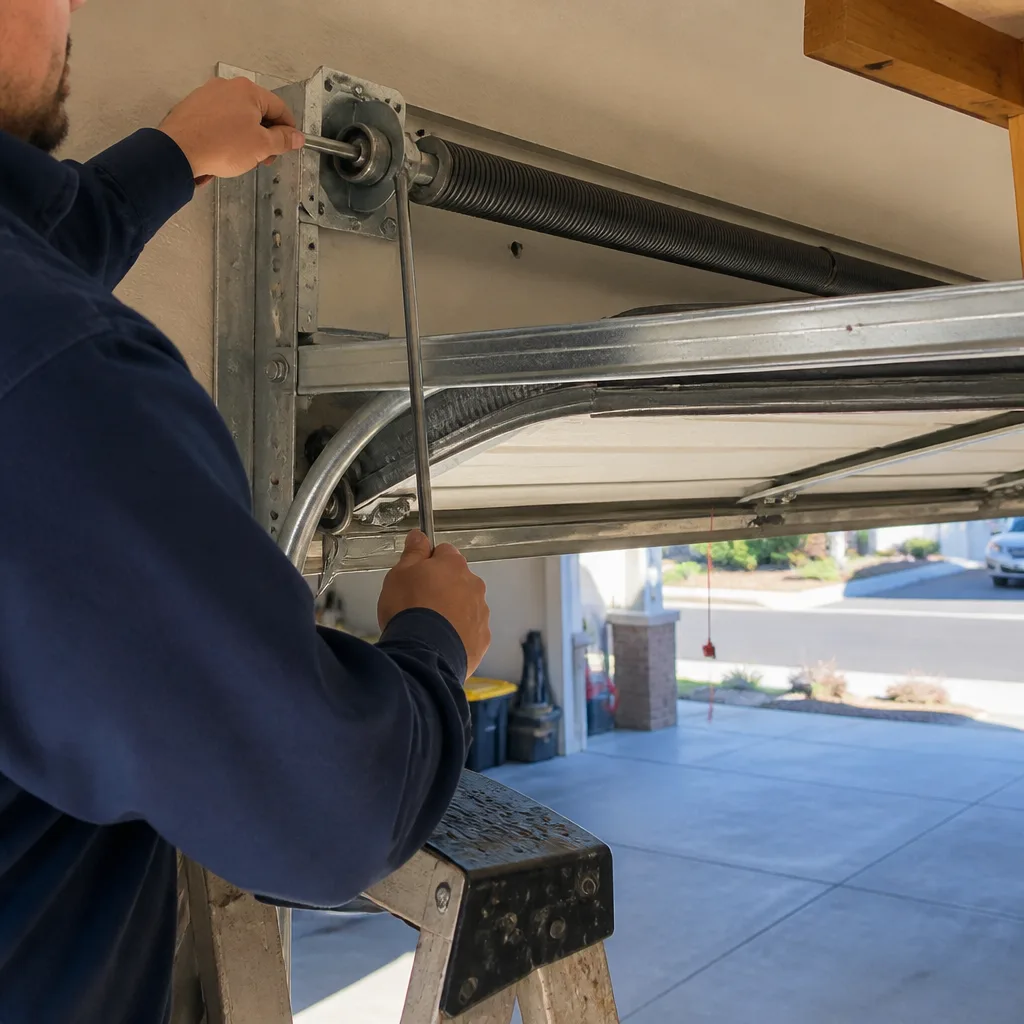 After
After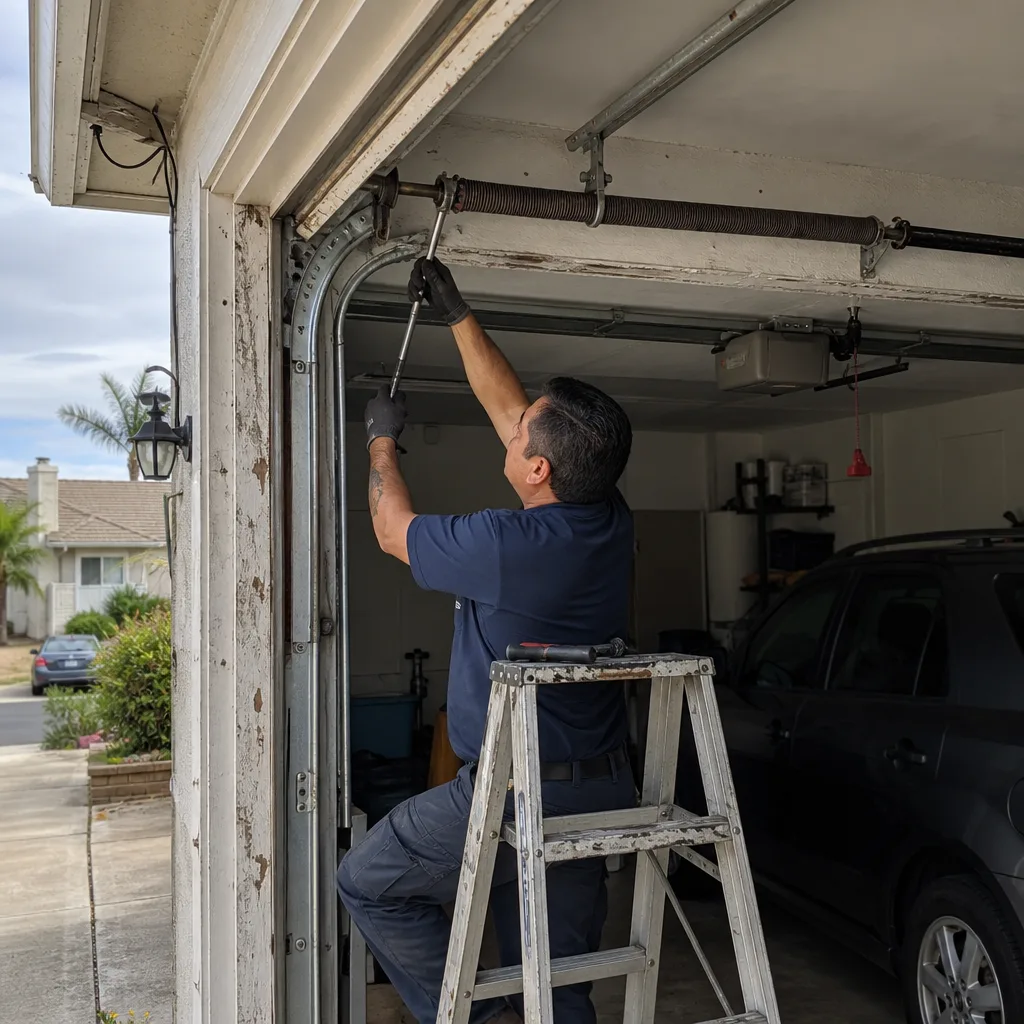 Before
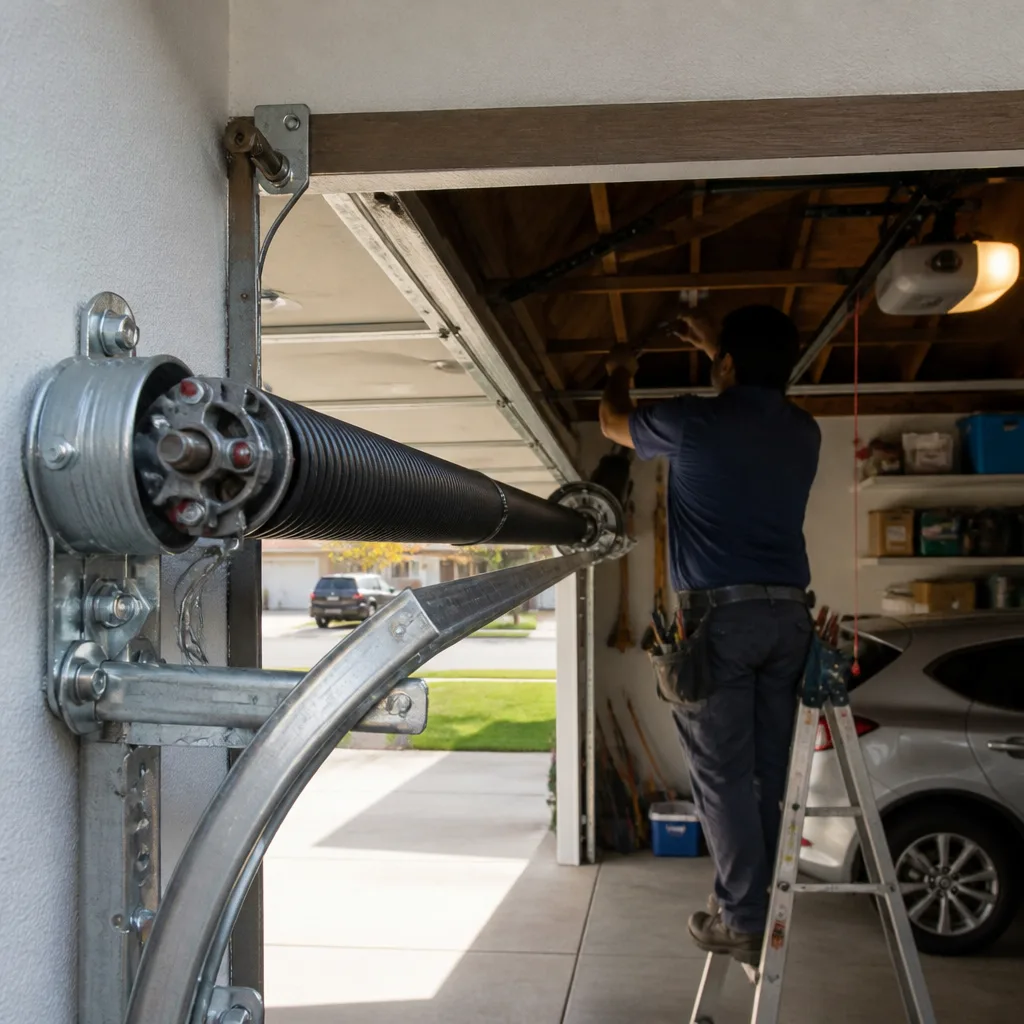 After
After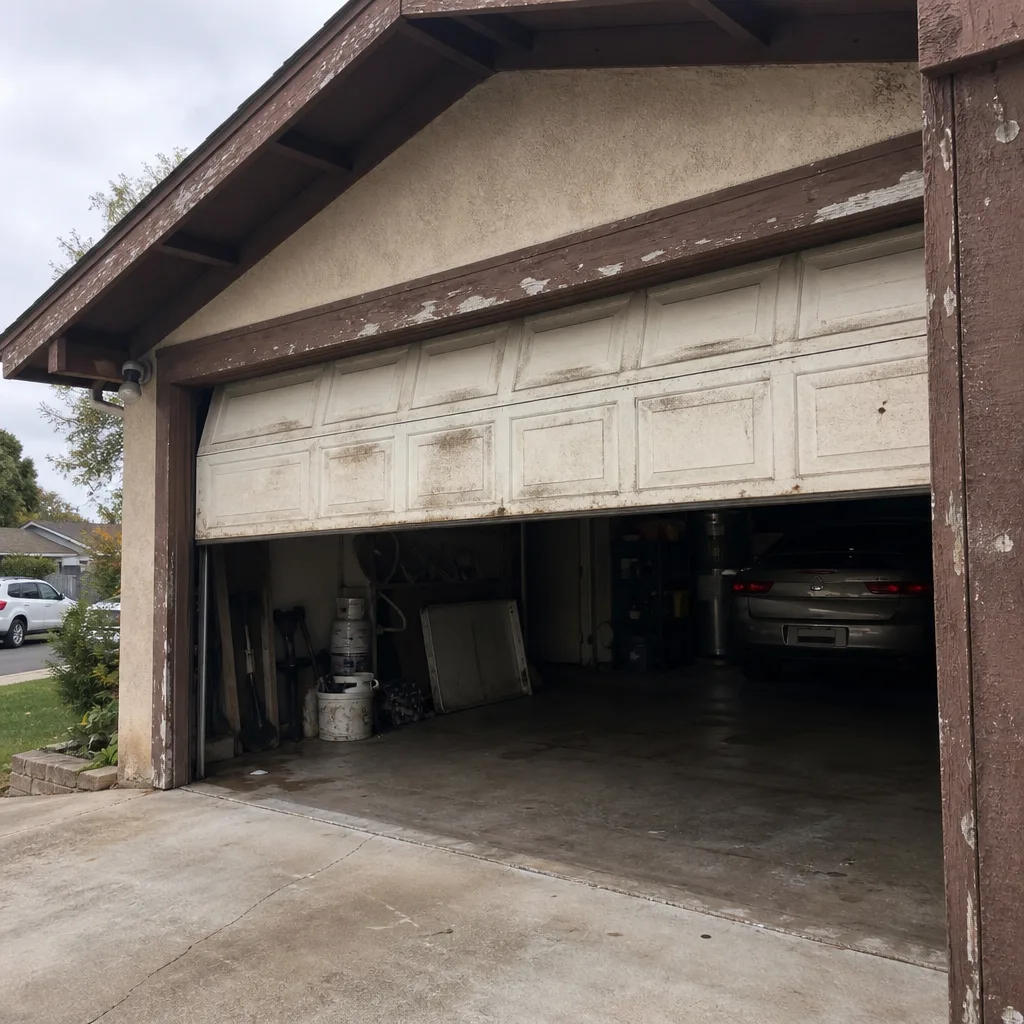 Before
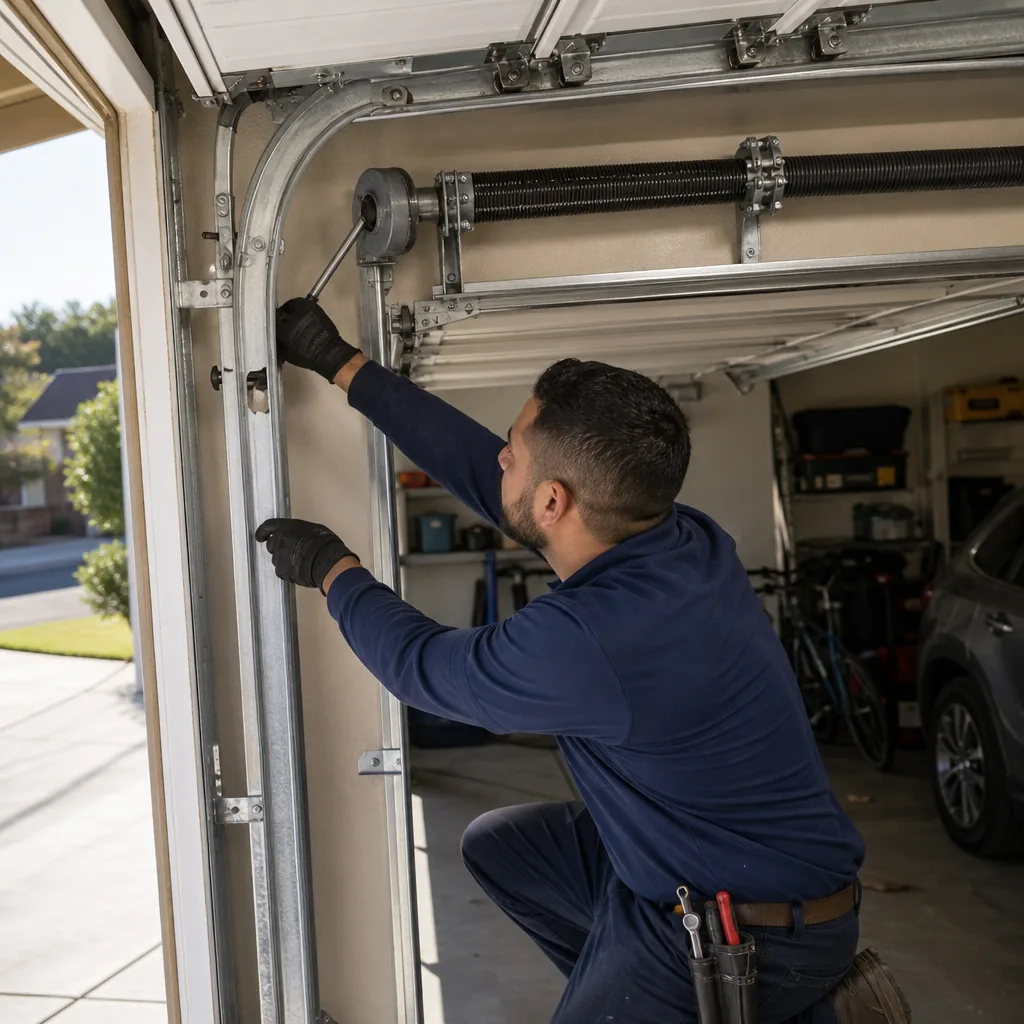 After
AfterSeasonal Garage Door Care for El Cajon: Year-Round Homeowner’s Guide
El Cajon regularly records the hottest temperatures in San Diego County. That sustained dry heat does something to garage doors that coastal homeowners never face: steel panels expand in their tracks, opener logic boards bake in uncooled garages, and the intense thermal cycling weakens springs faster than moderate climates allow. In this guide - a companion to our Complete Guide to Garage Door in El Cajon - you’ll learn how to maintain your garage door around El Cajon’s real two-season calendar - a long dry heat from May through October and a compressed wet-and-mild stretch from November through April - rather than following a template built for four distinct seasons.
Quick Answer
Garage door maintenance in El Cajon should follow a two-season rhythm: pre-summer adjustments in April to address heat expansion and opener stress, and fall seal replacement in October before winter rains arrive. A professional seasonal tune-up costs $89 and catches the problems that El Cajon’s extreme temperature swings create before they become expensive repairs.
Table of Contents
- Why El Cajon’s Climate Demands Its Own Maintenance Calendar
- Pre-Summer Checklist: April Preparation for Peak Heat
- Summer Survival: What Heat Does to Your Door and Opener
- The Narrow Fall Window: October to November Seal Replacement
- Winter Rain and Red Clay Soil: What El Cajon Homeowners Should Watch
- Spring Tension, Temperature, and When Tune-Ups Pay Off
- What You Can Safely Check Yourself vs. What Requires a Technician
- A Practical Year-Round Maintenance Schedule for El Cajon
Why El Cajon’s Climate Demands Its Own Maintenance Calendar
Most seasonal maintenance guides assume four distinct seasons with freezing winters and humid summers. That template fails in El Cajon. Our climate splits into two phases with very different effects on garage door systems.
From May through October, El Cajon experiences sustained dry heat that routinely pushes garage interior temperatures past 110°F. In neighborhoods like Fletcher Hills and Rancho San Diego, south-facing garages with poor ventilation become ovens. This heat causes steel door panels to expand, increasing friction in tracks and forcing openers to work harder. We’ve seen Clopay and Amarr steel doors bind in their tracks during August afternoons when the gap between panel and jamb shrinks to nothing.
From November through April, the pattern flips. El Cajon receives most of its annual rainfall in concentrated winter storms. The combination of wet weather and our region’s expansive red clay soil creates ground movement that stresses garage door frames and compromises bottom seals. Temperatures stay mild enough that homeowners forget about their doors - until water appears on the garage floor.
The maintenance calendar that works here addresses heat before it arrives and seals before the rain does. Everything else is secondary.
Three factors make El Cajon unique:
- Thermal amplitude: Daily temperature swings of 30°F or more stress metal components through repeated expansion and contraction
- Soil chemistry: High clay content in El Cajon soils expands when wet and contracts when dry, moving garage slabs and frames
- Solar load: More annual solar radiation than coastal San Diego County, accelerating weathering of exterior components
We’ve been working on doors in El Cajon since 2016, and the pattern is consistent: the homeowners who schedule maintenance around these two transitions avoid the emergency calls that peak in July and January.
Pre-Summer Checklist: April Preparation for Peak Heat
April is the month to prepare your garage door for El Cajon’s punishing summer. The work done now prevents the binding, opener failures, and spring breaks that spike our call volume in June and July.
Check Panel Expansion Gaps
Steel garage door panels expand measurably in heat. A standard 16-foot wide door can grow by 1/8 to 3/16 inch across its width when interior garage temperatures hit 120°F. If the installed gap between door edge and track is already tight, summer expansion causes the door to scrape, bind, or jam.
What to check: With the door closed, measure the gap between the door edge and the track on both sides. You want at least 1/4 inch of clearance. If you see paint rubbed off the door edge or black marks on the track, the gap is already too tight. This is not a DIY adjustment - track realignment requires precise leveling to maintain proper cable tension. See our DIY vs Professional Garage Door: The El Cajon Homeowner’s Decision Guide for when to call a technician.
Verify Travel Limits and Force Settings
Opener travel limits tell the motor how far to move the door. When summer heat increases friction in the system, an opener set to minimal force may falsely detect an obstruction and reverse. Alternatively, an opener straining against binding tracks overheats its logic board.
Modern LiftMaster and Chamberlain openers have electronic force sensing that should be verified before peak heat. Older Genie or Craftsman units with manual force adjustments need seasonal attention. If your opener has started “stuttering” or reversing on hot afternoons, the force setting is likely too low for summer friction levels.
Inspect Springs for Heat Fatigue
Torsion springs sit above the door, often in the hottest part of the garage. In El Cajon, we’ve measured spring temperatures above 140°F in uncooled garages. While springs are designed for heat, sustained elevated temperatures accelerate metal fatigue.
Look for these warning signs:
- Gaps between coils in the wound spring - indicates the spring has lost tension and is working harder to lift the door
- Rust streaks on the spring or shaft - even in dry climates, temperature swings create condensation on metal surfaces
- A door that feels heavier to lift manually - the spring is no longer carrying its share of the door’s weight
Springs are under extreme tension and can cause serious injury if handled improperly. Visual inspection from a safe distance is appropriate for a homeowner; adjustment or replacement requires a trained technician with proper winding bars.
Lubricate Moving Parts with High-Temperature Grease
Standard lithium grease thins and runs in El Cajon summer heat. We use a high-temperature synthetic lubricant on rollers, hinges, and bearings that maintains viscosity to 400°F. The wrong lubricant becomes a black streak down your door by August.
Apply a thin film to roller bearings, hinge pivots, and the torsion spring (if accessible without disassembly). Never lubricate the track itself - the rollers need grip, not slip.
Our Garage Door Repair in El Cajon service includes full pre-summer preparation, and most jobs are completed in a single visit because our trucks carry the necessary parts and lubricants.
Summer Survival: What Heat Does to Your Door and Opener
When El Cajon temperatures peak, garage door systems face specific stresses that homeowners elsewhere rarely consider.
Opener Logic Board Failure
The logic board is the computer brain of your garage door opener, typically mounted on the ceiling of the garage. In an uncooled El Cajon garage, ceiling temperatures can exceed 130°F on summer afternoons. Most opener manufacturers rate their electronics for ambient temperatures to 120°F. Beyond that, solder joints weaken, capacitors degrade, and intermittent failures begin.
The threshold for concern: if your garage interior regularly exceeds 115°F, your opener is operating outside its design envelope. Symptoms include remote inconsistency, wall button delays, or complete failure during the hottest hours of the day with normal operation in the morning.
Mitigation options include adding ventilation to the garage, installing a small exhaust fan, or relocating the opener to a wall-mounted position if the door design allows. For new installations, we specify openers with extended temperature ratings when we know the garage runs hot.
Steel Panel Expansion and Track Binding
We’ve already discussed expansion gaps, but the problem goes deeper. When a steel door binds in its tracks, the opener strains, cables go off-drum, and in extreme cases the top section of the door folds where the horizontal track meets the vertical. This is not theoretical - we replace bent top sections every summer in El Cajon.
The neighborhoods most affected are those with older, uninsulated steel doors facing west or south: parts of Bostonia, the older sections of Fletcher Hills, and homes below the El Cajon valley rim where afternoon sun is most intense. Wayne Dalton and some older Craftsman door designs with thinner gauge steel are particularly susceptible.
Weather Seal Degradation
Ironically, summer is when rubber bottom seals begin to fail - not from rain, but from UV exposure and ozone cracking. A seal that looks fine in April may be brittle and leaking by October. The damage happens invisibly; the consequences appear when the first winter storm hits.
Check your bottom seal in August: bend it slightly. If it cracks or shows a dry, gray surface rather than black resilience, it’s already compromised. Replacement in October, before the rains, is the prudent course.
The Narrow Fall Window: October to November Seal Replacement
El Cajon’s rainy season is short but concentrated. Most annual rainfall arrives between December and March, with the heaviest storms typically in January and February. The window to prepare is October to November - after summer heat has ended but before the first significant storms.
Bottom weather seals are the primary defense against water intrusion, but they also block dust, pests, and the Santa Ana winds that sweep through El Cajon each fall. A compromised seal does more than let water in: it creates a pressure differential that strains the opener each cycle, and it allows moisture to accumulate under the door where it accelerates rust on the bottom fixture hardware.
What to Inspect
- Bottom seal: Look for cracks, flattening, or loss of resilience. The seal should maintain a bulb or fin shape that compresses against the floor. If it’s permanently flattened or hardened, it won’t seal against minor floor irregularities.
- Side and top seals: These are often overlooked. Check the vinyl or rubber seals along the door jambs for tearing or shrinkage. Gaps here allow wind-driven rain to enter even when the bottom seal is intact.
- Threshold condition: The concrete threshold where the door meets the floor should be relatively level. In El Cajon, soil movement can create a gap or ridge that the seal cannot accommodate.
Seal Types for El Cajon Conditions
Standard rubber bulb seals work for most El Cajon homes, but properties with significant floor irregularities or persistent water issues benefit from an oversized “beaver tail” seal or a vinyl threshold insert. For homes in low-lying areas of El Cajon near the creek beds, we sometimes recommend a dual-fin seal that provides redundant contact points.
Seal replacement is straightforward for a technician with the door properly secured. It is not a safe DIY project - the door must be held open at height while working on the bottom edge, and the bottom fixtures are under spring tension.
Our $89 Seasonal Tune-Up includes seal inspection and replacement if needed, with the seal cost added at our standard parts pricing. For full pricing context, see our Garage Door Cost Breakdown: The El Cajon Homeowner’s Reference for 2026. We carry common seal profiles on every truck, so there’s no waiting for parts.
Winter Rain and Red Clay Soil: What El Cajon Homeowners Should Watch
El Cajon’s winter rains interact with our local geology in ways that directly affect garage door performance. Understanding this connection helps homeowners distinguish normal seasonal behavior from problems requiring attention.
Expansive Soil and Garage Slab Movement
The red clay soils common in El Cajon and eastern San Diego County are classified as expansive - they swell when wet and shrink when dry. A single heavy winter storm can increase soil volume by several percent, lifting garage slabs and the door frames mounted to them. When the soil dries in spring, the slab settles back.
This seasonal heave creates several garage door problems:
- Bottom seal gaps: A slab that rises even 1/4 inch during wet weather can leave the seal compressed and distorted, then create a gap when the slab settles
- Track misalignment: Door frames attached to the garage structure move with the slab, potentially twisting the vertical tracks out of parallel
- Header stress: The structural header above the door opening may crack or separate from the frame if slab movement is severe
In the older neighborhoods of El Cajon - particularly homes built before 1980 with minimal foundation reinforcement - we’ve measured seasonal slab movement of 1/2 inch or more. Newer construction with post-tension slabs shows less movement but is not immune.
What Homeowners Can Monitor
After heavy winter rains, check these indicators:
- Does the door seal evenly across the full width, or is light visible under one corner?
- Does the door operate more noisily or feel different on the manual release?
- Are there new cracks in the drywall around the door frame or in the exterior stucco?
Minor seasonal variation is normal. Persistent binding, visible track misalignment, or new structural cracks warrant professional evaluation. Our technicians check slab-to-frame alignment as part of every service call in El Cajon.
Moisture and Metal Components
Even in our dry climate, winter moisture finds its way to metal. Condensation forms on cold steel surfaces during temperature inversions. Rainwater wicks into bottom fixtures and roller stems. We’ve replaced rust-frozen bottom rollers in El Cajon garages that appeared dry to the eye.
The preventive step: ensure your bottom seal is intact before winter, and consider a light application of moisture-displacing lubricant to bottom fixtures in November. Not WD-40 - it evaporates - but a proper corrosion inhibitor or light machine oil.
Spring Tension, Temperature, and When Tune-Ups Pay Off
Garage door springs are precisely tensioned to balance the door’s weight. That tension changes with temperature, and understanding when that change matters helps homeowners avoid unnecessary service calls while catching real problems early.
How Temperature Affects Spring Force
Torsion springs are made of hardened steel wire wound into a coil. Like all metals, steel expands when heated and contracts when cooled. The spring rate - the force it exerts per degree of twist - decreases slightly as temperature rises. In practical terms, a spring tensioned correctly at 70°F will exert about 2-3% less force at 120°F.
For a standard double-car door weighing 150 pounds, that 2-3% reduction means 3-5 pounds less assist from the spring. The opener compensates by working harder. On a well-maintained system, this is negligible. On a system already near its margin - aging spring, worn rollers, dry bearings - the additional load accelerates wear.
When Seasonal Tension Adjustment Makes Sense
Most modern garage door springs are designed with sufficient safety margin that seasonal temperature variation does not require adjustment. However, there are specific El Cajon circumstances where a seasonal tune-up pays for itself:
- Doors with older springs (7+ years): Springs lose tension gradually through metal fatigue. The additional summer reduction may push an aging spring below the threshold for reliable operation
- Heavy custom doors: Solid wood, insulated steel, or full-view glass doors operate closer to the spring’s design limit and benefit from precise seasonal tuning
- Homes with frequent cycling: A door used as the primary entry, opening 6-8 times daily, accumulates wear faster and justifies more frequent attention
When It’s Unnecessary
A door that operates smoothly, stays in position at any height when disconnected from the opener, and shows no visible spring wear does not need seasonal tension adjustment. The $89 tune-up is preventive maintenance, not mandatory ritual. We tell El Cajon homeowners honestly when their system is running well and only needs basic lubrication and inspection. Browse our more guides & resources for year-round maintenance advice.
Our Garage Door Installation in El Cajon service includes spring specification for our climate, with extended-life springs that reduce the frequency of adjustment needs.
What You Can Safely Check Yourself vs. What Requires a Technician
Some seasonal maintenance is appropriate for a careful homeowner. Other work involves genuine hazards and should be left to trained professionals. This distinction matters for safety and for preserving your door’s warranty.
Safe Homeowner Checks
- Visual inspection: Look for rust, frayed cables, cracked hinges, or worn rollers from a safe position with the door closed
- Balance test: Disconnect the opener (pull the red release cord), lift the door manually to waist height, and release. A properly balanced door stays in place. A door that falls or rises has spring issues
- Reversal test: With the opener connected, place a 2×4 flat on the floor under the door path. The door should reverse on contact. Test monthly
- Photo eye alignment: The two sensors near the floor should show steady indicator lights. Clean lenses and verify alignment if lights flicker
- Listen: New grinding, squealing, or popping sounds indicate mechanical problems developing
Work for Professionals Only
Torsion spring adjustment or replacement: These springs store enough energy to cause serious injury or death. Winding and unwinding require specialized tools and training. We have seen homeowners injured by improvised tools and improperly secured springs. This is not a YouTube project.
Cable replacement: Lift cables are under spring tension and can whip unpredictably if released improperly.
Track realignment: Tracks must be parallel and plumb to within 1/4 inch across the full door height. Improper adjustment causes binding, cable off-drum, and door damage.
Opener logic board work: Involves electrical hazards and warranty considerations.
Our background-checked, uniformed technicians work under the K.E.Y.S. values code - Krafted right, Every time, Your home first, Standing behind it. Every job carries our 90-Day Done Right Promise in writing: if it’s not right, we return at no charge, no paperwork, no arguing.
A Practical Year-Round Maintenance Schedule for El Cajon
Based on our experience serving El Cajon since 2016, here is a maintenance calendar that matches our actual climate rather than a generic four-season template.
| Timing | Task | Who Does It | Estimated Cost |
|---|---|---|---|
| April | Pre-summer inspection: expansion gaps, travel limits, spring condition, high-temp lubrication | Professional | $89 Seasonal Tune-Up |
| May | Homeowner visual check: listen for changes, verify photo eyes, check remote battery | Homeowner | Free |
| August | Bottom seal UV damage check; monitor opener performance during peak heat | Homeowner | Free |
| October | Fall seal replacement and weatherization; pre-rain inspection | Professional | $89 Seasonal Tune-Up plus seal if needed |
| December | Post-first-storm check: seal performance, slab movement indicators | Homeowner | Free |
| January | Mid-winter professional inspection if any issues noted in December | Professional | Service call if needed |
The April and October professional visits are the critical ones - they bracket our two climate phases and catch problems before they become emergencies. Everything else is monitoring and basic care.
For homeowners who prefer to set it and forget it, we offer scheduled seasonal reminders. Call (619) 853-0087 and we’ll note your preference for April and October contact.
Common Mistakes to Avoid
- Using a Midwest maintenance calendar: El Cajon does not have freezing winters that require winterization of openers or de-icing of weather seals. Following a four-season template wastes money on unnecessary services while missing our actual climate risks.
- Ignoring garage ventilation: Homeowners who treat the garage as unconditioned space miss that extreme heat is the primary stressor on their door system. Simple ventilation - an exhaust fan, louvered vents, or even leaving the service door ajar on the hottest days - extends opener life measurably.
- DIY spring lubrication with the wrong product: Standard WD-40 or household oil attracts dust and gums up in heat. Use only garage-door-specific synthetic lubricant, or have a technician apply the correct product.
- Replacing seals in summer: The heat-hardened rubber available in August is the wrong material for winter performance. Wait for October when suppliers stock compounds rated for our full temperature range.
- Assuming slab movement is “just settling”: In El Cajon, seasonal slab heave from expansive clay is cyclical and predictable, but progressive frame damage is not. New cracks that grow year over year indicate a structural issue beyond normal soil movement.
- Delaying service until complete failure: A door that binds occasionally in summer or seal that “mostly” keeps water out is telling you something. The repair cost doubles or triples when the system fails completely, often at the least convenient moment.
When to Call a Professional
Call a technician when you observe any of the following: the door binds or reverses intermittently, springs show visible wear or the door feels heavy manually, cables are frayed or off-drum, the opener operates erratically in heat, or water enters the garage around the door perimeter. These are not problems that resolve themselves, and delay typically increases repair scope and cost.
Carl Dutton and the team at Mainspring Garage Door Co. home have served El Cajon since 2016. We answer calls with a live person 24/7, arrive with parts on the truck for most repairs, and state the flat price before any work begins. Garage Door Repair in El Cajon is our core service, and we offer free estimates - call (619) 853-0087 to schedule.
Frequently Asked Questions
Most El Cajon homeowners benefit from two professional visits yearly: a pre-summer tune-up in April and a fall weatherization check in October. Doors with heavy use, older springs, or custom construction may need additional attention. Our $89 Seasonal Tune-Up covers full inspection, adjustment, and lubrication with high-temperature products suited to our climate. Call (619) 853-0087 to schedule.
This pattern almost always indicates heat-related stress. As your garage interior warms through the day, steel panels expand, lubricants thin, and opener electronics approach their thermal limits. The problem is progressive - it will worsen as summer intensifies. A pre-summer inspection in April identifies the specific cause and corrects it before peak heat arrives.
Bottom seal replacement requires securing the door in the open position and working on the bottom edge where hardware is under spring tension. For safety, we recommend professional installation. Our technicians carry common seal profiles and complete the work as part of our standard service call, with the seal cost added at our standard parts pricing.
Our Seasonal Tune-Up is $89 and includes full mechanical inspection, travel limit verification, safety reversal testing, high-temperature lubrication of all moving parts, and seal condition assessment. If parts replacement is needed, we quote the exact price before any work begins. Seniors and veterans receive our permanent 5% discount. Call (619) 853-0087 for scheduling.
No. We state the flat price before any work begins, and that price does not change unless you authorize additional work. Our no-hassle upfront pricing means no surprises on the bill. If inspection reveals issues beyond the tune-up scope, we explain the finding, quote the repair separately, and you decide without pressure. This is how we’ve operated since 1984.
Our trucks are stocked with springs, cables, rollers, hinges, openers, and common seals for all major brands including LiftMaster, Chamberlain, Genie, Clopay, Amarr, Wayne Dalton, Craftsman, and Raynor. Most repairs are completed in a single visit. If your door uses an unusual component, we quote the repair and schedule return installation once the part arrives - no deposit required for standard items.
The Bottom Line
El Cajon’s garage doors face a two-season reality: sustained dry heat that expands steel and stresses electronics, followed by concentrated winter rain that tests seals and moves slabs. A maintenance calendar built around these actual conditions - pre-summer preparation in April, fall seal replacement in October, and homeowner monitoring in between - prevents the emergency calls that peak in July and January. The work is straightforward, the timing matters, and the cost of prevention is a fraction of the cost of failure. For homeowners who plan to stay in their homes and want their garage door to be something they never have to think about, seasonal attention is the square deal.
Ready to schedule your seasonal tune-up? Call (619) 853-0087 for a free estimate. Our live person answers 24/7, and most jobs are completed in a single visit with the price stated upfront before any work begins. Ask about our $89 Seasonal Tune-Up, $50 off any repair over $250, and permanent 5% senior and veteran discount.
Written by Carl Dutton, Owner at Mainspring Garage Door Co., serving El Cajon since 2016.