
Last updated September 10, 2026
Full 25-point door and opener safety check with every visit - springs, cables, rollers, tracks, and your LiftMaster or Chamberlain opener included
You get a price before we start. It does not change when the truck arrives.
 Before
 After
After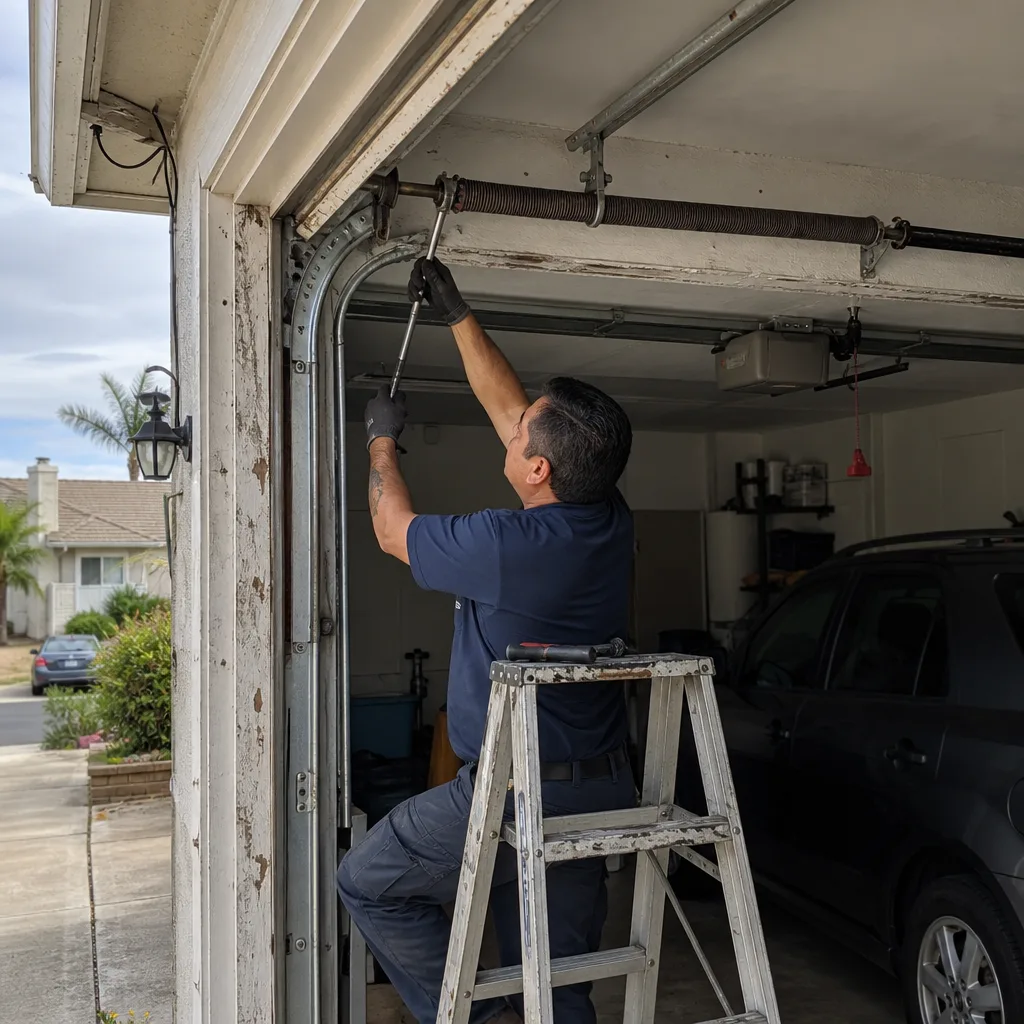 Before
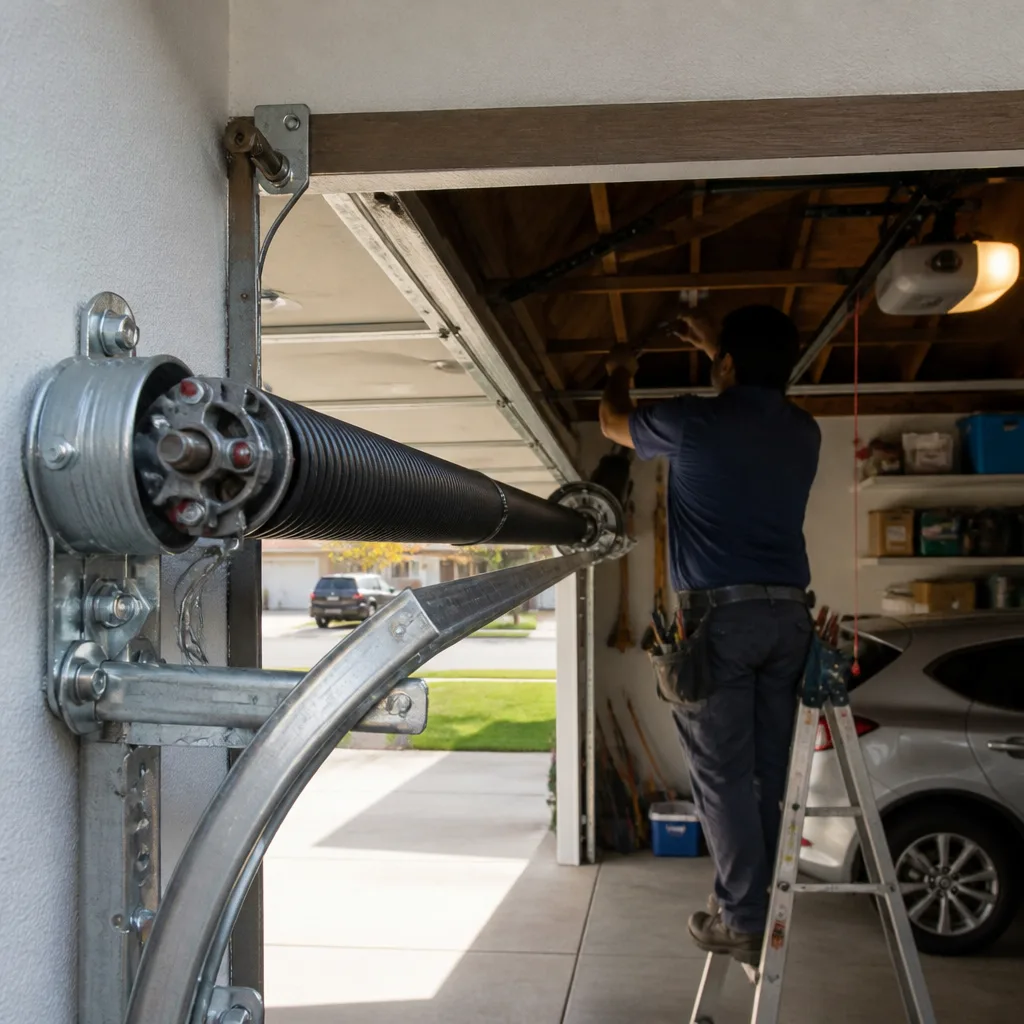 After
After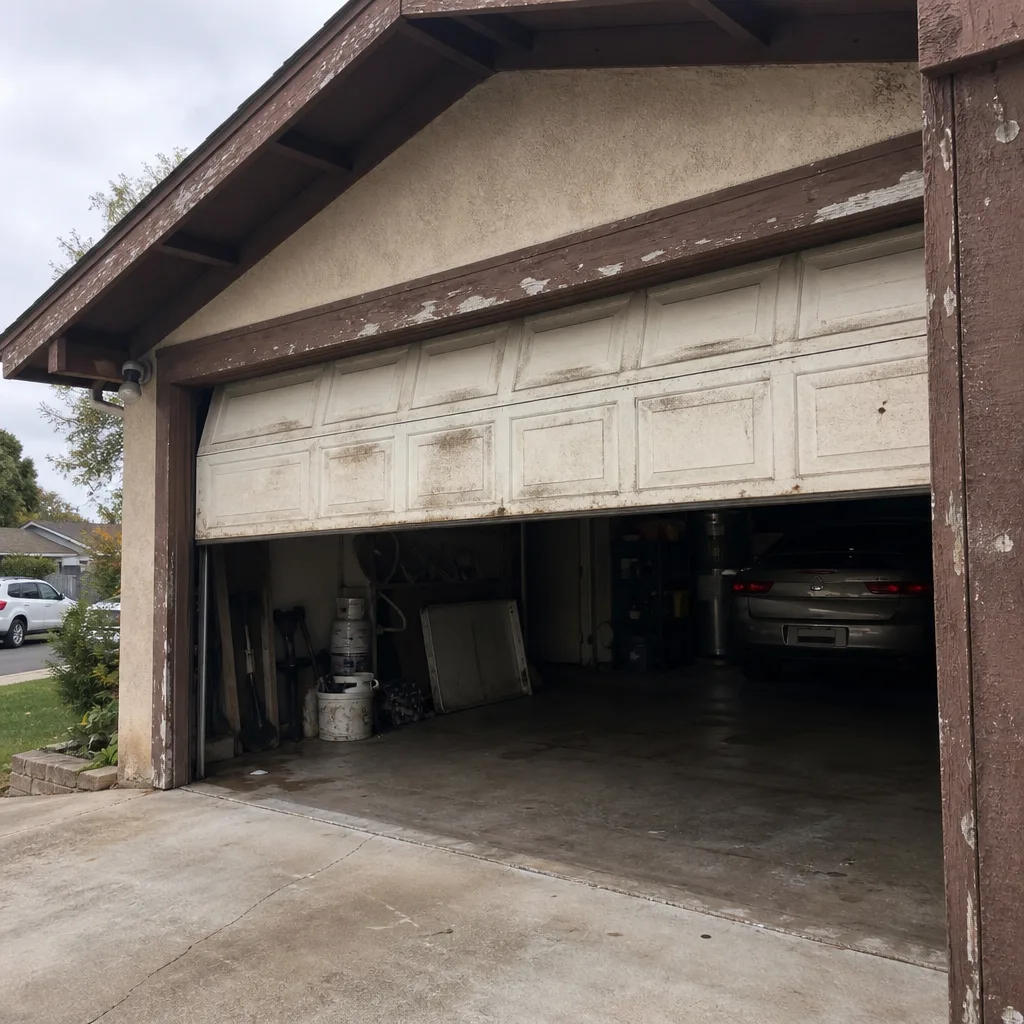 Before
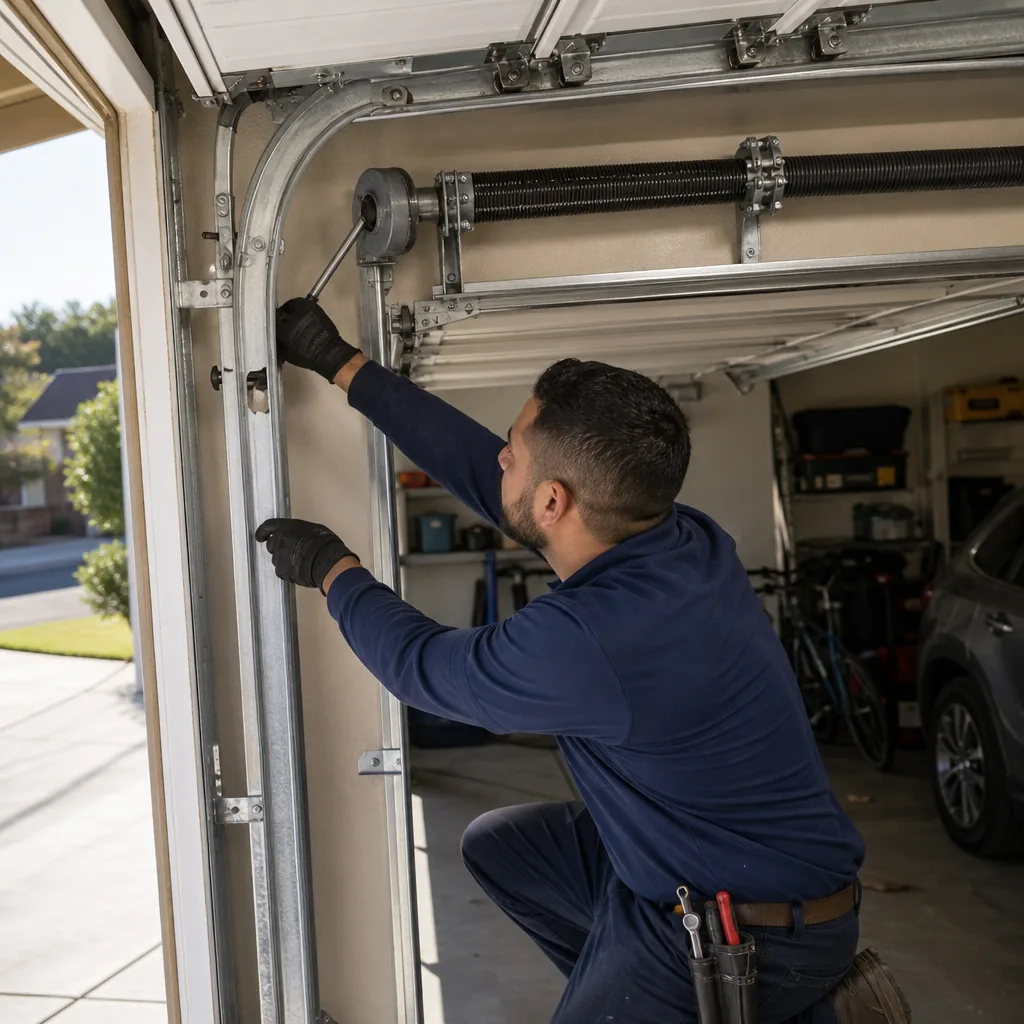 After
AfterGarage Door Warning Signs: A El Cajon Homeowner’s Reference Guide
A garage door that hesitates for two seconds before moving is not “just getting old.” That hesitation is demonstrating a measurable voltage drop or spring tension loss that will become a complete failure within weeks, not months. In our 42 years serving El Cajon and East County, we’ve learned that every mechanical failure sends advance signals. Most homeowners simply don’t know how to read them. This guide - along with our complete guide to garage doors in El Cajon - teaches you to interpret those signals accurately so you can schedule a repair on your own timeline instead of an emergency one.
Quick Answer
Garage door warning signs in El Cajon fall into five categories: movement irregularities (slow, uneven, or hesitant motion), specific sounds (grinding, popping, or squealing), visual deterioration (rust, fraying, or sagging), opener behavior changes (auto-reverse failures or multiple start attempts), and manual versus powered performance gaps. Catching these early typically means a $180-$340 repair; ignoring them often leads to $800-$1,400 replacement costs and a door that won’t open at all.
Table of Contents
- Slow Movement vs. Uneven Movement: Two Different Problems
- What Your Garage Door Sounds Like When It Fails
- Reading Your Opener’s Auto-Reverse Behavior
- When the Door Works by Hand but Not by Remote
- Visual Warning Signs in El Cajon’s Climate
- The Specific Danger of Torsion Spring Fatigue
- Garage Door Opener Warning Signs
- Common Mistakes to Avoid
- When to Call a Professional
- Frequently Asked Questions
Slow Movement vs. Uneven Movement: Two Different Problems
Homeowners in El Cajon often describe a door as “moving funny” and leave it at that. But slow movement and uneven movement point to entirely different failures with different repair costs. Learning to distinguish them saves you from misdiagnosis and unnecessary spending.
Slow movement means the door takes noticeably longer to open or close than it did six months ago. A standard 7-foot door should travel in roughly 12-15 seconds. If yours now takes 20 seconds or more, the cause is almost always spring tension loss. Garage door springs carry the door’s full weight - typically 150-250 pounds for a standard steel door. When springs weaken, the opener strains against that dead weight. The motor overheats, the gears wear prematurely, and eventually the opener fails completely. In Fletcher Hills and Rancho San Diego, we regularly see this pattern in homes built during the 1980s and 1990s housing booms, where original springs have simply reached end of life.
Uneven movement looks different. One side of the door rises faster than the other, or the door appears to “walk” in the track. This signals roller wear, track misalignment, or cable length imbalance - not spring failure. The distinction matters because spring replacement runs $180-$340, while roller and track work typically falls in the $220-$400 range. More importantly, continuing to operate an uneven door stresses the opener’s rail system and can warp the door panels themselves.
Here’s how to test which problem you have:
- Disconnect the opener by pulling the red emergency release cord.
- Lift the door manually to waist height and release it.
- A properly balanced door will stay in place or drift slowly; a door with spring problems will fall rapidly or feel heavy to lift.
- Observe whether the door stays level as you lift; if one side lags, you have an alignment or roller issue.
In El Cajon’s older neighborhoods like Bostonia and Crest, settled foundations can shift track mounting points over decades. We’ve measured track misalignments of 3/8 inch or more in homes where the concrete slab has shifted with seasonal soil expansion. That misalignment doesn’t correct itself, and the door’s daily operation slowly grinds the rollers oval.
Garage Door Repair in El Cajon covers both spring and alignment work, but knowing which you need helps you ask the right questions when you call.
What Your Garage Door Sounds Like When It Fails
Sound is the most reliable early warning system your garage door provides. The specific noise tells you which component is failing, often before any visible sign appears. We categorize garage door sounds into three diagnostic types: grinding, popping, and squealing. Each maps to a distinct repair.
Grinding is a low, continuous rumble that often vibrates through the house. It means metal is wearing against metal without proper lubrication or alignment. The most common sources are:
- Worn opener gears, especially in chain-drive units older than 10 years
- Degraded rollers where the steel wheel has worn through the nylon tire
- Track misalignment causing the roller to scrape the track edge
In El Cajon’s occasional marine layer conditions - particularly in areas west of Magnolia Avenue where morning fog lingers - moisture accelerates this wear. We’ve replaced opener gear assemblies in homes near Lake Jennings where the grinding had progressed so far that metal shavings collected on the opener housing.
Popping is a sharp, intermittent crack that occurs at specific points in the door’s travel. This almost always indicates a section hinge failing or a roller binding in the track. The sound is the door panel flexing against resistance, and each pop represents stress on the panel itself. Steel doors will eventually crack at the hinge point; wood doors will split. In our experience, popping that occurs at the same height every time means a specific roller or hinge, while random popping suggests multiple points of wear.
Squealing is a high-pitched whine during operation, most common in belt-drive openers or doors with dry bearings. Unlike grinding, squealing rarely indicates immediate failure, but it signals that lubrication has broken down. In El Cajon’s dry summer heat, lithium grease can evaporate or harden within 18 months. We recommend annual lubrication, as covered in our Seasonal Garage Door Care for El Cajon guide, but most homeowners never do it until the squealing becomes unbearable.
A note on brand-specific sounds: Raynor and Craftsman chain-drive openers from the early 2000s are known for gear wear that produces a distinctive “coffee grinder” sound before complete failure. If you own one of these units and hear that pattern, the gear assembly is typically 30-60 days from stripping completely.
Reading Your Opener’s Auto-Reverse Behavior
Every garage door opener manufactured after 1993 includes an auto-reverse safety system. Federal law requires it. But that same system functions as a diagnostic tool that most homeowners ignore. The way your opener behaves when it encounters resistance tells you exactly what is failing.
Single attempt, immediate reverse: The door starts down, meets slight resistance, and reverses promptly. This is normal safety function, but if it happens on an apparently clear path, check for debris on the floor, misaligned safety sensors, or a warped door bottom that contacts the frame. In El Cajon, where pack rats and ground squirrels are common in hillside neighborhoods like Mt. Helix and Jamacha, we’ve found sensor beams blocked by nesting material, leaves, or even spider webs dense enough to trigger the infrared beam.
Multiple start attempts before movement: You press the button, the opener clicks or hums, the door doesn’t move, and you press again. Two or three attempts later, it finally engages. This pattern indicates opener motor capacitor failure or excessive door weight due to spring loss. The motor generates starting torque but cannot overcome the load until the capacitor partially charges between attempts. This is a precursor to complete opener failure, typically within 2-4 weeks of the symptom appearing.
Reverses after partial travel: The door descends 2-3 feet, then reverses. This is the most dangerous pattern because it suggests a binding component that the safety system is correctly detecting. The cause is usually a frayed cable catching in the drum, a cracked roller jamming in the track curve, or spring tension so uneven that the door torques in the frame. Continuing to operate the door in this condition risks the safety system failing to detect a genuine obstruction, with serious injury potential.
Does not reverse at all: If your door hits an object and continues downward, the auto-reverse system has failed entirely. Federal standards require the door to reverse within 2 seconds of contact with a 1.5-inch test block placed on the floor. Test this monthly with a roll of paper towels. If the door does not reverse, disconnect the opener and call for service immediately. This is not a maintenance item; it is a safety failure.
Garage Door Opener in El Cajon service includes safety system testing and adjustment as standard practice on every call.
When the Door Works by Hand but Not by Remote
This is the single most misunderstood symptom in garage door repair, and misunderstanding it costs homeowners hundreds of dollars. When a door moves smoothly by manual operation but struggles or fails under opener power, the problem is almost always spring balance - not opener failure.
Here’s why: a garage door opener is designed to move a balanced door, not lift dead weight. The springs carry the door’s weight; the opener provides controlled motion. When springs weaken, the door becomes a 200-pound object that the 1/2-horsepower opener cannot reliably lift. The motor overheats, the thermal cutoff trips, and the homeowner concludes they need a new opener.
In El Cajon, we see this misdiagnosis frequently - as detailed in our step-by-step guide to hiring a garage door contractor in El Cajon - in homes with Wayne Dalton TorqueMaster spring systems, where the springs are concealed inside the tube and wear is not visible. Homeowners replace a perfectly good opener - $400-$600 - when they needed spring replacement at roughly half that cost. The correct diagnostic sequence is simple:
- Disconnect the opener and test manual operation.
- If the door lifts smoothly and stays at waist height when released, springs are adequate and the opener is suspect.
- If the door feels heavy, falls rapidly, or won’t stay open, springs are the problem regardless of opener behavior.
The cost distinction is significant. Spring replacement in El Cajon typically runs $180-$340 depending on spring type and door size. Opener replacement runs $450-$800 for a quality unit with professional installation. We’ve arrived at calls where the homeowner had already purchased a new opener based on self-diagnosis, and we had to explain that their new unit would fail the same way without spring replacement.
Our approach at Mainspring is to diagnose before quoting. We test balance on every service call, even when the customer is certain they know the problem. It’s part of how we deliver a square deal - no surprises on the bill, and no selling you what you don’t need.
Visual Warning Signs in El Cajon’s Climate
East County’s climate creates specific patterns of garage door deterioration that differ from coastal San Diego. Understanding these local conditions helps you interpret what you see.
El Cajon sits in a rain shadow with hot, dry summers and mild winters, but it’s not immune to moisture damage. The marine layer pushes inland through Mission Gorge and up the Sweetwater River valley roughly 40-60 mornings per year, particularly from October through April. This moisture settles on cold metal surfaces and evaporates slowly in the morning shade. The result is surface rust that homeowners often dismiss as cosmetic.
Surface rust versus structural fatigue: Surface rust appears as uniform orange discoloration on springs, cables, or hardware. It flakes away with light abrasion and does not significantly weaken the component. Structural fatigue shows as localized pitting, cracking, or a “waisted” appearance where the metal has narrowed. On torsion springs, look for a gap opening between coils when the door is closed - this indicates the spring has lost tension and is working beyond its design cycle count. We’ve replaced springs in El Cajon homes where the gap had grown to 3/4 inch, meaning the spring was providing perhaps 60% of rated lift.
Cable fraying: Garage door cables are aircraft-grade galvanized steel, but they run over drums and through sheaves that create wear points. Inspect where the cable wraps the drum and where it passes through the bottom bracket. A single broken wire in a cable strand is an immediate replacement item. We’ve seen cables with 15-20% strand failure still holding, but they fail catastrophically without further warning, and the sudden release of tension damages tracks, panels, and anything in the door’s path.
Panel sagging: Steel doors with insufficient interior bracing can develop a concave bow across the top section. This is visible when the door is closed and sunlight shows across the surface. The bow indicates the door is operating under excess weight or imbalanced tension, and it will eventually cause the top section to separate from the hinge points. In El Cajon’s intense summer heat, dark-colored doors can reach 140°F surface temperature, accelerating metal fatigue in already stressed panels.
Weather seal deterioration: The rubber bottom seal and vinyl side seals harden and crack in dry heat. A failed bottom seal allows water intrusion during rare heavy rains, and in El Cajon’s occasional flash flood conditions, that water can damage stored items before the homeowner notices. More subtly, a hardened seal creates drag that the opener must overcome, masking as opener weakness when it’s actually a $25 seal replacement.
Garage Door Installation in El Cajon includes proper seal specification for local climate conditions, a detail some installers overlook.
The Specific Danger of Torsion Spring Fatigue
Torsion springs are the most dangerous component in a garage door system and the most misunderstood. They store enough energy to lift 150-400 pounds of door weight, and that energy releases instantly if the spring breaks. A breaking spring can damage property, and attempting to replace one without proper tools and training causes serious injury or death annually.
Safety caveat: Never attempt to wind, unwind, or replace a torsion spring yourself. The winding bars must engage the cones with precise fit, and the tension must be released in controlled increments. Improper technique causes the bar to slip, and the stored energy can fracture bones or worse. This is trained professional work, period.
The warning signs of torsion spring fatigue are specific and observable:
- A visible gap between coils when the door is closed, indicating tension loss
- A loud bang from the garage, often mistaken for a car backfire or transformer explosion
- A door that suddenly feels “heavier” to lift manually
- An opener that previously handled the door but now strains or fails
- Cable looseness or unwrapping from the drum when the door is open
In El Cajon, spring life is measured in cycles, not years. A standard 10,000-cycle spring in a home with two daily departures lasts roughly 13-14 years. Many homes in the Fletcher Hills and Bostonia areas were built with original springs now approaching or exceeding 30 years. These springs are not merely old; they are operating far beyond their engineered fatigue limit, with unpredictable failure timing.
We carry springs rated at 25,000 and 50,000 cycles, and we size them precisely to door weight and track configuration. A correctly specified spring set, properly installed, gives predictable replacement intervals and smooth operation. The upfront cost difference is modest; the operational difference is years of reliable function versus repeated service calls.
Our Mainspring Garage Door Co. home page details our full service range, but spring work remains our most frequent call - and the one where proper diagnosis matters most.
Garage Door Opener Warning Signs
Opener failure rarely arrives without announcement. The signs are behavioral, and they progress through predictable stages if ignored.
Stage 1: Delayed response. You press the remote and count one, two before the opener engages. This is often the first sign of failing motor capacitors or weakening remote signal strength. In El Cajon’s dense housing tracts, radio interference from neighboring openers, WiFi networks, and even LED light bulbs can mask as opener failure. We test signal strength and interference patterns before condemning any component.
Stage 2: Incomplete travel. The door opens or closes partially, then stops. If it stops in the same position consistently, the travel limit switches need adjustment - a 10-minute calibration. If it stops at random positions, the motor is overheating due to excess load or internal wear. The distinction matters: limit adjustment is a service call, motor overheating typically precedes replacement.
Stage 3: No response with audible effort. The opener hums or clicks but the door doesn’t move. This indicates mechanical failure - stripped gears, broken drive coupler, or a disengaged trolley. Chain-drive openers from Chamberlain and LiftMaster built between 1995 and 2010 are particularly prone to nylon gear wear; the gear teeth strip gradually, and the final failure often occurs during temperature extremes when the lubricant is least effective.
Stage 4: Complete electrical silence. No light, no sound, no response to any control. This is usually power supply failure, circuit board damage from electrical surge, or motor burnout. El Cajon’s occasional power fluctuations during Santa Ana wind conditions can damage opener electronics even when other household items survive. We recommend surge protection on all opener outlets, particularly in areas with older electrical infrastructure.
Opener replacement decisions should consider door condition, not just opener failure. Installing a new opener on a door with worn springs or damaged tracks is poor economy. We assess the full system and quote accordingly, even when the customer called for “just the opener.”
Common Mistakes to Avoid
- Ignoring a two-second hesitation. That delay is measurable voltage drop or spring tension loss, not normal aging. In our experience, 80% of doors showing this symptom fail completely within 30 days.
- Applying WD-40 to garage door components. WD-40 is a solvent and water displacer, not a lubricant. It strips existing grease and attracts dust. Use lithium-based garage door lubricant on rollers, hinges, and bearings; use silicone spray on weather seals.
- Testing the auto-reverse with a rigid object. Federal testing protocol specifies a 1.5-inch test block or roll of paper towels. Using a rigid object can damage the door or opener and does not test the force sensitivity correctly.
- Replacing the opener when springs fail. As detailed above, this misdiagnosis costs homeowners hundreds. Always test manual operation before assuming opener failure.
- Dismissing surface rust on springs as cosmetic. While surface rust alone isn’t critical, it often conceals pitting that indicates structural fatigue. In El Cajon’s marine layer conditions, rust progresses faster than inland desert climates.
- Continuing to operate a door that has popped off track. A door partially out of track is unstable and can fall. Disconnect the opener, secure the door if possible, and call for service. Operating it “just once more” to get the car out risks panel damage or injury.
- Waiting for “both springs” to fail. Dual-spring systems are designed with redundancy, but operating on one failed spring overloads the survivor, damages the opener, and often warps the door. Replace springs in matched pairs.
When to Call a Professional
Call for service when you observe any warning sign described in this guide - and explore more guides & resources for ongoing maintenance - but especially when: the door reverses unpredictably, a spring shows visible gap or damage, cables are frayed, the opener hums without moving the door, or the door is off track. These conditions worsen with operation and rarely self-correct.
Mainspring Garage Door Co. offers free estimates in El Cajon. Our technicians arrive with springs, cables, rollers, and openers on the truck, and most repairs are completed in a single visit. The flat price is stated before any work begins, and every job carries our 90-Day Done Right Promise in writing. Call (619) 853-0087 to schedule.
Frequently Asked Questions
Most common repairs in El Cajon range from $180 for single spring replacement to $340 for dual spring systems, with roller and track work typically between $220 and $400. Opener repairs run $150-$280, while full opener replacement with installation is $450-$800 depending on horsepower and features. We provide exact written quotes before starting any work, and our $50 Off Any Repair Over $250 standing offer applies automatically. Call (619) 853-0087 for a free estimate.
Broken torsion springs cannot be repaired; they must be replaced. A spring has reached its engineered cycle limit, and any “repair” would be temporary and dangerous. Extension springs can sometimes be re-tensioned if the failure is in the cable or pulley system rather than the spring itself, but this is uncommon. We replace springs in matched pairs to maintain balanced lift, even when only one has failed.
Temperature affects lubricant viscosity, metal contraction, and opener electronics. In El Cajon’s mild climate, this is less pronounced than in freezing regions, but early morning temperatures in January and February can still thicken grease and slightly contract springs. If your door shows seasonal variation, the underlying issue is typically marginal spring tension or worn rollers that temperature stress exposes. The symptom is seasonal; the cause is year-round wear.
We recommend annual professional inspection and lubrication for doors under 10 years old, and semi-annual service for older systems or doors with daily use. Our $89 Seasonal Tune-Up includes balance testing, safety system verification, hardware inspection, and proper lubrication. Given El Cajon’s dry heat and occasional marine layer moisture, annual service prevents the accelerated wear we see in neglected systems.
No. Our price is quoted and agreed before any work begins. We diagnose first, then provide a flat written quote. If we discover additional issues during repair, we stop and discuss them with you before proceeding. There are no surprises on the bill, and our Free Second Opinion on any written estimate ensures you can compare with confidence.
Yes. Our trucks are stocked with springs, cables, rollers, hinges, and openers from all major brands including Amarr, Wayne Dalton, and Craftsman. Most repairs are completed in a single visit with no waiting for parts. For Raynor and other specialty hardware, we maintain next-day supplier relationships, but same-day completion covers roughly 90% of our El Cajon calls.
The Bottom Line
Every garage door failure in El Cajon sends advance signals: movement changes, specific sounds, visual deterioration, and opener behavior shifts. Learning to read these signs lets you schedule repairs at your convenience, avoid emergency premiums, and prevent the cascade damage that occurs when a failing component stresses the entire system. The two-second hesitation, the grinding at 6 AM, the slight sag in the top panel - these are not quirks of age. They are measurable, diagnosable precursors to failure. Address them early, and you replace a spring. Ignore them, and you replace a spring, an opener, and possibly a door. We’ve been serving El Cajon since 1984, and we’ve learned that the homeowners who call early are the ones who never have to think about their garage door again.
Written by Carl Dutton, Owner at Mainspring Garage Door Co., serving El Cajon since 2016.