
Last updated September 10, 2026
Full 25-point door and opener safety check with every visit - springs, cables, rollers, tracks, and your LiftMaster or Chamberlain opener included
You get a price before we start. It does not change when the truck arrives.
 Before
 After
After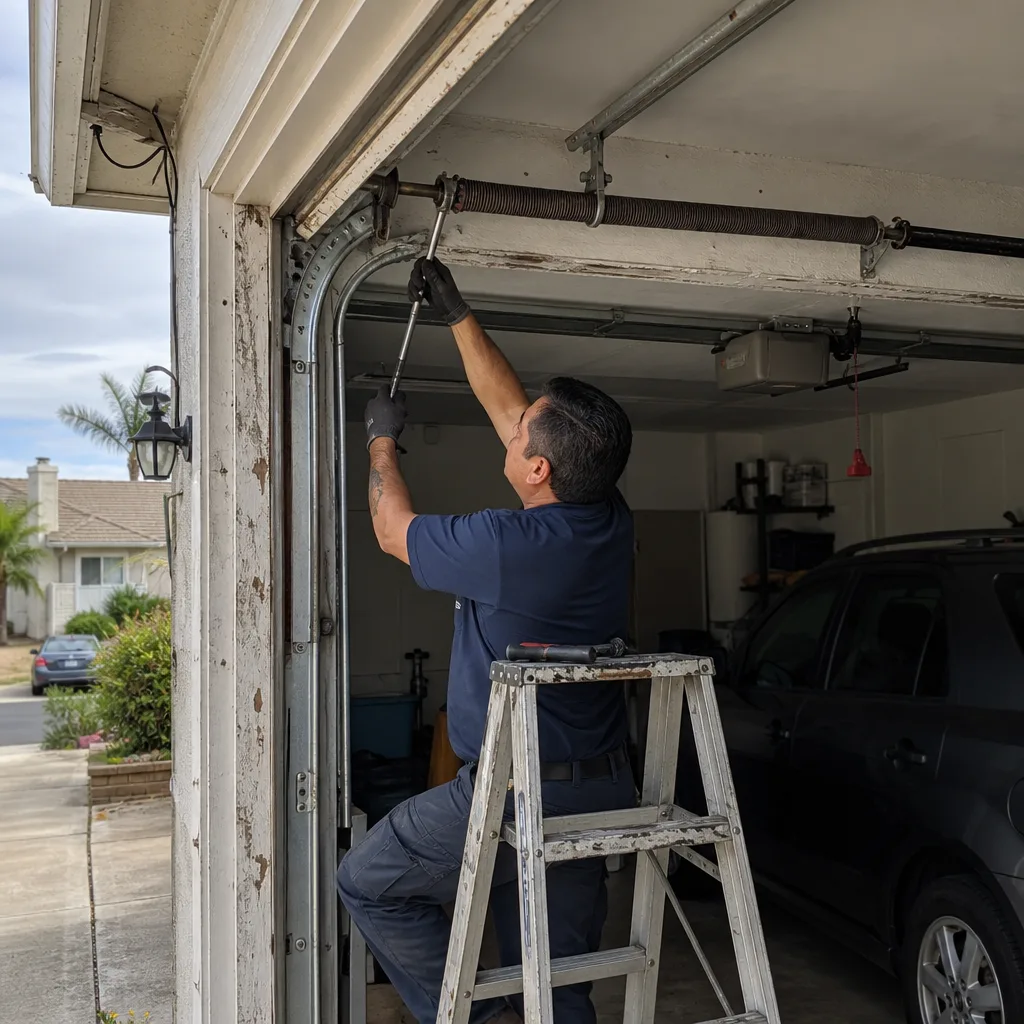 Before
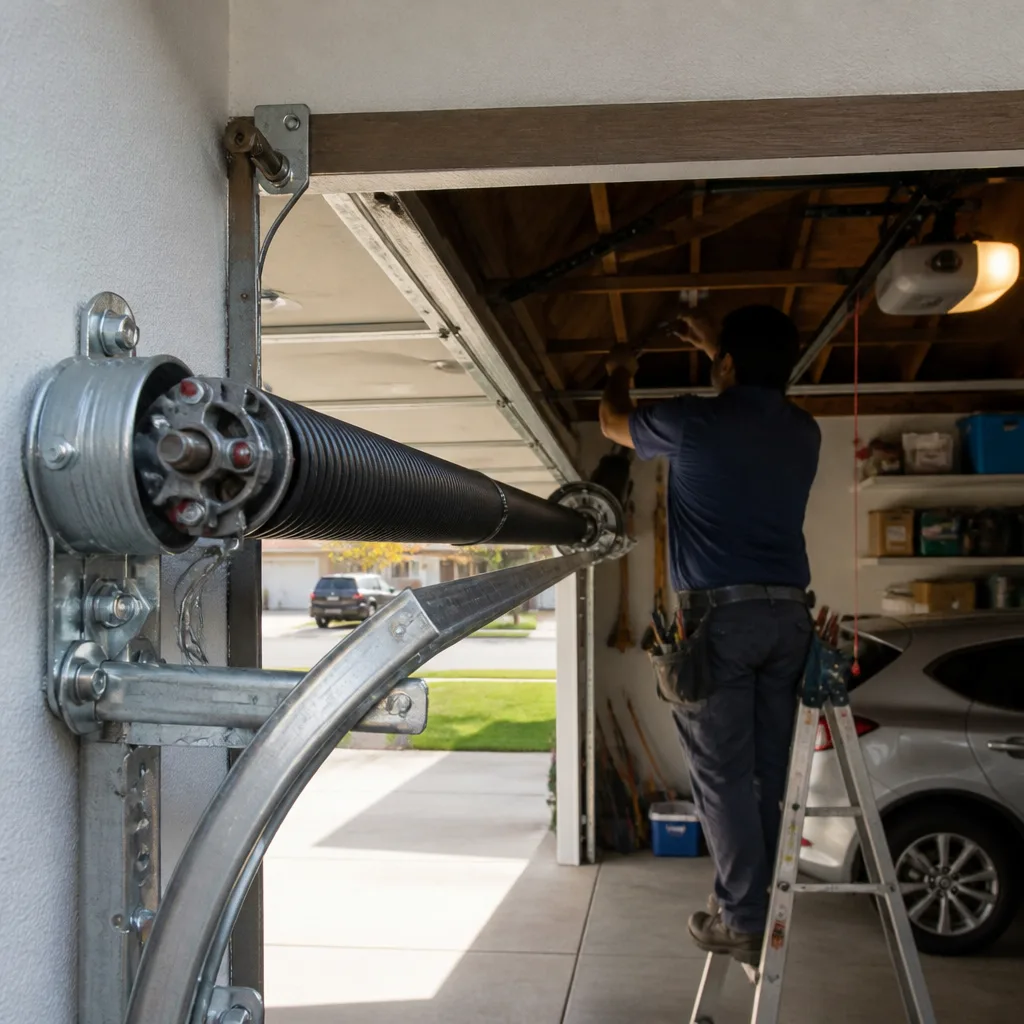 After
After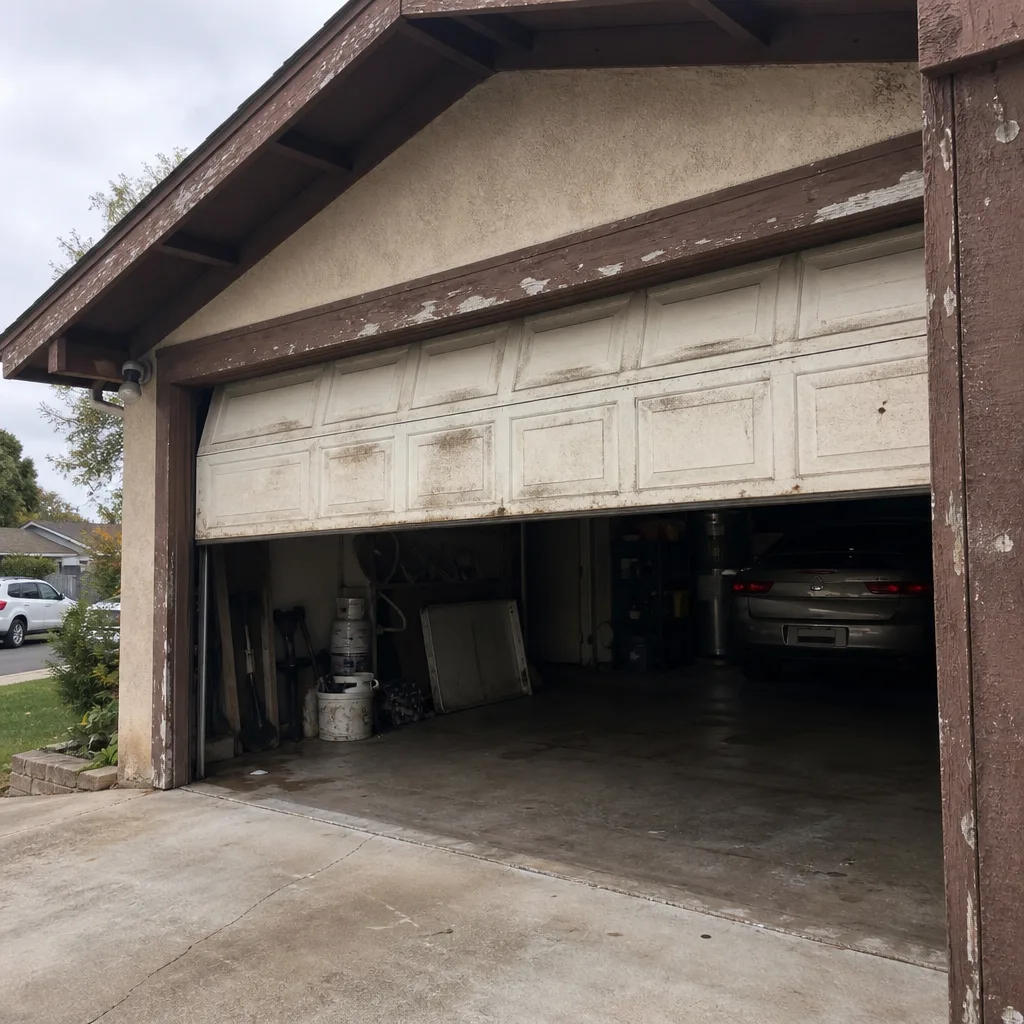 Before
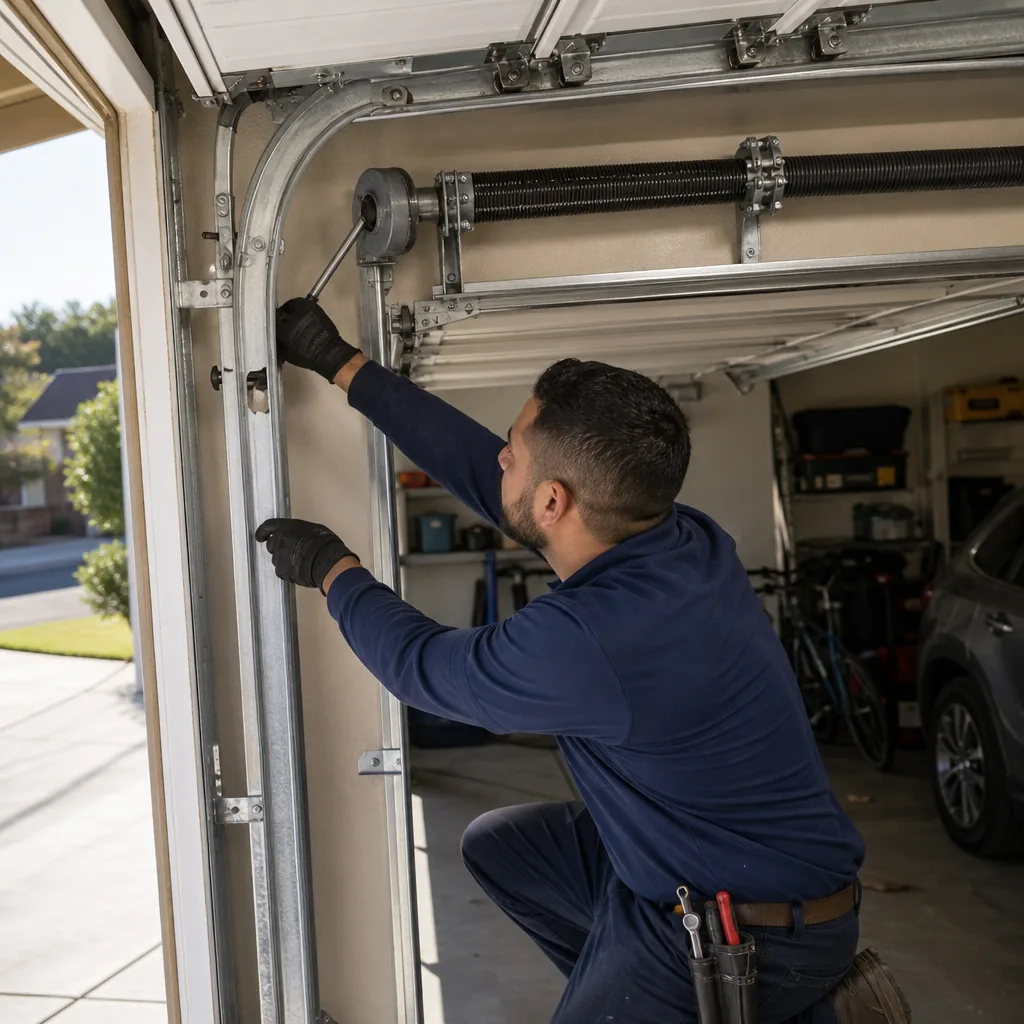 After
AfterGarage Door Cost Breakdown: The El Cajon Homeowner’s Reference for 2026
The single biggest source of surprise charges in garage door billing is labor billed by the hour rather than by the job. A technician who quotes $85 per hour can easily turn a two-hour spring replacement into a four-hour ordeal once they are in your driveway, and that distinction should appear in the first paragraph of any honest quote but rarely does. In El Cajon, where many of us have owned the same home for twenty years or more, we have seen neighbors pay $400 for work another homeowner got done for $220, with no visible difference in quality. This guide breaks down exactly where that money goes, which costs are fixed, which are flexible, and which low bids simply hide their true price in the fine print. For more guides & resources on garage door care, explore our blog.
Quick Answer
A typical garage door repair in El Cajon in 2026 runs between $180 and $650 depending on the component, while full door replacement ranges from $1,200 to $3,800 installed. The widest price swings come from labor pricing models, not parts quality. A legitimate shop quotes flat-rate, job-based pricing upfront, carries common parts on the truck, and puts a written labor warranty in your hand before work begins.
Table of Contents
- Component-by-Component Costs in El Cajon for 2026
- Flat-Rate vs. Hourly Labor: The Hidden Cost Multiplier
- Single-Car vs. Double-Car: Why It Is Not Simply Double
- How Materials Markup Works and What Is Fair
- Which Upgrades Pay Back in El Cajon and Which Do Not
- What a Written 90-Day Warranty Is Worth in Real Dollars
- Common Mistakes to Avoid
- When to Call a Professional
- Frequently Asked Questions
- The Bottom Line
Component-by-Component Costs in El Cajon for 2026
Every garage door repair or replacement involves some combination of parts and labor. Here is what each component should cost from a legitimate El Cajon shop in 2026, with parts and labor separated so you can compare apples to apples.
| Component | Parts Range | Labor Range | Total Installed |
|---|---|---|---|
| Torsion spring replacement (single) | $65 - $140 | $115 - $200 | $180 - $340 |
| Torsion spring replacement (pair) | $120 - $260 | $140 - $240 | $260 - $500 |
| Extension spring replacement | $45 - $95 | $100 - $180 | $145 - $275 |
| Cable replacement (pair) | $35 - $75 | $95 - $170 | $130 - $245 |
| Roller replacement (full set, 10-12) | $60 - $180 | $120 - $200 | $180 - $380 |
| Panel replacement (single, steel) | $180 - $450 | $140 - $220 | $320 - $670 |
| Garage door opener (belt drive, installed) | $280 - $520 | $160 - $280 | $440 - $800 |
| Garage door opener (chain drive, installed) | $180 - $340 | $140 - $240 | $320 - $580 |
| Safety sensor replacement (pair) | $45 - $85 | $85 - $150 | $130 - $235 |
| Weather seal replacement (bottom seal) | $25 - $65 | $75 - $140 | $100 - $205 |
These ranges reflect El Cajon’s market specifically. We are not San Diego proper with its higher cost of living, and we are not a rural outpost with limited supplier access. Parts flow through the same distribution centers that serve the county, and most established shops, including ours, maintain local inventory for same-day completion.
Spring failures dominate our call volume in El Cajon, particularly in older neighborhoods like Bostonia and Rancho San Diego where original doors from the 1970s and 1980s are still in service. These aging systems often show Garage Door Warning Signs: A El Cajon Homeowner’s Reference Guide before they fail completely. Those doors used heavier, shorter-cycle springs that were never designed for decades of daily use. When we open a torsion tube in those areas, we regularly find springs rated for 10,000 cycles that have been stretched past 30,000. The replacement spring we install is rated for 25,000 to 30,000 cycles, which translates to roughly 15 to 20 years of normal residential use.
Panel replacement deserves special attention because it is where homeowners most often overpay. A single dented panel on a steel door does not always require full door replacement, but some shops will quote $2,000 for a new door rather than source a matching panel for $400 installed. The catch: panel availability depends on the original manufacturer and model year. We carry factory-familiar knowledge of garage door repair in El Cajon across Amarr, Wayne Dalton, Craftsman, and Raynor lines, which lets us identify whether a matching panel still exists or whether the door style has been discontinued.
Flat-Rate vs. Hourly Labor: The Hidden Cost Multiplier
The labor line on your quote is where honest pricing separates from gamesmanship. There are two models in this trade, and only one protects the homeowner.
Flat-rate labor: The technician quotes $195 for a spring replacement, and that is the labor charge regardless of whether the job takes 45 minutes or two and a half hours. This is how we price at Mainspring. The rate is derived from our actual average time on that job type across hundreds of calls, plus a reasonable margin for the occasional difficult installation. You know the number before the work starts, and it does not change.
Hourly labor: The technician quotes $85 per hour, “probably two hours,” and the final bill shows 3.5 hours at $95 per hour because “the old hardware was corroded” or “we had to make an adjustment.” The initial quote sounded lower. The final invoice never is.
Hourly billing creates a structural conflict of interest. The technician is paid more when the job takes longer. Even an honest technician working hourly faces pressure from their employer to stretch time, and the homeowner has no way to verify whether 3.5 hours was truly necessary. We have responded to calls in El Cajon where a competitor’s technician spent four hours on a spring replacement that we routinely complete in 60 to 90 minutes. The homeowner paid $380 in labor alone, nearly double our flat rate for the same outcome.
Three questions to ask any shop before scheduling:
- Is labor quoted by the job or by the hour?
- If by the hour, what is the rate for travel time, and does the clock start at your shop or at my driveway?
- What is the maximum labor charge if complications arise?
A shop that hesitates on any of these answers is not offering a square deal. The flat-rate shop has already absorbed the risk of complications into their pricing model. That is their business to manage, not yours.
Single-Car vs. Double-Car: Why It Is Not Simply Double
A double-car garage door is wider, heavier, and more complex than a single-car door, but the cost relationship is not linear. Understanding why helps you evaluate quotes and avoid overpaying for what is essentially the same hardware scaled up.
Single-car door (8 to 9 feet wide):
- One torsion spring or two extension springs
- Standard 1/2 horsepower opener sufficient
- Lighter track hardware, simpler installation
- Replacement cost: $1,200 - $2,400 installed (steel, non-insulated to moderately insulated)
Double-car door (16 feet wide):
- Two torsion springs required for proper balance
- 3/4 horsepower opener recommended for longevity
- Heavier track, more rollers, reinforced struts
- Replacement cost: $1,800 - $3,800 installed (steel, comparable insulation level)
The double-car door costs roughly 50 to 70 percent more, not 100 percent more. The springs are the same diameter and wire gauge, just longer. The opener is a step up in horsepower, not a different category of machine. The track is standard hardware in longer lengths. Where homeowners get overcharged is when a shop quotes double-car labor at double the single-car rate, or insists on premium hardware upgrades that the door weight does not justify.
In El Cajon’s older developments, particularly around Madison Avenue and the original Bostonia tracts, we see a lot of 16-foot doors on detached garages that were built with minimal headroom. Those installations require low-headroom track kits, which add $80 to $150 in parts but should not add $200 in labor. The installation technique is different, not more time-consuming. A knowledgeable technician has done dozens of them.
How Materials Markup Works and What Is Fair
Every service trade marks up parts. The question is how much, and whether the markup is disclosed. In garage door work, a fair parts markup runs 30 to 60 percent above wholesale cost. That covers inventory carrying cost, warranty replacement risk, and the shop’s investment in keeping common parts on the truck.
Parts gouging starts at 100 percent markup and climbs from there. We have seen itemized invoices where a $22 wholesale roller set was billed at $89, or a $140 wholesale opener rail kit appeared at $340. The homeowner has no way to spot this without knowing wholesale prices, which is why itemized quotes matter.
Here is what transparency looks like:
- The quote lists each part by description and individual price
- The labor line is separate and flat-rate
- The total is the sum, with no “shop fee” or “environmental charge” added after the fact
Some shops bury markup in bundled pricing: “$495 for spring replacement, parts and labor included.” This is not inherently dishonest, but it prevents comparison. A bundled quote of $495 could represent $120 in parts and $375 in labor, or $220 in parts and $275 in labor. The homeowner cannot tell whether they are paying a fair labor rate or an inflated parts markup.
At Mainspring, we itemize every quote and state the flat labor rate separately. The price you approve is the price on the invoice. No surprises on the bill.
One El Cajon-specific note: our climate is dry and warm, which means rust is less aggressive than coastal San Diego but dust and grit are constant. Rollers and hinges wear from particulate intrusion more than corrosion. A shop that stocks only standard-grade rollers in this market is doing you a disservice. We carry sealed-bearing nylon rollers rated for dusty environments, which cost us more wholesale but last twice as long in local conditions. That is the kind of parts decision a markup should justify.
Which Upgrades Pay Back in El Cajon and Which Do Not
Not every available upgrade makes sense for our specific climate and housing stock. Here is the honest assessment from 42 years of working on El Cajon doors.
Upgrades with a local payback case:
- Belt-drive openers: Worth the $60 to $120 premium over chain drive. El Cajon’s attached garages are common, and the reduced noise transfers directly to living space comfort. We install LiftMaster and Chamberlain belt-drive units regularly for this reason.
- Battery backup: Required by California state law for new opener installations since 2019, and justified by our fire season power shutoffs. A door that opens during a blackout is not a luxury here. Existing openers are grandfathered, but replacement units must include it.
- Insulated steel doors (R-value 9 to 12): Makes sense for attached garages and west-facing doors that absorb afternoon sun. El Cajon’s summer temperatures regularly hit the 90s, and an uninsulated garage can reach 110 degrees, stressing opener electronics and making adjacent rooms harder to cool. For detached garages used only for parking, the payback is longer.
- Wind load reinforcement: Generally unnecessary in El Cajon. Our inland location sees none of the coastal wind exposure that justifies this upgrade in Del Mar or Imperial Beach. A shop pushing wind load doors here is selling fear, not function.
Upgrades without local justification:
- Ultra-high R-value doors (R-16+): The incremental cost rarely pays back in our mild winters. The door is not the thermal weak point of a typical El Cajon garage; the uninsulated block walls and concrete slab are.
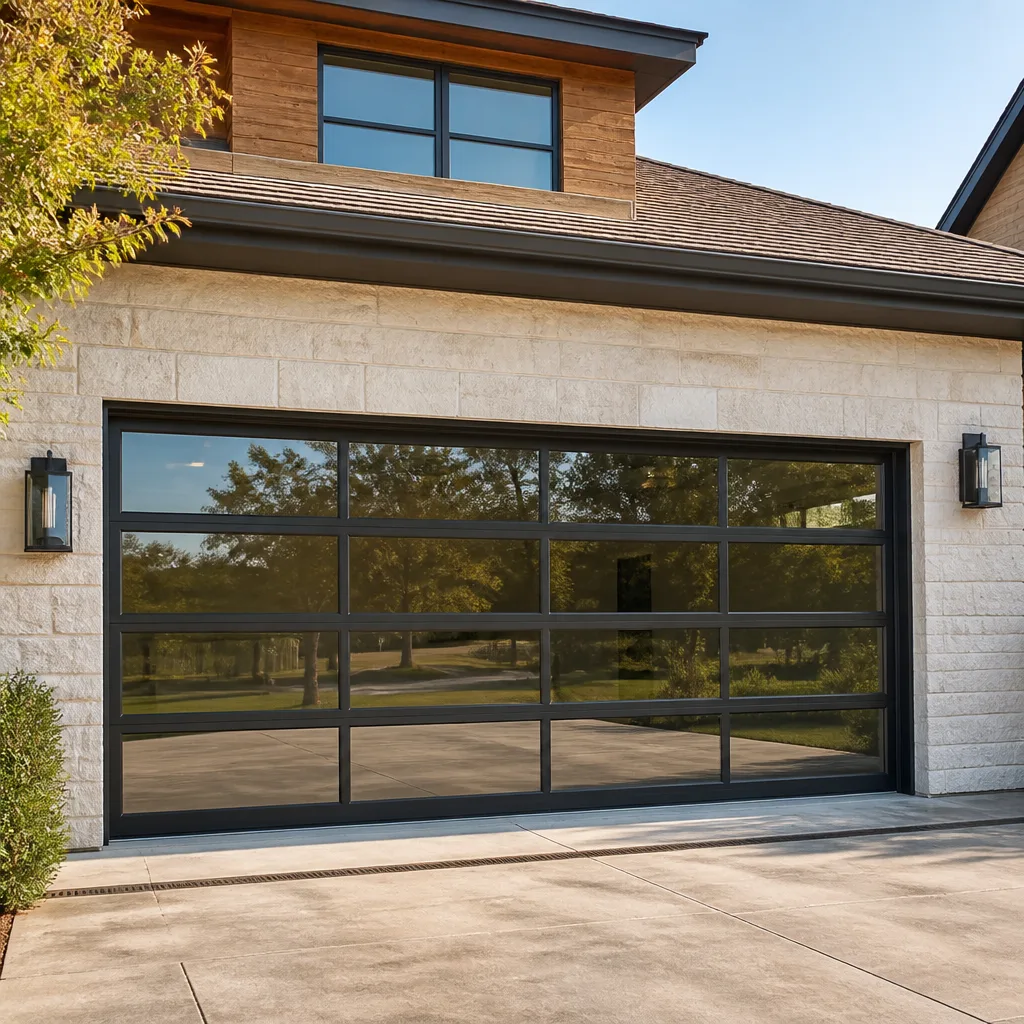
- Full-view glass doors: Beautiful in architectural magazines, but the solar heat gain through aluminum-framed glass is substantial in our climate. We have replaced full-view doors that the homeowner loved for six months and regretted by August.
- Smart home integration beyond basic Wi-Fi: Useful for some, but the subscription fees and compatibility churn mean most El Cajon homeowners over 60 never activate the features they paid for.
When we quote garage door installation in El Cajon, we ask how you use the space and which direction the door faces. The right door for a west-facing attached garage in Fletcher Hills is different from the right door for a north-facing detached unit in Crest.
What a Written 90-Day Warranty Is Worth in Real Dollars
A warranty is not a favor. It is a financial instrument, and its value can be calculated.
Consider the probability of a callback. In our experience, roughly 8 to 12 percent of garage door repairs require some adjustment within 90 days. Springs settle, cables stretch slightly, openers need limit switch tweaking. A shop that warranties labor for 90 days is essentially self-insuring against a 10 percent callback rate.
Now consider the cost of that callback to an uninsured homeowner. A second service call for a spring adjustment runs $150 to $250 in El Cajon market rates. Over ten years of normal homeownership with two or three repair events, the probability-weighted cost of uncovered callbacks approaches $200 to $400.
A written 90-day labor warranty eliminates that risk entirely. More importantly, it signals something about the shop offering it. A verbal guarantee costs nothing to give and nothing to break. A written warranty requires the shop to maintain records, honor claims without dispute, and absorb the cost of their own mistakes. Only a shop with low callback rates and financial stability can afford to offer it routinely.
Our 90-Day Done Right Promise is stated in writing on every job. If it is not right, we come back. No paperwork to file, no argument about whether the issue is “related” to the original repair, no window of availability three weeks out. We treat a warranty call with the same urgency as a new customer because we understand that a promise kept is worth more than a low bid broken.
The dollar value is real. The trust value is greater.
Common Mistakes to Avoid
- Accepting a phone quote without an on-site inspection. A spring replacement over the phone is a guess. The technician needs to see the door weight, headroom, drum type, and spring configuration. We offer free estimates precisely because guessing serves no one.
- Ignoring the “shop supplies” or “trip charge” footnote. A $189 spring replacement with a $65 trip charge and $28 shop fee is a $282 repair wearing a disguise. We quote the total, including all fees, upfront.
- Choosing the lowest bid without comparing warranty terms. The $150 spring job with no written warranty becomes a $380 job when the spring fails in six weeks and the shop has disappeared or “does not cover springs.”
- Assuming all springs are the same. A 10,000-cycle spring and a 30,000-cycle spring look identical to a homeowner but differ by $40 in wholesale cost and 15 years in service life. Ask the cycle rating.
- Neglecting to ask about opener force settings after a spring replacement. New springs are stronger than worn ones. If the opener force is not recalibrated, it will overwork and fail prematurely. This is standard procedure for us, but not for every shop.
- Waiting until complete failure to call. A door that groans, shudders, or hangs crooked is telling you something. Addressing it early prevents cascade damage to the opener, cables, and panels. In El Cajon’s dusty environment, a $89 seasonal tune-up catches problems before they become $400 repairs.
When to Call a Professional
Some garage door symptoms are inconvenient. Others are genuinely hazardous. Torsion springs store enough energy to cause serious injury or death if mishandled. Cables under tension can lash unpredictably when detached. If you are not trained in this trade, do not attempt to adjust or release these components.
Call a professional when:
- The door will not open or closes partially then reverses
- You hear a loud bang from the garage, typically a spring breaking
- Cables appear frayed, loose, or detached from the drum
- The door hangs crooked or binds in the track
- The opener motor runs but the door does not move
- Any component involving spring tension or high-tension cables needs attention
Mainspring Garage Door Co. offers free estimates in El Cajon. Our technicians arrive with springs, cables, openers, and hardware on the truck, and most repairs are completed in a single visit. Call (619) 853-0087 to schedule.
Frequently Asked Questions
A standard torsion spring replacement in El Cajon costs between $180 and $340 for a single spring, or $260 to $500 for a pair, including parts and flat-rate labor. The range depends on spring cycle rating, door weight, and whether the job requires additional hardware like cables or bearings. For details on regulatory requirements, see Garage Door Permits, Codes & Inspections in CA: What You Need to Know. Call (619) 853-0087 for an exact quote on your specific door, estimates are free.
The variation comes from three sources: labor pricing model (flat-rate vs. hourly), parts markup percentage, and whether the quote includes hidden fees. A flat-rate shop with fair markup and no trip charges will often quote higher than an hourly shop’s “estimate,” but the final invoice is typically lower and predictable. Always ask for the all-in total before approving work.
At Mainspring, the price we quote after inspection is the price you pay. We do not quote by phone, because guessing leads to surprises, but once we have seen the door and given you a written number, that number does not change. If a technician arrives and the price jumps, you are dealing with a bait-and-switch operation, not a professional shop.
Yes. Our technicians arrive with torsion and extension springs, cables, rollers, hinges, weather seal, and common opener models already on the truck. Most jobs are completed in a single visit without waiting for parts orders. This is standard for established shops and should be expected, not treated as a premium service.
A quality steel door with standard springs should last 20 to 30 years in El Cajon, with spring replacement every 15 to 20 years under normal use. Our dry climate is kind to steel but hard on moving parts due to dust. Annual lubrication of rollers, hinges, and the opener chain or belt extends service life measurably. Our $89 seasonal tune-up includes this service.
Ask five things: whether labor is flat-rate or hourly, whether the quote is itemized or bundled, what the written warranty covers and for how long, whether the technician is an employee or subcontractor, and whether the shop carries workers’ compensation and liability insurance. A legitimate company answers immediately and provides documentation. We welcome these questions on every call.
The Bottom Line
Garage door pricing in El Cajon is not mysterious once you understand the components. The spring costs what the spring costs. The real variables are labor pricing honesty, parts markup transparency, and whether the shop stands behind the work with something more than a handshake. A flat-rate quote with itemized parts, a written 90-day labor warranty, and a technician who arrives with the right parts on the truck, that is the square deal. Everything else is a gamble dressed in a lower opening number.
We have been serving El Cajon homeowners since 1984. We answer the phone with a live person, 24/7, including nights, weekends, and holidays. Our technicians are background-checked, uniformed, and trained under our K.E.Y.S. values code: Krafted right, Every time, Your home first, Standing behind it. Every job carries our 90-Day Done Right Promise in writing. And we do not consider the job finished until you understand exactly what you paid for and why.
Call (619) 853-0087 for a free estimate. We will look at your door, give you a flat price, and let you decide without pressure. That is how we have done it for 42 years.
Written by Carl Dutton, Owner at Mainspring Garage Door Co., serving El Cajon since 2016.