
Last updated September 10, 2026
Full 25-point door and opener safety check with every visit - springs, cables, rollers, tracks, and your LiftMaster or Chamberlain opener included
You get a price before we start. It does not change when the truck arrives.
 Before
 After
After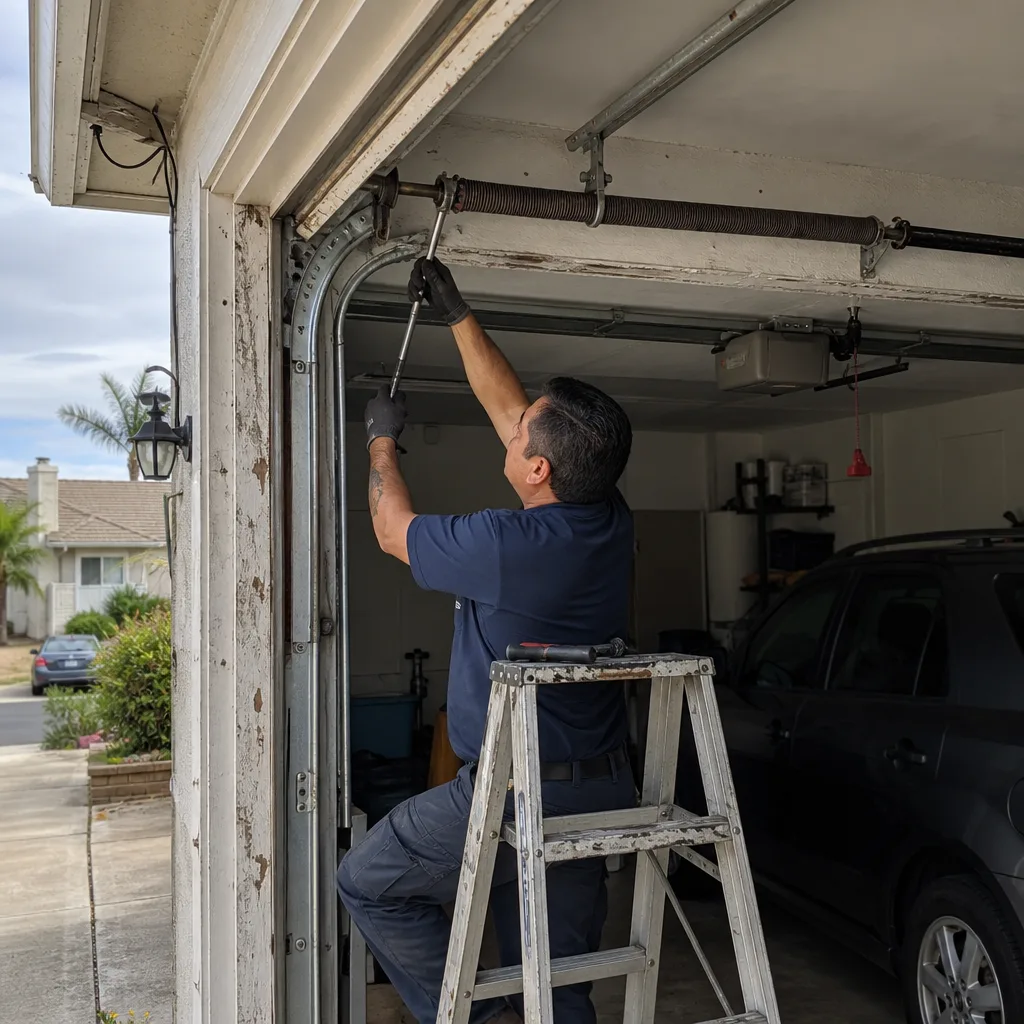 Before
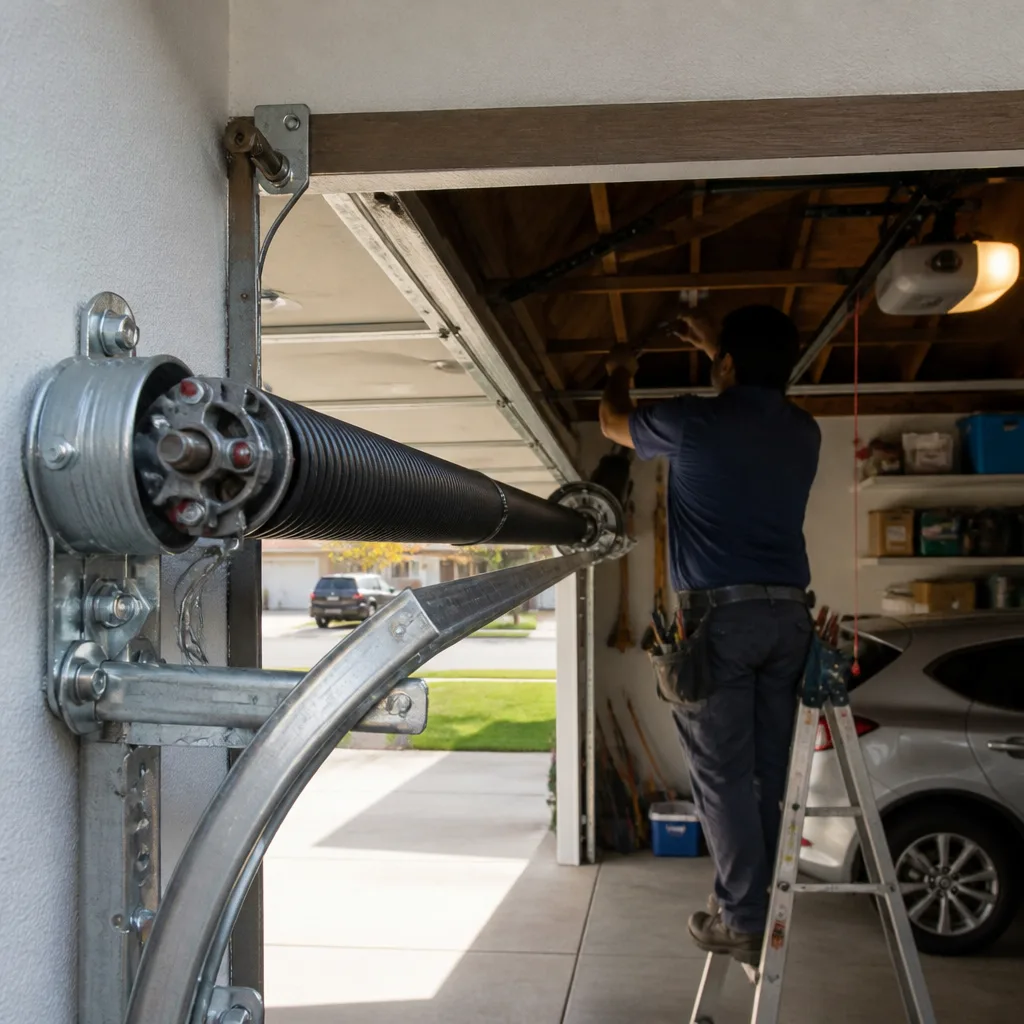 After
After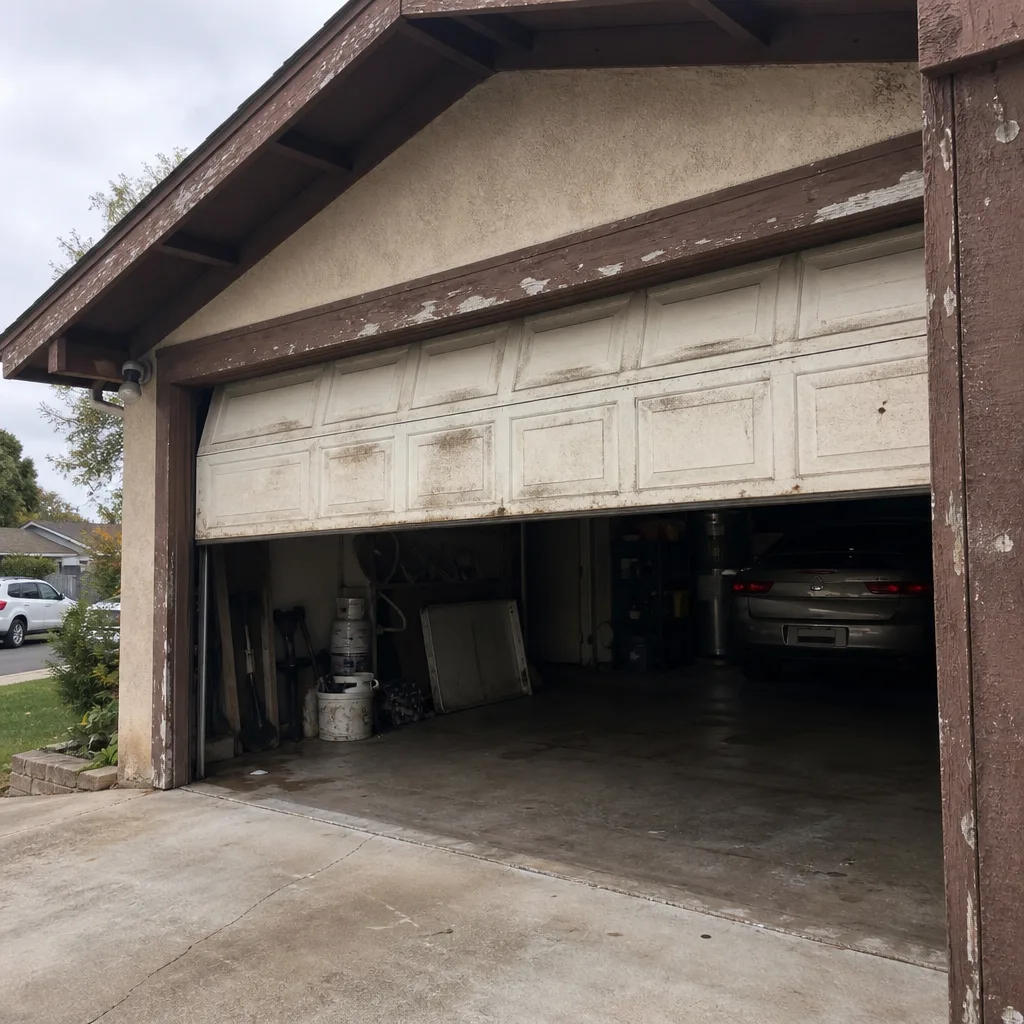 Before
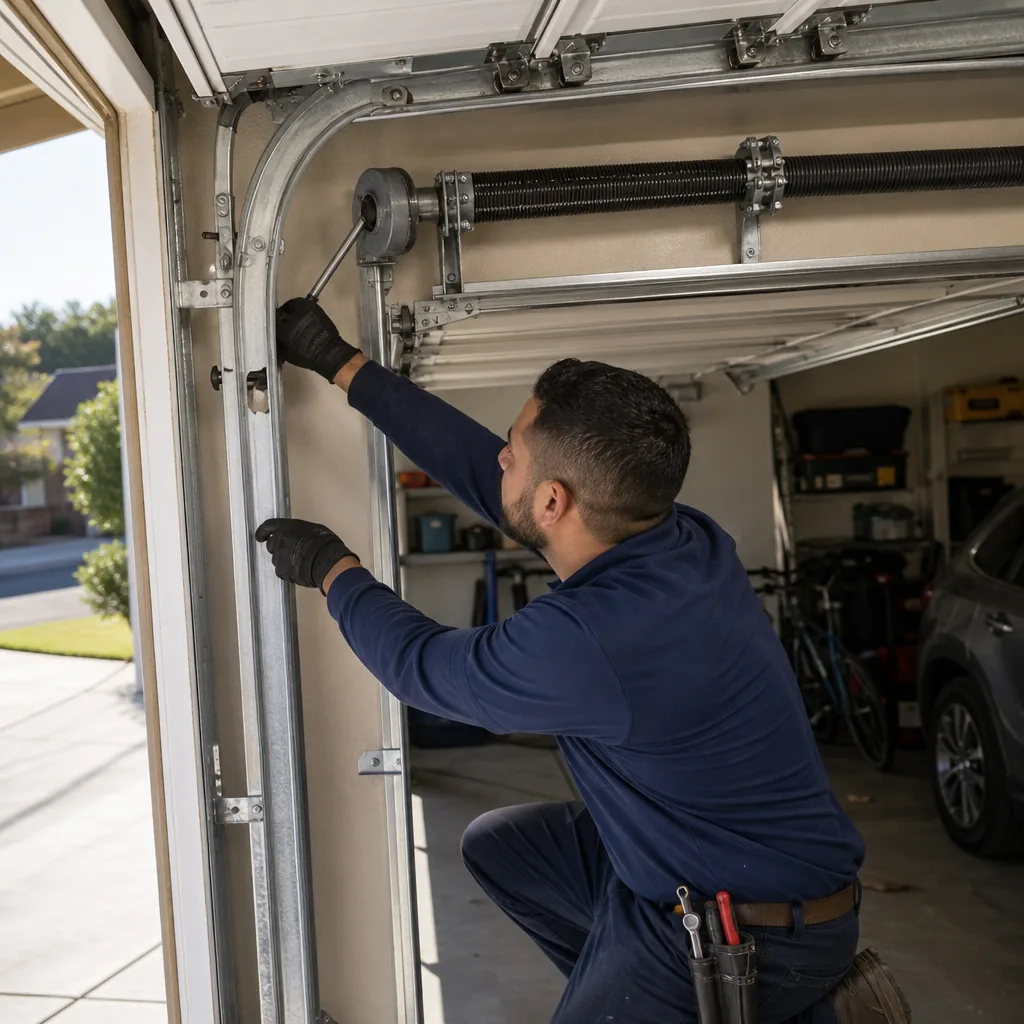 After
AfterDIY vs Professional Garage Door: The El Cajon Homeowner’s Decision Guide
Every year the Consumer Product Safety Commission logs hundreds of garage door injuries, and the majority involve torsion springs. A single spring stores enough torque to lift a 300-pound door, which means it stores enough energy to break a wrist, a collarbone, or worse when it releases unexpectedly. Most El Cajon homeowners who call us after a DIY attempt say the same thing: they thought the savings would be substantial. In our experience, the spread between a safe DIY job and a professional repair is often smaller than the emergency room copay. This guide breaks down which tasks belong in your garage and which ones belong with a trained technician who carries the right tools, insurance, and warranty. For more guidance, explore our Garage Door Repair Maintenance Checklist for El Cajon Homeowners.
Quick Answer
Basic garage door maintenance - lubricating rollers, aligning safety sensors, and reprogramming remotes - is safe for most El Cajon homeowners to handle themselves. Any work involving torsion springs, lift cables, or track re-hanging should be done by a licensed professional because the injury risk is documented, the liability exposure is real under California law, and the actual cost savings of DIY are typically under $100 when you factor in tools, time, and the risk of a second attempt.
Table of Contents
- What Is Actually Safe to DIY
- The Components That Can Seriously Hurt You
- The Real Cost Comparison: Torsion Spring Replacement
- California Licensing and Your Liability Exposure
- The Tools Pros Use (And Why Homeowners Don’t Own Them)
- A Smart Maintenance Strategy: DIY Plus Pro
- When to Call a Professional
- Frequently Asked Questions
What Is Actually Safe to DIY
Not every garage door task carries the same risk profile. Some jobs are genuinely low-stakes, require no special tools, and can save you a service call. We encourage our customers in El Cajon to handle these three categories themselves.
1. Seasonal Lubrication
El Cajon’s dry, warm climate means dust collects in roller tracks faster than in coastal San Diego neighborhoods. Twice a year, apply a silicone-based lubricant to the steel rollers, hinges, and the top of the rail where the trolley travels. Do not lubricate the track itself - that attracts grit. Avoid WD-40; it is a solvent, not a lubricant, and it dries out in our heat.
What to check while you are at it: look for rust on the bottom rollers, which is common in older Fletcher Hills homes where morning dew sits on the threshold. If you see orange flaking, the roller is binding and adding strain to the opener. That is worth a call.
2. Safety Sensor Alignment
Every automatic door installed after 1993 has two photo-eye sensors near the floor. When they drift out of alignment, the door reverses for no apparent reason or refuses to close.
- Unplug the opener or turn off the breaker.
- Loosen the wing nut on one sensor bracket.
- Point both sensors directly at each other until both LED lights glow steady (not blinking).
- Tighten the wing nut and test the door.
If both LEDs glow steady and the door still misbehaves, the issue is likely wiring or logic board failure. That is not a DIY fix.
3. Remote and Keypad Reprogramming
Lost a remote? Bought a new LiftMaster or Chamberlain? The learn button on the motor unit is the key. Press it once, then press the button on your new remote within 30 seconds. For keypads, enter your PIN, then press the learn button. These steps are in your owner’s manual, and no physical risk is involved.
What we see go wrong: homeowners in Rancho San Diego buy a universal remote that is not compatible with their opener’s frequency or security protocol. If the learn button press does not produce a flashing LED, check the manufacture date. Pre-1993 openers use dip switches, not rolling code technology.
4. Visual Inspection
Once a month, run the door manually (pull the red release cord with the door closed) and lift it halfway. A properly balanced door stays put. If it crashes down or rockets up, the spring tension is wrong. Do not adjust this yourself. Note the symptom and call for service.
Also look for:
- Frayed cables (like a rope with broken strands)
- Bent track sections
- Loose bolts on the flag bracket or spring anchor plate
- Cracked or delaminating door panels, common in direct sun exposure in El Cajon’s inland heat
Spotting these early prevents the catastrophic failure that costs more to fix.
The Components That Can Seriously Hurt You
The DIY-versus-pro debate is usually framed as a money question. The more accurate frame is risk transfer. The components that are easiest to replace yourself cost the least. The components that carry the most savings also carry the most documented injury risk.
Torsion Springs
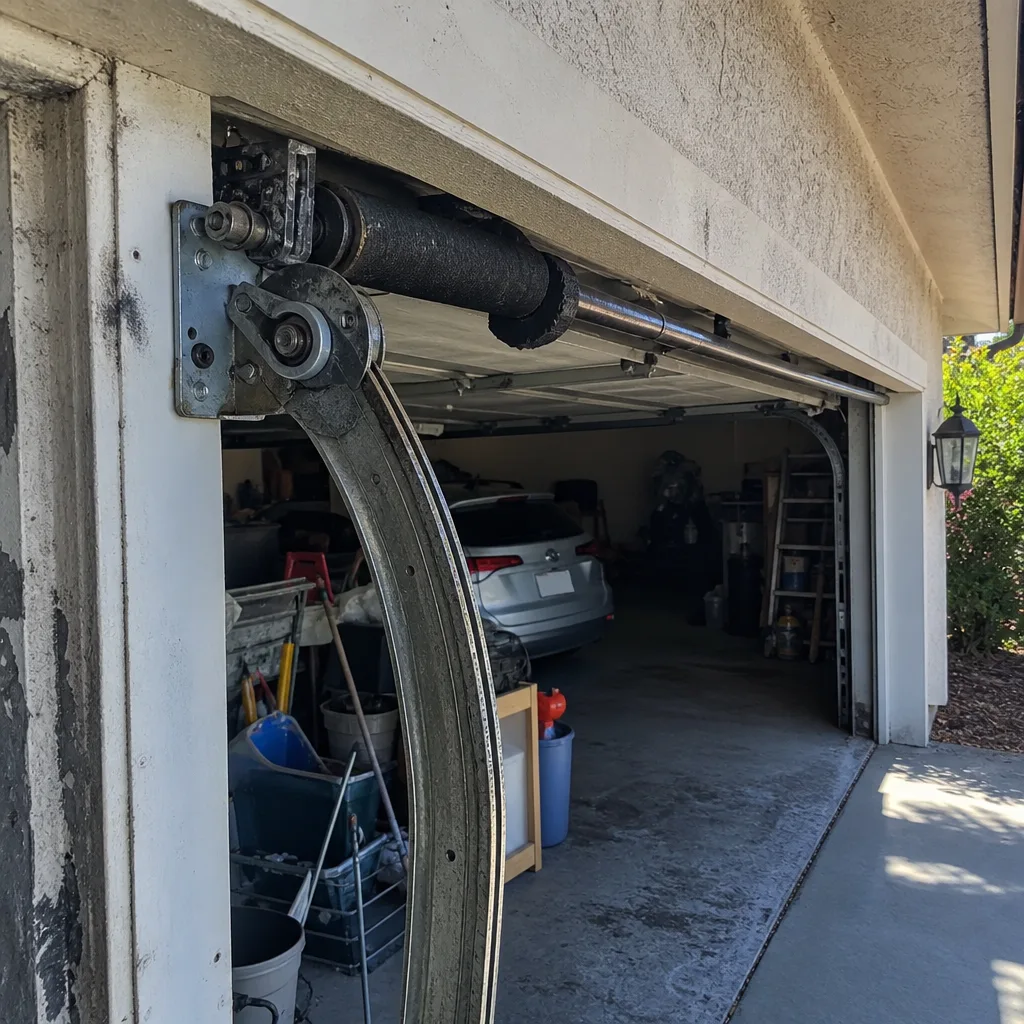
A standard 16-foot wide steel door in El Cajon uses either one or two torsion springs mounted on a steel shaft above the door opening. These springs are wound tight, typically 7.5 to 8 full turns for a standard 7-foot door height. That winding stores roughly 1,000 to 1,500 inch-pounds of torque.
When a spring breaks, it often sounds like a gunshot. Homeowners describe finding a two-inch gap in the coil. The door becomes dead weight. Many homeowners then watch a video, buy a spring online for $40-$80, and attempt the replacement.
Here is what the videos do not convey adequately:
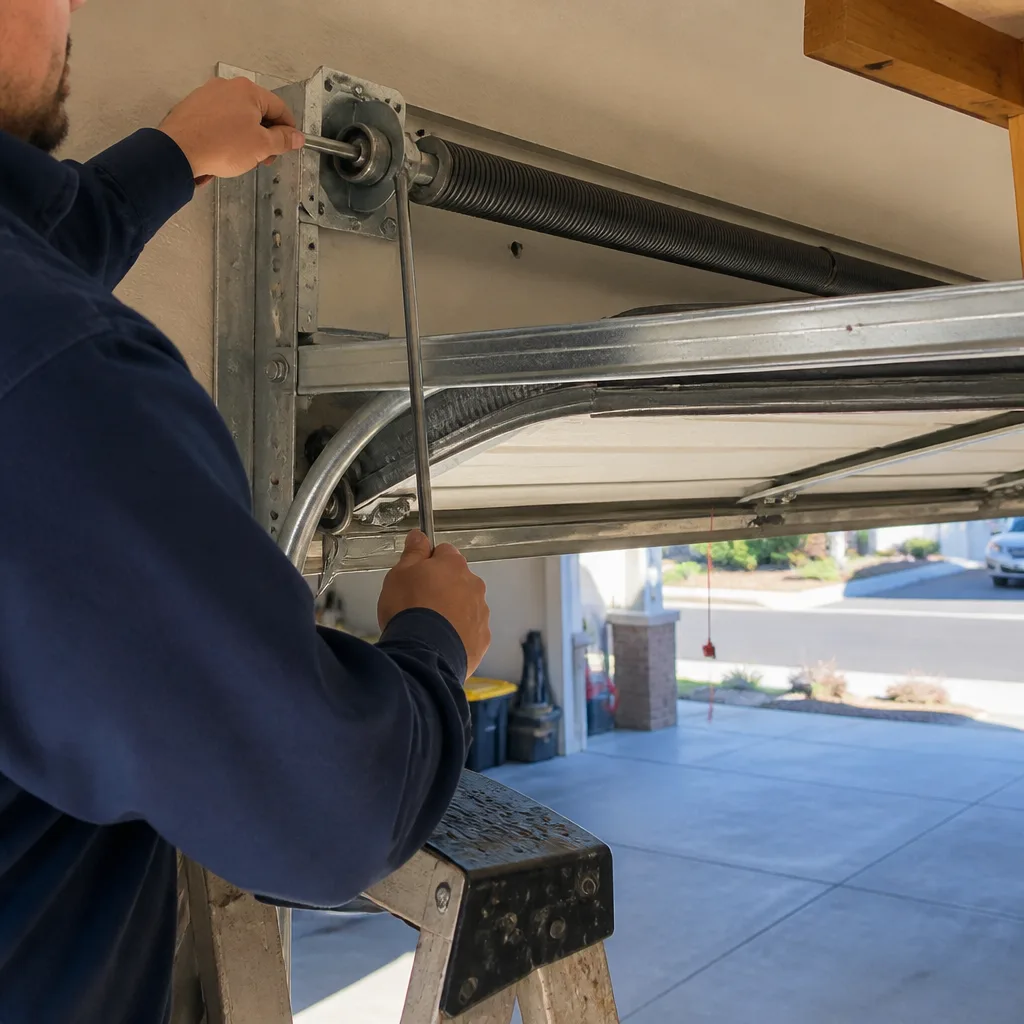
- You need winding bars - solid steel bars inserted into the cogs of the winding cone - to add or release tension. Using screwdrivers, pliers, or socket extensions is how people get hurt.
- The cones and drums are specific to the spring’s wire size, inner diameter, and length. A mismatched spring will fail prematurely or cause the door to run crooked.
- Even with proper tools, an unwound spring can slip, the bar can kick back, or the set screws can strip.
We have been called to El Cajon homes where a homeowner’s first attempt bent the shaft, damaged the bearing plates, and turned a $250 spring replacement into a $600 overhaul. We have also seen worse outcomes.
Lift Cables
Cables run from the bottom bracket of each door panel to the drum at the end of the torsion shaft. When a spring breaks, the cables often go slack or unspool. Replacing a cable seems straightforward: unbolt, thread, reattach.
The danger is the bottom bracket. It is under spring tension even when the spring is broken, because the other spring (on a two-spring system) or the remaining torque can still load the bracket. Removing the bottom bracket without properly securing the door can cause the panel to drop or the cable to whip.
Track Re-Hanging and Door Removal
Bent tracks happen. A car bumper, a ladder tip, or gradual fatigue can put a bow in the vertical or horizontal track. Re-hanging track requires plumb-bob precision: the vertical tracks must be parallel within a quarter-inch, and the horizontal tracks must slope back toward the motor at a specific angle. Get this wrong and the rollers bind, the opener strains, and the door wears unevenly.
Removing a sectional door from its tracks - necessary for some repairs or to get a vehicle out when the door is jammed - requires two people, proper clamping, and an understanding of which panels carry the load. A 16-foot wide insulated door can weigh 250 pounds. That is not a solo job.
The Real Cost Comparison: Torsion Spring Replacement
Let us walk through the actual numbers for the most common “should I DIY this?” scenario we hear in El Cajon. We will use a standard two-car garage with a single torsion spring, which describes roughly half the homes in the Bostonia and Crest areas built between 1980 and 2005.
The DIY Path
| Item | Cost |
|---|---|
| Torsion spring (correct size, 0.250 wire, 2″ ID, 31″ length) | $45-$75 |
| Winding bars (2, solid steel, 18″) | $25-$40 |
| Vise grips, socket set, ladder tall enough for safe overhead work | $40-$80 (if not owned) |
| Time: research, ordering, waiting for delivery, execution, cleanup | 4-8 hours |
| Risk premium: probability of injury or error × cost of either | Unquantified, non-zero |
| Total out-of-pocket | $110-$195 plus time |
What this table does not capture: if you order the wrong spring, you wait another week and pay return shipping. If you strip a set screw, you replace the cone or drum. If the door was already unbalanced and you did not know it, your new spring fails in six months. We see this in El Cajon regularly, especially with online springs that carry no warranty and no phone support.
The Professional Path
| Item | Cost |
|---|---|
| Flat-rate spring replacement, parts and labor | $180-$340 (El Cajon market, 2024-2025) |
| Same-day completion | Included |
| Warranty on parts and labor | 90 days minimum (Mainspring: 90-Day Done Right Promise in writing) |
| Liability insurance if something goes wrong | Included |
| Time required of homeowner | 30-45 minutes |
| Total out-of-pocket | $180-$340 |
The spread between DIY and professional, after you account for tools and time, is often $85 to $145. For that difference, you get a correctly sized spring (we measure wire gauge with a micrometer, not a tape measure), proper tensioning for your door’s weight, a safety inspection of cables and rollers, and a warranty. We do not think that is a difficult decision, but we are not you. We are simply showing you the math.
California Licensing and Your Liability Exposure
California requires a contractor’s license (C-61/D-28 for garage doors, or C-36 for related work) for any job over $500 in combined labor and materials. This is not a trivial regulation. It shapes what happens when something goes wrong.
If a Licensed Contractor Causes Damage or Injury
The contractor’s general liability insurance and workers’ compensation policy absorb the claim. You file with their insurer. Their license bond provides additional recourse through the Contractors State License Board. This is why we carry both, and why every Mainspring technician is background-checked and uniformed - the license and insurance are only as good as the people operating under them.
If a Homeowner Causes Damage or Injury
Your homeowner’s insurance may or may not cover it. Many policies exclude injury to non-family members that results from unlicensed construction or repair work. If your neighbor’s child is injured by a door you worked on, or if a spring you installed fails and damages a vehicle, you may be personally liable. There is no contractor’s insurance to absorb the claim. Your policy limits and your personal assets are exposed.
We are not alarmists. We are tradespeople who have seen the aftermath of jobs that went wrong. In 42 years, we have been called to clean up after DIY attempts in El Cajon, Lakeside, and La Mesa. The pattern is consistent: the homeowner saved a small amount, spent a weekend frustrated, and then paid more to fix both the original problem and the secondary damage.
Permit Requirements in El Cajon
New garage door installations in El Cajon require a building permit if the door is part of new construction or a significant structural modification. For full details, read our guide to Garage Door Permits, Codes & Inspections in CA: What You Need to Know. Simple replacements of an existing door on the same opening typically do not. However, if you are converting a carport to an enclosed garage or altering the header size, permits and inspections apply. A licensed contractor handles this paperwork; a DIY homeowner is responsible for knowing the requirement and scheduling the inspection. Miss it, and you face delays at resale.
The Tools Pros Use (And Why Homeowners Don’t Own Them)
There is a reason most El Cajon garages do not contain a set of winding bars. Or a spring winding tool with calibrated torque measurement. Or a micrometer for wire gauge. These are single-purpose tools for a task most homeowners encounter once every seven to ten years.
The Winding Bar
The non-negotiable tool for torsion spring work is a solid steel winding bar, 18 inches long, inserted into the notches of the winding cone. Not a screwdriver. Not a socket extension. Not a piece of rebar from the backyard. The bar must fit snugly, must be steel (aluminum bends), and must be long enough to provide leverage without putting your face near the cone.
A set of two costs $25-$40. You will use them for 20 minutes, then store them for a decade. Most homeowners correctly decide this is not a sound tool investment.
The Micrometer and Spring Chart
Springs are sized by wire gauge (to the thousandth of an inch), inner diameter, and overall length. A tape measure gets you close; a micrometer gets you exact. The wrong spring - even slightly wrong - changes the cycle life dramatically. A 10,000-cycle spring installed with incorrect tension may last 3,000 cycles. At four cycles per day, that is two years instead of seven.
The Torque Winding Tool
Professional technicians increasingly use calibrated winding tools that measure inch-pounds of torque as the spring is wound. This removes guesswork and ensures both springs on a two-spring system are matched. No homeowner version of this tool exists at a reasonable price.
The Truck Inventory
Here is the practical reality: when our technician arrives in El Cajon, the truck carries 40-plus spring sizes, multiple cable lengths, drums for standard and low-headroom applications, and hardware for Wayne Dalton, Clopay, Amarr, and other common brands. We do not order parts after diagnosis. We diagnose and repair in the same visit. That inventory represents a capital investment no homeowner makes for a single repair.
A Smart Maintenance Strategy: DIY Plus Pro
The most cost-effective approach is not all-DIY or all-professional. It is strategic: handle the low-risk, high-frequency maintenance yourself, and budget for professional service on the components that actually fail.
Your Annual Calendar
| Month | Task | Who |
|---|---|---|
| March | Lubricate rollers, hinges, rail; inspect cables and springs for rust | You |
| March | Professional tune-up: balance test, force setting check, safety reversal test | Pro ($89 at Mainspring) |
| September | Clean photo-eye lenses; test remote batteries; check weatherstripping | You |
| As needed | Spring replacement, cable repair, track adjustment, opener replacement | Pro |
This schedule respects your time and your safety. The March tune-up catches developing problems before they strand you. The September check prevents the “remote stopped working” surprise before a holiday weekend. And the professional line items are budgeted, not emergency expenses.
For homeowners in El Cajon who have been in their house twenty years and plan to stay, this approach typically runs $150-$250 annually in professional service, versus $400-$800 every few years in emergency repairs after a failure. The math favors prevention, which is why we offer the $89 Seasonal Tune-Up as a standing offer, not a limited-time promotion.
Common Mistakes to Avoid
- Using the wrong lubricant. WD-40 is a solvent that strips grease and attracts dust in El Cajon’s dry climate. Use silicone spray or white lithium grease on garage door components.
- Ignoring a single broken spring on a two-spring system. Many wide doors have two springs. When one breaks, the door may still open with opener strain. Running it this way burns out the motor and risks the second spring failing catastrophically.
- Adjusting the opener force settings instead of fixing the real problem. If the door reverses, the temptation is to crank up the down force. This overrides the safety system and creates a crushing hazard. The real issue is usually spring tension or track alignment.
- Buying springs by door weight alone. Online calculators ask for door dimensions and weight. They do not account for headroom constraints, track radius, or whether you have a standard or low-headroom system. A spring that fits on paper may not fit in your garage.
- Working alone on a heavy door. Even with the opener disconnected, a 200-pound door can shift or drop. We have responded to calls in the Fletcher Hills area where a homeowner trapped their hand between panels while attempting a solo repair.
- Neglecting the safety reversal test. Federal law since 1993 requires auto-reverse on contact and non-contact (photo-eye) protection. Test monthly by placing a 2×4 flat on the floor - the door should reverse on contact. If it does not, stop using the door and call for service.
When to Call a Professional
Call a professional when the task involves stored mechanical energy, structural load, or electrical integration beyond a simple remote pairing. Specifically: broken torsion or extension springs, frayed or detached cables, bent or misaligned track, a door that has jumped its rollers, an opener that hums but does not move the door, or any situation where the door is stuck open and your home is unsecured.
In El Cajon, same-day service is available for these scenarios. Mainspring Garage Door Co. offers free estimates in El Cajon - call (619) 853-0087. We answer live, 24/7, including nights and weekends. Our trucks carry the parts to complete most repairs in a single visit, and we state the flat price before any work begins. If the work is not done right, we come back at no charge. That promise is in writing on every job.
Frequently Asked Questions
A single torsion spring replacement in El Cajon typically runs $180 to $340, including parts, labor, and disposal of the old spring. The price varies with spring size and whether your door uses one or two springs. We quote the exact flat price after inspection, before any work starts. Call (619) 853-0087 for a free estimate.
You can, but you should not. Springs on the same shaft are matched for cycle life and tension. Replacing one means the new spring carries more load and the old spring fails soon after. We replace both, set matched tension, and warranty the pair. Doing one at a time costs more in the long run.
Yes, on your own home. California’s contractor licensing law applies to work performed for compensation, not to homeowners working on their own property. However, if your work injures someone or damages property, you lack the contractor’s insurance and license bond that would absorb the claim. Your personal liability exposure is real.
Look for a gap in the coil, visible rust or corrosion, a door that feels heavier to lift manually, or an opener that strains more than it used to. In El Cajon’s dry climate, springs typically last 7-12 years depending on cycle count. If your springs are original to a 1990s home in Rancho San Diego or Bostonia, they are living on borrowed time.
At Mainspring, no. We state the flat price before work begins. If we discover additional issues during inspection - a frayed cable, a bent track - we explain the finding, quote the additional work separately, and you approve it before we proceed. No surprises on the bill. That is our promise.
Yes. Our trucks are stocked with springs, cables, rollers, and hardware for all major brands including Craftsman, Wayne Dalton, LiftMaster, Chamberlain, Genie, Clopay, Amarr, and Raynor. Most repairs are completed in a single visit with no waiting on parts. For obsolete systems, we will tell you honestly if repair is practical or if replacement makes more sense.
The Bottom Line
The DIY-versus-professional question for garage doors is best answered with a task-specific risk assessment, not a blanket rule. Lubrication, sensor alignment, and remote programming are safe, sensible homeowner maintenance. Spring replacement, cable work, and track adjustment carry documented injury risk, require specialized tools you will not own, and offer smaller savings than most assume once time and risk are priced in. For El Cajon homeowners who plan to stay in their homes, the strategic approach is clear: handle the maintenance yourself, build a relationship with a licensed local shop for the mechanical work, and never gamble with components that can hurt you. We have been here since 1984. We will be here when you need us.
Written by Carl Dutton, Owner at Mainspring Garage Door Co., serving El Cajon since 2016.